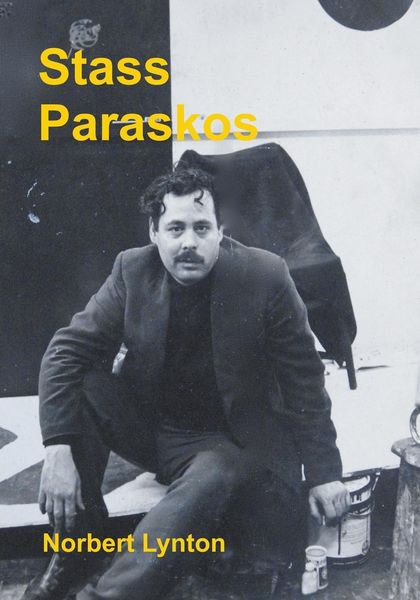
Stass Paraskos
-
- Englisch ausgewählt
-
Verlag:Touchladybirdlucky Studios
27,99 €
inkl. gesetzl. MwSt.,
- Kostenlose Lieferung ab 30 € Einkaufswert
- Versandkostenfrei für Bonuscard-Kund*innen
Beschreibung
Produktdetails
Einband
Taschenbuch
Erscheinungsdatum
01.07.2003
Verlag
Touchladybirdlucky StudiosSeitenzahl
98
Maße (L/B/H)
25,4/17,8/0,6 cm
Gewicht
186 g
Sprache
Englisch
ISBN
978-0-9544523-0-8
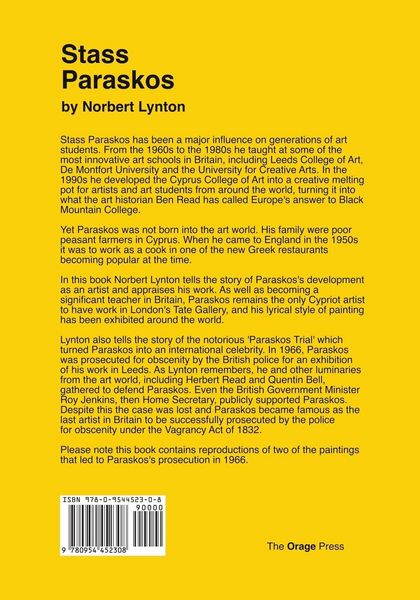
Stass Paraskos is an artist who has been a major influence on generations of art students. From the 1960s to the 1980s he taught at some of the most innovative art schools in Britain, including Leeds College of Art, De Montfort University and the University for Creative Arts. In the 1990s he developed the Cyprus College of Art into a creative meeting point for artists and art students from around the world, turning it into what the art historian Ben Read has called Europe's answer to Black Mountain College in the United States. Yet Paraskos was not born into the art world. His family were poor peasant farmers in Cyprus. When he came to England in the 1950s it was to work as a cook in one of the new Greek restaurants becoming popular at the time. In this book Norbert Lynton tells the story of Paraskos's development as an artist and appraises his work. As well as becoming a significant teacher in Britain, Paraskos remains the only Cypriot artist to have work in London's Tate Gallery, and his lyrical style of painting has been exhibited around the world. Lynton also tells the story of the notorious Paraskos Trial which turned Paraskos into an international celebrity. In 1966, Paraskos was prosecuted for obscenity by the British police for an exhibition of his work held in Leeds. Along with Lynton, other luminaries from the art world spoke in favour of Paraskos, including Herbert Read and Quentin Bell. Even the Government Minister Roy Jenkins, then Home Secretary, spoke out against the prosecution. But despite this the case was lost and Paraskos became famous as the last artist in Britain to be successfully prosecuted for obscenity under the Vagrancy Act of 1832.
Noch keine Bewertungen vorhanden
Verfassen Sie die erste Bewertung zu diesem Artikel
Helfen Sie anderen Kundinnen und Kunden durch Ihre Meinung.
Kurze Frage zu unserer Seite
Vielen Dank für Ihr Feedback
Wir nutzen Ihr Feedback, um unsere Produktseiten zu verbessern. Bitte haben Sie Verständnis, dass wir Ihnen keine Rückmeldung geben können. Falls Sie Kontakt mit uns aufnehmen möchten, können Sie sich aber gerne an unseren Kund*innenservice wenden.
zum Kundenservice