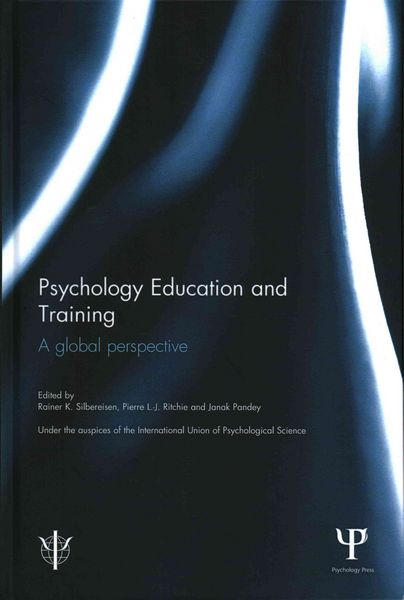
Psychology Education and Training A global perspective
-
- Hardcover ausgewählt
- Taschenbuch
- eBook
-
Sprache:Englisch
175,99 €
inkl. gesetzl. MwSt.,
Beschreibung
Produktdetails
Einband
Gebundene Ausgabe
Erscheinungsdatum
17.12.2013
Abbildungen
schwarz-weiss Illustrationen, Zeichnungen, schwarz-weiss, Tabellen, schwarz-weiss
Herausgeber
Rainer Silbereisen + weitereVerlag
Taylor and FrancisSeitenzahl
280
Maße (L/B/H)
24/16,1/2 cm
Gewicht
587 g
Sprache
Englisch
ISBN
978-1-84872-151-7
Much of the psychological research in the last century has been conducted in the global North West; hence, many prevailing theories and methodologies reflect the philosophical framework and shared cultural knowledge of this region. Other world views and cultural contexts have, as yet, not had the same opportunity to develop scientific insights that come to the attention of global audiences. Psychology Education and Training is the first truly international effort to generate a framework for common standards in psychological education and training across the globe. Psychologists have long studied human beings in their socio-cultural context. New challenges such as globalisation and the relationship of the brain and behavior require that education and training keep pace with these rapidly evolving developments. The chapters in this book were generated by an international conference which resulted in the Dornburg Accord. While anchored in higher education, the focus is on the generative and translational psychological science needed to fulfill psychology's responsibility to society. Psychology Education and Training is the first book of its kind to cover both historic strengths and the requirements of emerging fields. The book deals with balancing the universalities and cultural specificities of psychological processes, the adjustments to academic curricula required to support national needs, as well as the credentials and regulations required to assure the quality of psychological services. Psychology Education and Training is unique in providing initial data and concurrent assessment of various components of education and training in psychology across the globe. The book is a must for faculty members, advanced students of psychology and policy-makers who are interested in the issues that shape their societies.
Noch keine Bewertungen vorhanden
Verfassen Sie die erste Bewertung zu diesem Artikel
Helfen Sie anderen Kundinnen und Kunden durch Ihre Meinung.
Kurze Frage zu unserer Seite
Vielen Dank für Ihr Feedback
Wir nutzen Ihr Feedback, um unsere Produktseiten zu verbessern. Bitte haben Sie Verständnis, dass wir Ihnen keine Rückmeldung geben können. Falls Sie Kontakt mit uns aufnehmen möchten, können Sie sich aber gerne an unseren Kund*innenservice wenden.
zum Kundenservice