Beschreibung
Produktdetails
Einband
Gebundene Ausgabe
Erscheinungsdatum
01.11.2013
Verlag
Human Kinetics PublishersSeitenzahl
440
Maße (L/B/H)
28,8/22,5/3,3 cm
Gewicht
1425 g
Sprache
Englisch
ISBN
978-0-7360-9340-8
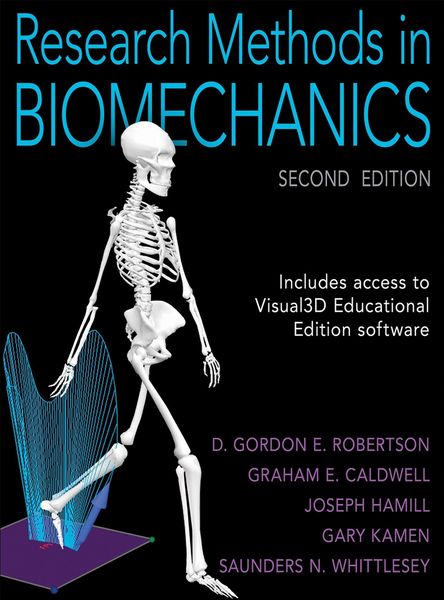
Research Methods in Biomechanics, Second Edition, demonstrates the range of available research techniques and how to best apply this knowledge to ensure valid data collection. In the highly technical field of biomechanics, research methods are frequently upgraded as the speed and sophistication of software and hardware technologies increase. With this in mind, the second edition includes up-to-date research methods and presents new information detailing advanced analytical tools for investigating human movement.
Expanded into 14 chapters and reorganized into four parts, the improved second edition features more than 100 new pieces of art and illustrations and new chapters introducing the latest techniques and up-and-coming areas of research. Additional enhancements in this edition include the following:
• Special features called From the Scientific Literature highlight the ways in which biomechanical research techniques have been used in both classic and cutting-edge studies.
• An overview, summary, and list of suggested readings in each chapter guide students and researchers through the content and on to further study.
• Sample problems appear in select chapters, and answers are provided at the end of the text.
• Appendixes contain mathematical and technical references and additional examples.
• A glossary provides a reference for terminology associated with human movement studies.
Research Methods in Biomechanics, Second Edition, assists readers in developing a comprehensive understanding of methods for quantifying human movement. Parts I and II of the text examine planar and three-dimensional kinematics and kinetics in research, issues of body segment parameters and forces, and energy, work, and power as they relate to analysis of two- and three-dimensional inverse dynamics. Two of the chapters have been extensively revised to reflect current research practices in biomechanics, in particular the widespread use of Visual3D software.
In part III, readers can explore the use of musculoskeletal models in analyzing human movement. This part also discusses electromyography, computer simulation, muscle modeling, and musculoskeletal modeling; it presents new information on MRI and ultrasound use in calculating muscle parameters. Part IV offers a revised chapter on additional analytical procedures, including signal processing techniques. Also included is a new chapter on movement analysis and dynamical systems, which focuses on how to assess and measure coordination and stability in changing movement patterns and the role of movement variability in health and disease. In addition, readers will find discussion of statistical tools useful for identifying the essential characteristics of any human movement.
The second edition of Research Methods in Biomechanics explains the mathematics and data collection systems behind both simple and sophisticated biomechanics. It assists both beginning and experienced researchers in developing their methods for analyzing and quantifying human movement.
Noch keine Bewertungen vorhanden
Verfassen Sie die erste Bewertung zu diesem Artikel
Helfen Sie anderen Kundinnen und Kunden durch Ihre Meinung.
Kurze Frage zu unserer Seite
Vielen Dank für Ihr Feedback
Wir nutzen Ihr Feedback, um unsere Produktseiten zu verbessern. Bitte haben Sie Verständnis, dass wir Ihnen keine Rückmeldung geben können. Falls Sie Kontakt mit uns aufnehmen möchten, können Sie sich aber gerne an unseren Kund*innenservice wenden.
zum Kundenservice