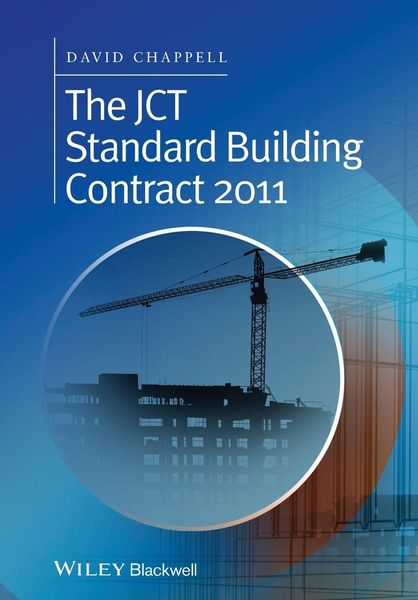
Produktbild: The Jct Standard Building Contract 2011

The Jct Standard Building Contract 2011 An Explanation and Guide for Busy Practitioners and Students

85,99 €

inkl. gesetzl. MwSt., Versandkostenfrei


Beschreibung

Produktdetails

Einband

Taschenbuch

Erscheinungsdatum

07.04.2014

Verlag

Wiley

Seitenzahl

368

Maße (L/B/H)

24,1/16,8/2 cm

Gewicht

712 g

Sprache

Englisch

ISBN

978-1-118-81975-3

Beschreibung

Produktdetails

Einband

Taschenbuch

Erscheinungsdatum

07.04.2014

Verlag

Wiley

Seitenzahl

368

Maße (L/B/H)

24,1/16,8/2 cm

Gewicht

712 g

Sprache

Englisch

ISBN

978-1-118-81975-3

Herstelleradresse

Libri GmbH
Europaallee 1
36244 Bad Hersfeld
DE

Email: gpsr@libri.de

Kundinnen und Kunden meinen

0 Bewertungen

Informationen zu Bewertungen

Zur Abgabe einer Bewertung ist eine Anmeldung im Konto notwendig. Die Authentizität der Bewertungen wird von uns nicht überprüft. Wir behalten uns vor, Bewertungstexte, die unseren Richtlinien widersprechen, entsprechend zu kürzen oder zu löschen.

Die Bewertungen sind nach Format, Anzahl Sterne und Datum sortiert.

Verfassen Sie die erste Bewertung zu diesem Artikel

Helfen Sie anderen Kund*innen durch Ihre Meinung

Kundinnen und Kunden meinen

0 Bewertungen filtern

Die Leseprobe wird geladen.
  • Produktbild: The Jct Standard Building Contract 2011
  • Preface xiv

    Abbreviations used in the text xvi

    Notes before reading xvii

    Part I Preliminaries 1

    1 Introduction 1

    1.1 What is a contract? 1

    1.2 Purpose of building contracts 4

    1.3 Types of construction contracts 4

    1.4 Characteristics of a standard form 7

    1.5 Commonly used contracts 9

    1.6 Important background to SBC 11

    1.7 SBC and variants 11

    2 Basic matters 13

    2.1 Works 13

    2.2 Drawings 13

    2.3 Specification 14

    2.4 Schedules 15

    2.5 Bills of quantities 15

    2.6 The Standard Method of Measurement 16

    2.7 Privity of contract and the Third Party Act 17

    2.8 Third party rights and collateral warranties 18

    2.9 Base Date 19

    2.10 Common problems 20

    3 About the contract documents 23

    3.1 What constitutes the contract? 23

    3.2 What are articles and recitals? 24

    3.3 How to complete the contract form 25

    3.4 Priority of documents 29

    3.5 Errors, discrepancies and divergences 30

    3.6 Custody and copies 34

    3.7 Limits to use 35

    3.8 Reckoning days 35

    3.9 Certificates, notices and other communications 36

    3.10 Applicable law 37

    3.11 Common problems 37

    4 Related matters 40

    4.1 The Housing Grants, Construction and Regeneration Act 1996 as amended 40

    4.2 Entire contracts 42

    4.3 Express and implied terms 43

    4.4 Limitation periods 44

    4.5 Letters of intent 46

    4.6 Quantum meruit 47

    4.7 Limited companies 48

    4.8 Bonds 49

    4.9 Common problems 51

    Part Ii Participants 53

    5 The architect's powers and duties 53

    5.1 What the architect can do or must do 53

    5.2 Specific requirements under the JCT contract 54

    5.3 Powers 54

    5.4 The architect's design role under SBC 54

    5.5 The architect as agent for the employer 61

    5.6 No power to direct contractor 62

    5.7 Issue of certificates 63

    5.8 The issue of instructions 66

    5.9 Instructions in detail 70

    5.10 Issue of information 70

    5.11 Duties under the contract 73

    5.12 General duties 77

    5.13 Does the architect have any duty to the contractor? 79

    5.14 Common problems 79

    6 The contractor's powers and duties 82

    6.1 What the contractor can do or must do 82

    6.2 Person-in-charge 82

    6.3 Access to the Works and premises 82

    6.4 Carrying out the Works 96

    6.5 Levels and setting out 98

    6.6 Workmanship and materials 98

    6.7 Contractor's master programme and other documents 100

    6.8 Statutory obligations 103

    6.9 Antiquities 104

    6.10 Drawings, details and information 104

    6.11 Compliance with architect's instructions 106

    6.12 Suspension of performance 107

    6.13 Does the contractor have a duty to warn of design defects? 108

    6.14 Common problems 108

    7 The employer's powers and duties 110

    7.1 What the employer can or must do 110

    7.2 Express and implied powers and duties 110

    7.3 General powers 115

    7.4 General duties 122

    7.5 Common problems 123

    8 Consultants 125

    8.1 General points 125

    8.2 Quantity surveyors 126

    8.3 Employer's representative/project manager 128

    8.4 Structural engineers, mechanical engineers and others 129

    8.5 Common problems 129

    9 The clerk of works 131

    9.1 Method of appointment 131

    9.2 Duties 131

    9.3 Snagging lists 132

    9.4 Defacing materials 132

    9.5 Common problems 133

    10 Sub-contractors and suppliers 134

    10.1 General 134

    10.2 Assignment 135

    10.3 Sub-contracting 136

    10.4 Listed sub-contractors 138

    10.5 Named specialists 139

    10.6 Common problems 140

    11 Statutory authorities 143

    11.1 Work not forming part of the contract 143

    11.2 Statutory authorities in contract 143

    11.3 The CDM Regulations 2007 145

    11.4 Common problems 147

    Part Iii Work in Progress 149

    12 Insurance 149

    12.1 Why insurance? 149

    12.2 Types of insurance in the contract 149

    12.3 What is an indemnity? 150

    12.4 Injury to persons and property 151

    12.5 Things that are the liability of the employer 152

    12.6 Insurance terms 153

    12.7 Insurance of the Works: alternatives 154

    12.8 A new building where the contractor is required to insure 155

    12.9 A new building where the employer insures 156

    12.10 Alterations or extensions to an existing building 157

    12.11 Benefits for sub-contractors 158

    12.12 The Joint Fire Code 158

    12.13 Terrorism cover 159

    12.14 Common problems 159

    13 Possession of the site 161

    13.1 General 161

    13.2 Date of possession 162

    13.3 Common problems 163

    14 Extension of time 165

    14.1 Basics 165

    14.2 Extension of time 166

    14.3 Grounds 168

    14.4 Procedure 177

    14.5 Important conditions 186

    14.6 Common problems 188

    15 Liquidated damages 190

    15.1 What are liquidated damages? 190

    15.2 Procedure 191

    15.3 Common problems 193

    16 Financial claims 195

    16.1 Loss and expense claims 195

    16.2 Procedure 196

    16.3 Effect on regular progress 200

    16.4 The architect's opinion 201

    16.5 Ascertainment 202

    16.6 Reimbursement under other contract provisions 203

    16.7 Relevant matters forming the basis of a claim 203

    16.8 Certification of direct loss and/or expense 207

    16.9 Contractor's other rights and remedies 208

    16.10 Common problems 208

    17 Architect's instructions 210

    17.1 Purpose 210

    17.2 Scope 210

    17.3 Common problems 216

    18 Variations 219

    18.1 What is a variation? 219

    18.2 Does extra work always involve payment? 221

    18.3 Valuation 222

    18.4 Treatment of approximate quantities, defined and undefined provisional sums 227

    18.5 If the conditions for carrying out other work are altered 228

    18.6 Valuation of obligations and restrictions 229

    18.7 Schedule 2 quotations 229

    18.8 Acceleration 231

    18.9 Daywork 232

    18.10 Valuation of contractor's designed portion 233

    18.11 Common problems 233

    19 Payment 235

    19.1 The Contract Sum 235

    19.2 Valuation 237

    19.3 Method and timing 239

    19.4 Payment procedure 240

    19.5 Retention 243

    19.6 Final payment 245

    19.7 The effect of certificates 248

    19.8 Off-site materials 250

    19.9 Fluctuations 251

    19.10 Common problems 252

    20 Contractor's design 254

    20.1 Contractor's Designed Portion (CDP) 254

    20.2 Documents 254

    20.3 The contractor's obligations 255

    20.4 Liability 258

    20.5 Variations 259

    20.6 Insurance 260

    20.7 Common problems 261

    Part Iv Closing Stages 263

    21 Practical completion 263

    21.1 Definition 263

    21.2 What the contract says 263

    21.3 Consequences 265

    21.4 Partial possession and sectional completion 265

    21.5 Common problems 267

    22 Defects liability 269

    22.1 During construction 269

    22.2 Rectification period 271

    22.3 Definition 271

    22.4 Defects, shrinkages or other faults 271

    22.5 Frost 272

    22.6 Procedure 272

    22.7 Common problems 275

    23 Termination 276

    23.1 General points 276

    23.2 Termination by the employer 278

    23.3 Grounds: contractor's defaults 279

    23.4 Grounds: insolvency of contractor 282

    23.5 Grounds: corruption 283

    23.6 Grounds: neutral causes 283

    23.7 Grounds: insurance risks and terrorism cover 284

    23.8 Consequences of termination for contractor's default or insolvency 285

    23.9 Consequences of termination for neutral causes or insurance risks 288

    23.10 Termination by the contractor 288

    23.11 Grounds: employer's defaults 288

    23.12 Grounds: insolvency of employer 292

    23.13 Grounds: neutral causes 293

    23.14 Grounds: insurance risks and terrorism cover 293

    23.15 Consequences of termination for employer's default, neutral causes or insolvency of the employer, etc. 293

    23.16 Consequences of termination for insurance risks 294

    23.17 Suspension of the Works by the contractor 295

    23.18 Common problems 295

    Part V Intractable Problems 297

    24 Dispute resolution procedures 297

    24.1 General 297

    24.2 Adjudication 301

    24.3 Arbitration 310

    24.4 Legal proceedings (litigation) 317

    24.5 Mediation 317

    24.6 Common problems 317

    Notes and references 319

    Table of cases 330

    Subject index 339

    Clause number index to text 346