KI-Beratung Beta

Gutscheinbedingungen

**Gültig am 27.11.2026 auf Spielzeug, Schreibwaren, Filme, Geschenke & Trends, Musik, tolino eReader & Zubehör, Hörbücher und Hörbuch-Downloads, nicht preisgebundene Bücher und Kalender online auf thalia.at und in der Thalia App. Einzelne Artikel können ausgeschlossen sein. Aufgrund der Buchpreisbindung sind deutschsprachige Bücher und eBooks ausgenommen. Zusätzlich ausgenommen sind Abos & Flatrates, Games, Geschenkkarten/-boxen, Shelfies, Software, Zeitschriften sowie einzelne Artikel von tonies®. Pro Einkauf einmal einlösbar. Click & Collect nur bei Onlinevorabzahlung möglich. Keine Barauszahlung. Nicht kombinierbar mit anderen Aktionen und Gutscheinen. Gutschein wird auf max. 500€ Bestellwert angerechnet. Nicht gültig für Versandkosten und Services.

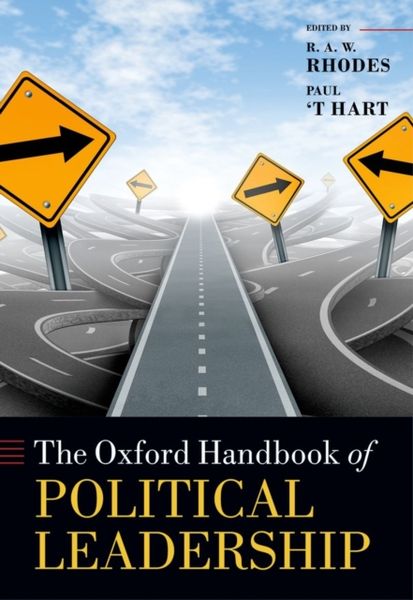
Produktbild: The Oxford Handbook of Political Leadership

The Oxford Handbook of Political Leadership

247,99 €

inkl. gesetzl. MwSt., Versandkostenfrei


Beschreibung

Political leadership has made a comeback. It was studied intensively not only by political scientists but also by political sociologists and psychologists, Sovietologists, political anthropologists, and by scholars in comparative and development studies from the 1940s to the 1970s. Thereafter, the field...

Beschreibung

Political leadership has made a comeback. It was studied intensively not only by political scientists but also by political sociologists and psychologists, Sovietologists, political anthropologists, and by scholars in comparative and development studies from the 1940s to the 1970s. Thereafter, the field lost its way with the rise of structuralism, neo-institutionalism, and rational choice approaches to the study of politics, government, and governance. Recently, however, students of politics have returned to studying the role of individual leaders and the exercise of leadership to explain political outcomes. The list of topics is nigh endless: elections, conflict management, public policy, government popularity, development, governance networks, and regional integration. In the media age, leaders are presented and stage-managed--spun--as the solution to almost every social problem. Through the mass media and the Internet, citizens and professional observers follow the rise, impact, and fall of senior political officeholders at closer quarters than ever before.
This Handbook encapsulates the resurgence by asking, where are we today? It orders the multidisciplinary field by identifying the distinct and distinctive contributions of the disciplines. It meets the urgent need to take stock. It brings together scholars from around the world, encouraging a comparative perspective, to provide a comprehensive coverage of all the major disciplines, methods, and regions. It showcases both the normative and empirical traditions in political leadership studies, and juxtaposes behavioural, institutional, and interpretive approaches. It covers formal, office-based as well as informal, emergent political leadership, and in both democratic and undemocratic polities.

Rezension

The book is written in a smooth but nonetheless rigorous way, and even non-specialists of particular disciplines can fruitfully read all the chapters. Michelangelo Vercesi, Political Studies Review

Produktdetails

Einband

Gebundene Ausgabe

Erscheinungsdatum

22.07.2014

Herausgeber Rhodes R. A. W. + weitere
Verlag Oxford University Press

Produktdetails

Einband

Gebundene Ausgabe

Erscheinungsdatum

22.07.2014

Herausgeber
Verlag Oxford University Press
Seitenzahl

800

Maße (L/B/H)

24,9/17,5/5,3 cm

Gewicht

1520 g

Sprache

Englisch

ISBN

978-0-19-965388-1

Herstelleradresse

Libri GmbH
Europaallee 1
36244 Bad Hersfeld
DE

Email: gpsr@libri.de

Noch keine Bewertungen vorhanden

Verfassen Sie die erste Bewertung zu diesem Artikel

Helfen Sie anderen Kundinnen und Kunden durch Ihre Meinung.

Kundinnen und Kunden meinen

Bewertungen (0)

Die Leseprobe wird geladen.
  • Produktbild: The Oxford Handbook of Political Leadership
    • 1: Paul t Hart and R. A. W. Rhodes: Puzzles of political leadership

    • Part I. Thinking about political leadership: traditions and disciplines

    • 2: Nannerl O. Keohane: Leadership in Western political thought

    • 3: Frank Hendriks and Niels Karsten: Theory of democratic leadership in action

    • 4: Joseph Chan and Elton Chan: Confucianism and political leadership

    • 5: Laura Sjoberg: Feminism

    • 6: David S. Bell: Political science

    • 7: R. A. W. Rhodes: Administrative leadership

    • 8: Margaret G. Hermann: Political psychology and the study of political leadership

    • 9: Stanley A. Renshon: Psychoanalytic perspectives on political leaders and leadership

    • 10: Stephen D. Reicher, S. Alexander Haslam and Michael J. Platow: The social psychological study of leadership

    • 11: Geoffrey Brennan and Michael Brooks: Whimpers from a dog that doesn't bark: rational choice approaches to leadership

    • 12: Cris Shore: Anthropology and political leadership

    • Part II. Studying political leadership: analytical and methodological perspectives

    • 13: Ludger Helms: Institutional analysis

    • 14: Paul t Hart: Contextual analysis

    • 15: David Brulé, Alex Mintz and Karl DeRouen, Jr.: Political leadership and decision analysis

    • 16: Keith Grint: Leaders as story-tellers: social constructionist approaches to political leadership

    • 17: John Uhr: Rhetorical and performative analysis

    • 18: Rose McDermott: Experimental analysis

    • 19: Francesca Gains: Observational analysis

    • 20: Mark Schafer: At-a-distance analysis

    • 21: James Walter: Biographical analysis

    • 22: Jerrold M. Post: Political personality profiling

    • Part III. Political leadership at work

    • 23: Richard A. Couto: Civic leadership

    • 24: Marina Costa Lobo: Party and electoral leadership

    • 25: Cas Mudde and Cristóbal Rovira Kaltwasser: Populism and political leadership

    • 26: John Gaffney: It's the singer, not the song: understanding leadership as performance

    • 27: Erik-Hans Klijn: Political leadership in networks

    • 28: Chris Ansell, Arjen Boin and Paul t Hart: Political leadership in times of crisis

    • Part IV. Executive leadership in the West

    • Presidential leadership: the United States and beyond

    • 29: David McKay: Leadership and the American presidency

    • 30: Jeffrey E. Cohen: Presidential communication from Hustings to Twitter

    • 31: Robert Elgie: Executive leadership in semi-presidential systems

    • Prime ministerial leadership: Westminster and beyond

    • 32: Patrick Weller: The variability of prime ministers

    • 33: Andrew Blick and George W. Jones: The contingencies of prime ministerial power in the UK

    • 34: Chris Eichbaum and Richard Shaw: The mortal temples of the king: prime ministers and their advisers in parliamentary democracies

    • 35: Rudy B. Andeweg: Cabinet ministers: leaders, team players, followers?

    • Part V. Political leadership below and beyond the national level

    • 36: Colin Copus and Steve Leach: Local political leaders

    • 37: John Wanna: Regional political leadership

    • 38: Charles F. Parker and Christer Karlsson: Leadership and international cooperation

    • 39: Bob Reinalda and Bertjan Verbeek: Leadership of international organizations

    • Part VI. Political leadership beyond the West

    • 40: Bo Zhiyue: Political leadership in China

    • 41: Harvey F. Kline: Latin American leadership

    • 42: Leslie Holmes: Post-communist leadership

    • 43: Gerrie Swart, Jo-Ansie van Wyk and Maryke Botha: A leadership renaissance, revolution or reversion? Probing the emerging study and scholarship on African political leadership

    • Part VII. Debating political leadership

    • 44: Jean Hartley: Training and development for political leadership

    • 45: Patricia Sykes: Does gender matter?

    • 46: Jean Blondel: What have we learned?