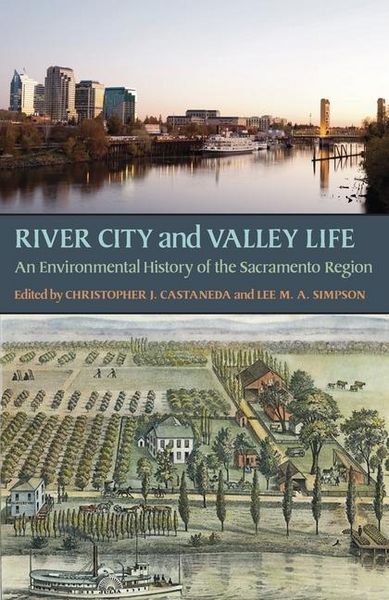
River City and Valley Life An Environmental History of the Sacramento Region
-
- Taschenbuch ausgewählt
- eBook
-
Sprache:Englisch
72,99 €
inkl. gesetzl. MwSt.,
Beschreibung
Produktdetails
Einband
Taschenbuch
Erscheinungsdatum
09.12.2013
Herausgeber
Christopher Castaneda + weitereVerlag
University Of Pittsburgh PressSeitenzahl
416
Maße (L/B/H)
24/15,6/2,7 cm
Gewicht
592 g
Sprache
Englisch
ISBN
978-0-8229-6250-2
Often referred to as "the Big Tomato," Sacramento is a city whose makeup is significantly more complex than its agriculture-based sobriquet implies. In River City and Valley Life, seventeen contributors reveal the major transformations to the natural and built environment that have shaped Sacramento and its suburbs, residents, politics, and economics throughout its history.
The site that would become Sacramento was settled in 1839, when Johann Augustus Sutter attempted to convert his Mexican land grant into New Helvetia (or "New Switzerland"). It was at Sutter's sawmill fifty miles to the east that gold was first discovered, leading to the California Gold Rush of 1849. Nearly overnight, Sacramento became a boomtown, and cityhood followed in 1850.
Ideally situated at the confluence of the American and Sacramento Rivers, the city was connected by waterway to San Francisco and the surrounding region. Combined with the area's warm and sunny climate, the rivers provided the necessary water supply for agriculture to flourish. The devastation wrought by floods and cholera, however, took a huge toll on early populations and led to the construction of an extensive levee system that raised the downtown street level to combat flooding. Great fortune came when local entrepreneurs built the Central Pacific Railroad, and in 1869 it connected with the Union Pacific Railroad to form the first transcontinental passage. Sacramento soon became an industrial hub and major food-processing center. By 1879, it was named the state capital and seat of government.
In the twentieth century, the Sacramento area benefitted from the federal government's major investment in the construction and operation of three military bases and other regional public works projects. Rapid suburbanization followed along with the building of highways, bridges, schools, parks, hydroelectric dams, and the Rancho Seco nuclear power plant, which activists would later shut down. Today, several tribal gaming resorts attract patrons to the area, while "Old Sacramento" revitalizes the original downtown as it celebrates Sacramento's pioneering past.
This environmental history of Sacramento provides a compelling case study of urban and suburban development in California and the American West. As the contributors show, Sacramento has seen its landscape both ravaged and reborn. As blighted areas, rail yards, and riverfronts have been reclaimed, and parks and green spaces created and expanded, Sacramento's identity continues to evolve. As it moves beyond its Gold Rush, Transcontinental Railroad, and government-town heritage, Sacramento remains a city and region deeply rooted in its natural environment.
Noch keine Bewertungen vorhanden
Verfassen Sie die erste Bewertung zu diesem Artikel
Helfen Sie anderen Kundinnen und Kunden durch Ihre Meinung.
Kurze Frage zu unserer Seite
Vielen Dank für Ihr Feedback
Wir nutzen Ihr Feedback, um unsere Produktseiten zu verbessern. Bitte haben Sie Verständnis, dass wir Ihnen keine Rückmeldung geben können. Falls Sie Kontakt mit uns aufnehmen möchten, können Sie sich aber gerne an unseren Kund*innenservice wenden.
zum Kundenservice