• Produktbild: Military Decision-Making Processes
  • Produktbild: Military Decision-Making Processes

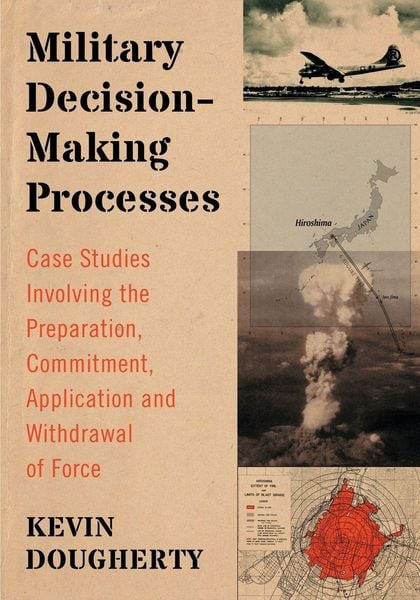
Military Decision-Making Processes Case Studies Involving the Preparation, Commitment, Application and Withdrawal of Force

42,99 €

inkl. gesetzl. MwSt., Versandkostenfrei


Beschreibung

Produktdetails

Einband

Taschenbuch

Erscheinungsdatum

01.10.2013

Verlag

McFarland

Seitenzahl

172

Maße (L/B/H)

25,4/17,8/1 cm

Gewicht

337 g

Sprache

Englisch

ISBN

978-0-7864-7798-2

Beschreibung

Produktdetails

Einband

Taschenbuch

Erscheinungsdatum

01.10.2013

Verlag

McFarland

Seitenzahl

172

Maße (L/B/H)

25,4/17,8/1 cm

Gewicht

337 g

Sprache

Englisch

ISBN

978-0-7864-7798-2

Herstelleradresse

Libri GmbH
Europaallee 1
36244 Bad Hersfeld
DE

Email: Libri GmbH

Noch keine Bewertungen vorhanden

Verfassen Sie die erste Bewertung zu diesem Artikel

Helfen Sie anderen Kundinnen und Kunden durch Ihre Meinung.

Kundinnen und Kunden meinen

Bewertungen (0)

Die Leseprobe wird geladen.
  • Produktbild: Military Decision-Making Processes
  • Produktbild: Military Decision-Making Processes
  • Table of Contents

    Preface
    Introduction
    Chapter 1: The Rational Actor Model
    Example 1: Truman's Decision to Use the Atomic Bomb on Japan, 1945
    Example 2: Reagan's Decision to Bomb Libya, 1986
    Example 3: Bush's Decision to Halt Operation Desert Storm, 1991
    Utility of the Rational Actor Model
    Chapter 2: Prospect Theory
    Example 1: Washington's Decision to Attack Trenton, 1776
    Example 2: Meade's Decision Not to Pursue Lee After Gettysburg, 1863
    Example 3: Clinton's Decision to Withdraw from Somalia, 1993
    Utility of the Prospect Theory
    Chapter 3: Poliheuristic Theory
    Example 1: Eisenhower's Decision Not to Intervene in Hungary, 1956
    Example 2: Kennedy's Authorization of the Bay of Pigs, 1961
    Example 3: Johnson's Decision to De-escalate US Involvement in Vietnam, 1968
    Utility of the Poliheuristic Theory
    Chapter 4: The Bureaucratic Model
    Example 1: The Confederate Departmental System's Impact on the Vicksburg Campaign, 1862-1863
    Example 2: The ­Army-Air Force Helicopter Rivalry, 1950s-1960s
    Example 3: The Department of State and the Department of Defense and the Multinational Peacekeeping Force in Beirut, 1982
    Utility of the Bureaucratic Model
    Chapter 5: The Organizational Process Model
    Example 1: Strategic Formulation in the Vietnam War, 1960s-1970s
    Example 2: The Decision to Abort the Iranian Hostage Rescue Mission, 1980
    Example 3: The Federalization of the California Army National Guard During the Los Angeles Riot, 1992
    Utility of the Organizational Process Model
    Chapter 6: The Small Group Model
    Example 1: The Blockade Board in the Civil War, 1861
    Example 2: The Executive Committee During the Cuban Missile Crisis, 1962
    Example 3: The Restricted Interagency Group in Developing a Strategy Toward Nicaragua, 1980s
    Utility of the Small Group Model
    Chapter 7: The Elite Theory
    Example 1: The In¿uence of the Congressional Black Caucus in the Decision to Intervene in Haiti, 1993 and 1994
    Example 2: The Role of the Media in the Decision to Intervene in Somalia, 1992
    Example 3: The Agenda of Secretary of State Madeline Albright in the Decision to Intervene in Kosovo, 1999
    Utility of the Elite Theory
    Chapter 8: The Pluralist Model
    Example 1: Conscription in the Confederate Army, 1861-1864
    Example 2: The Re¿agging of Kuwaiti Tankers in the Midst of the ­Iran-Iraq War, 1987-1988
    Example 3: The Implementation Force (IFOR) in Bosnia, 1995
    Utility of the Pluralist Model
    Epilogue
    Chapter Notes
    Bibliography
    Index