
KI-Beratung Beta

  • Produktbild: Changing Landscape of Academic Women's Health Care in the United States
  • Produktbild: Changing Landscape of Academic Women's Health Care in the United States
Band 48 - 12%

Changing Landscape of Academic Women's Health Care in the United States

12% sparen

144,99 € UVP 164,99 €

inkl. gesetzl. MwSt., Versandkostenfrei


Beschreibung

Since 2005 a dozen states and more than 15 specialties have reported a physician shortage or anticipate one in the next few years. This anticipated shortage and a worsening of physician distribution are compounded by a projected increased demand for women’s healthcare services.Women’s healthcare is particularly...

Beschreibung

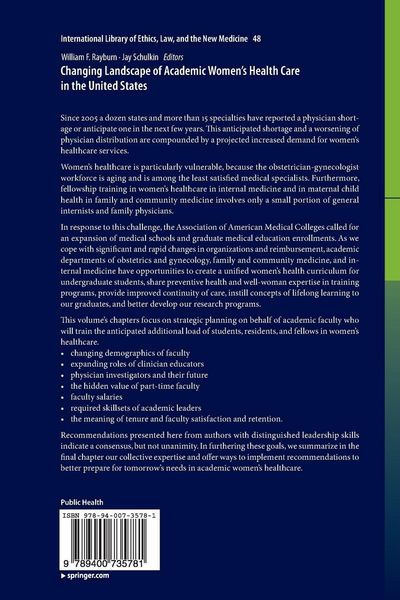
Since 2005 a dozen states and more than 15 specialties have reported a physician shortage or anticipate one in the next few years. This anticipated shortage and a worsening of physician distribution are compounded by a projected increased demand for women’s healthcare services.Women’s healthcare is particularly vulnerable, because the obstetrician-gynecologist workforce is aging and is among the least satisfied medical specialists. Furthermore, fellowship training in women’s healthcare in internal medicine and in maternal child health in family and community medicine involves only a small portion of general internists and family physicians.In response to this challenge, the Association of American Medical Colleges called for an expansion of medical schools and graduate medical education enrollments. As we cope with significant and rapid changes in organizations and reimbursement, academic departments of obstetrics and gynecology, family and community medicine, and internal medicine have opportunities to create a unified women’s health curriculum for undergraduate students, share preventive health and well-woman expertise in training programs, provide improved continuity of care, instill concepts of lifelong learning to our graduates, and better develop our research programs. This volume’s chapters focus on strategic planning on behalf of academic faculty who will train the anticipated additional load of students, residents, and fellows in women’s healthcare. -changing demographics of faculty -expanding roles of clinician educators -physician investigators and their future -the hidden value of part-time faculty -faculty salaries -required skillsets of academic leaders -the meaning of tenure and faculty satisfaction and retention.Recommendations presented here from authors with distinguished leadership skills indicate a consensus, but not unanimity. Infurthering these goals, we summarize in the final chapter our collective expertise and offer ways to implement recommendations to better prepare for tomorrow’s needs in academic women’s healthcare.

Produktdetails

Einband

Taschenbuch

Erscheinungsdatum

29.05.2013

Herausgeber William F. Rayburn + weitere
Verlag Springer Netherland

Produktdetails

Einband

Taschenbuch

Erscheinungsdatum

29.05.2013

Herausgeber
Verlag Springer Netherland
Seitenzahl

176

Maße (L/B/H)

23,5/15,5/1,1 cm

Gewicht

295 g

Auflage

1. Auflage

Sprache

Englisch

ISBN

978-94-007-3578-1

Herstelleradresse

Springer-Verlag GmbH
Tiergartenstr. 17
69121 Heidelberg
DE

Email: ProductSafety@springernature.com

Noch keine Bewertungen vorhanden

Verfassen Sie die erste Bewertung zu diesem Artikel

Helfen Sie anderen Kundinnen und Kunden durch Ihre Meinung.

Kundinnen und Kunden meinen

Bewertungen (0)

  • Produktbild: Changing Landscape of Academic Women's Health Care in the United States
  • Produktbild: Changing Landscape of Academic Women's Health Care in the United States
  • Foreword
    Preface
    Chapter 1: Medical Education 100 years after the Flexner Report
    Chapter 2: Preparing for Medical School and Residency Training Expansion
    Chapter 3: Changing Demographics of Women's Healthcare Faculty
    Chapter 4: Clinician Educators and Their Expanding Roles
    Chapter 5: Physician Investigators and Their Future
    Chapter 6: Part-time Faculty and Their Hidden Value
    Chapter 7: Trends in Faculty Salaries
    Chapter 8: Tenure and Its Many Meanings
    Chapter 9: Faculty Satisfaction and Retention
    Chapter 10: Developing Academic Leaders