Gutscheinbedingungen

**Gültig am 28.06.2026 auf Spielzeug, Schreibwaren, Filme, Geschenke & Trends, Musik, tolino eReader & Zubehör, Hörbücher und Hörbuch-Downloads (außer Abo), nicht preisgebundene Bücher und Kalender online auf thalia.at und in der Thalia App. Einzelne Artikel können ausgeschlossen sein. Aufgrund der Buchpreisbindung sind deutschsprachige Bücher und eBooks ausgenommen. Zusätzlich ausgenommen sind preisgebundene Artikel, Abos & Flatrates, eBooks, Games, Geschenkkarten/-boxen, Shelfies, Software, Zeitschriften sowie einzelne Artikel von tonies®. Pro Einkauf einmal einlösbar. Click & Collect nur bei Onlinevorabzahlung möglich. Keine Barauszahlung. Nicht kombinierbar mit anderen Aktionen und Gutscheinen. Gutschein wird auf max. 500€ Bestellwert angerechnet. Nicht gültig für Versandkosten und Services.

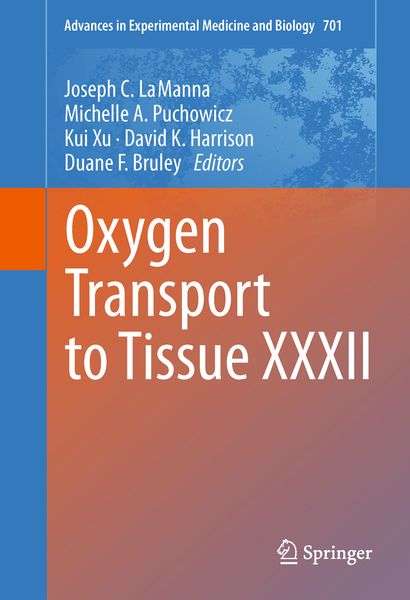
  • Produktbild: Oxygen Transport to Tissue XXXII
  • Produktbild: Oxygen Transport to Tissue XXXII
Band 701 - 12%

Oxygen Transport to Tissue XXXII

12% sparen

289,99 € UVP 329,99 €

inkl. gesetzl. MwSt., Versandkostenfrei


Beschreibung

Produktdetails

Einband

Taschenbuch

Erscheinungsdatum

28.05.2013

Herausgeber

Joseph C. LaManna + weitere

Verlag

Springer Us

Seitenzahl

374

Maße (L/B/H)

23,5/15,5/2,2 cm

Gewicht

610 g

Auflage

2011

Sprache

Englisch

ISBN

978-1-4614-2853-4

Beschreibung

Produktdetails

Einband

Taschenbuch

Erscheinungsdatum

28.05.2013

Herausgeber

Verlag

Springer Us

Seitenzahl

374

Maße (L/B/H)

23,5/15,5/2,2 cm

Gewicht

610 g

Auflage

2011

Sprache

Englisch

ISBN

978-1-4614-2853-4

Herstelleradresse

Springer-Verlag KG
Sachsenplatz 4-6
1201 Wien
AT

Email: GPSR Kontakt

Kundinnen und Kunden meinen

0 Bewertungen

Informationen zu Bewertungen

Zur Abgabe einer Bewertung ist eine Anmeldung im Konto notwendig. Die Authentizität der Bewertungen wird von uns nicht überprüft. Wir behalten uns vor, Bewertungstexte, die unseren Richtlinien widersprechen, entsprechend zu kürzen oder zu löschen.

Die Bewertungen sind nach Format, Anzahl Sterne und Datum sortiert.

Verfassen Sie die erste Bewertung zu diesem Artikel

Helfen Sie anderen Kund*innen durch Ihre Meinung

Kundinnen und Kunden meinen

0 Bewertungen filtern

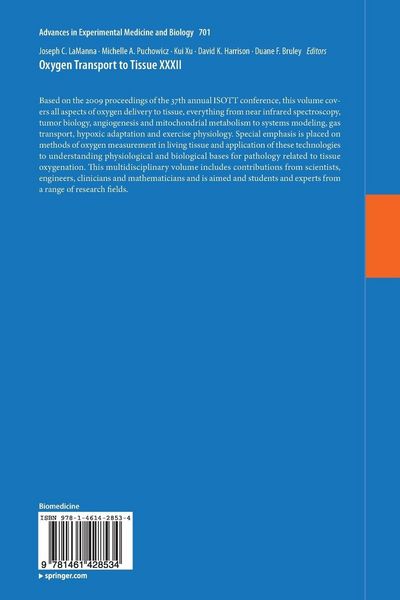
  • Produktbild: Oxygen Transport to Tissue XXXII
  • Produktbild: Oxygen Transport to Tissue XXXII
  • Part 1 – Near Infrared Spectroscopy
    Chapter 1
    The Western Reserve, Edward Morley and Oxygen

    Chapter 2
    Analysis of the Changes in the Oxidation of Brain Tissue Cytochrome c Oxidase in Traumatic Brain Injury Patients during Hypercapnoea: A Broadband NIRS Study

    Chapter 3
    Effects of Assuming Constant Optical Scattering on Haemoglobin Concentration Measurements using NIRS during a Valsalva Manoeuvre

    Chapter 4
    Speech Therapy Changes Blood Circulation and Oxygenation in the Brain and Muscle. A Near-Infrared Spectrophotometry Study

    Part 2 – Oxygen Sensors and Measurement
    Chapter 5
    Evaluation of Lithium Naphthalocyanine (LiNc) Microcrystals for Biological EPR Oximetry

    Chapter 6
    Challenges to Intestinal pO2 Measurement Using EPR

    Chapter 7
    Quantification of Systemic Interference in Optical Topography Data during Frontal Lobe and Motor Cortex Activation: An Independent Component Analysis

    Chapter 8
    Measuring Oxygen in Living Tissue: Intravascular, Interstitial and "Tissue" Oxygen Measurements

    Chapter 9
    Cerebral Oxygenation of the Cortex and Striatum following Normobaric Hyperoxia and Mild Hypoxia in Rats by EPR Oximetry Using Multi-Probe Implantable Resonators

    Chapter 10
    31P-MRS Studies of Melanoma Xenograft Metastatic Potential

    Chapter 11
    Modulation of Tumor Hypoxia by Topical Formulations with Vasodilators for Enhancing Therapy

    Part 3 – Blood and Blood Substitutes
    Chapter 12
    MP4, A Vasodilatory PEGylated Hemoglobin

    Chapter 13
    Zymogen Protein C to Prevent Clotting Without Bleeding During Invasive Medical Procedures

    Part 4 – Tumor Biology
    Chapter 14
    Oxygenation Status of Urogenital Tumors

    Chapter 15
    Tumor pO2 as a Surrogate Marker to Identify Therapeutic Window during Metronomic Chemotherapy of 9L Gliomas

    Chapter 16
    Hypoxia-induced Extracellular Acidosis Increases p-glycoprotein activity and chemoresistance in tumors in vivo via p38 signaling pathway

    Chapter 17
    Evidence Against a Major Role for TKTL-1 in Hypoxic and Normoxic Cancer Cells

    Chapter 18
    NMR Metabolic and Physiological Markers of Therapeutic Response

    Chapter 19
    Characterizing Breast Cancer Mouse Xenografts with T1p-MRI: A Preliminary Study

    Chapter 20
    Effect of AEM Energy Applicator Configuration on Magnetic Nanoparticle Mediated Hyperthermia for Breast Cancer

    Chapter 21
    Highly Specific, NIR Fluorescent Contrast Agent with Emission Controlled by Gold Nanoparticle

    Part 5 – Presidential Symposium
    Chapter 22
    Oral Pioglitazone Reduces Infarction Volume and Improves Neurologic Function Following MCAO in Rats

    Part 6 – Angiogenesis
    Chapter 23
    Chronic Mild Hypoxia Ameliorates Chronic Inflammatory Activity in Myelin Oligodendrocyte Glycoprotein (MOG) Peptide Induced Experimental Autoimmune Encephalomyelitis (EAE)

    Chapter 24
    Effect of Oxygenation on Stem-Cell Therapy for Myocardial Infarction

    Part 7 – Mitochondrial Metabolism
    Chapter 25
    Regulation of Cytosolic and Mitochondrial Oxidation via Malate-Aspartate Shuttle: An Observation Using Dynamic 13C NMR Spectroscopy

    Chapter 26
    In Vivo Assessment of Oxygen Consumption via Deuterium Magnetic Resonance

    Chapter 27
    Elevated Mitochondrial DNA Copy Number and POL- Expression but decreased Expression of TFAM in Murine Intestine following Therapeutic Dose Irradiation

    Chapter 28
    Heterogeneity of Mitochondrial Redox State in Premalignant Pancreas in a PTEN Null Transgenic Mouse Model

    Chapter 29
    Potential Application of 17O MRI to Human Ischemic Stroke

    Part 8 – Development
    Chapter 30
    Fetal Cerebral Oxygenation: The Homeostatic Role of Vascular Adaptations to Hypoxic Stress

    Chapter 31
    Impaired Cerebral Autoregulation Using Near-Infrared Spectroscopy and its Relation to Clinical Outcomes in Premature Infants

    Part 9 – Systems Modeling
    Chapter 32
    Variable ATP Yields and Uncoupling of Oxygen Consumption in Human Brain

    Chapter 33
    Interpretation of NMR Spectroscopy Human Brain Data with Multi-Compartment Computational Model of Cerebral Metabolism

    Chapter 34
    Regional Brain Blood Flow in Mouse: Quantitative Measurement Using Single-Pass Radio-Tracer Method and Mathematical Algorithm

    Part 10 – Microcirculation and Wound Healing
    Chapter 35
    Wound Healing in Diabetes: Hemorheological and Microcirculatory Aspects

    Chapter 36
    Modeling O2-dependent Effects of Nitrite Reductase Activity in Blood and Tissue on Coupled NO and O2 Transport around Arterioles

    Chapter 37
    Skin SO2 Measurement Using Visible Lightguide Spectrophotometry in a Black Population: A Feasibility Study

    Chapter 38
    Antioxidant Properties of Quercetin

    Chapter 39
    Antioxidant Properties of Select Radiation Mitigators Based on Semicarbazone and Pyrazole Derivatives of Curcumin

    Part 11 – Gas Transport
    Chapter 40
    Impact of Intracellular Diffusion of Oxygen in Hypoxic Sensing

    Chapter 41
    The Micropores in the Vitteline Layer of the Eggs of the Dragonfly Oligoaeshna Pryeri: A Preliminary Observation from the View Point of Oxygen Uptake

    Part 12 – Hypoxic Adaptation
    Chapter 42
    A Heat-Shock Protein Co-Inducer Treatment Improves Behavioral Performance in Rats Exposed to Hypoxia

    Chapter 43
    Chronic Intermittent Hypoxia-induced Augmented Cardiorespiratory Outflow Mediated by Vasopressin-V1A Receptor Signaling in the Medulla

    Chapter 44
    The Effect of Inspiration of 12% O2 (balance N2) on Cardiac Output, Respiration, Oxygen Saturation and Oxygen Delivery

    Chapter 45
    Sufficient Oxygen Can Be Transported to Resting Skeletal Muscle

    Part 13 – Exercise Physiology
    Chapter 46
    Skeletal Muscle Perfusion and Oxygenation Assessed by Dynamic NMR Imaging and Spectroscopy

    Chapter 47
    Hemoglobin and Myoglobin Contributions to Skeletal Muscle Oxygenation in Response to Exercise

    Chapter 48
    Estimation of Muscle Fatigue Using Surface Electromyography and Near-Infrared Spectroscopy