KI-Beratung Beta

Gutscheinbedingungen

**Gültig am 20.11.2026 ab einem Mindestbestellwert von 30€ auf Spielzeug, Schreibwaren, Filme, Geschenke & Trends, Musik, tolino eReader & Zubehör, Hörbücher und Hörbuch-Downloads, nicht preisgebundene Bücher und Kalender online auf thalia.at und in der Thalia App. Einzelne Artikel können ausgeschlossen sein. Aufgrund der Buchpreisbindung sind deutschsprachige Bücher und eBooks ausgenommen. Zusätzlich ausgenommen sind Abos & Flatrates, Games, Geschenkkarten/-boxen, Shelfies, Software, Zeitschriften sowie einzelne Artikel von tonies®. Pro Einkauf einmal einlösbar. Click & Collect nur bei Onlinevorabzahlung möglich. Keine Barauszahlung. Nicht kombinierbar mit anderen Aktionen und Gutscheinen. Gutschein wird auf max. 500€ Bestellwert angerechnet. Nicht gültig für Versandkosten und Services. Preisgebundene Artikel sind vom Mindestbestellwert ausgeschlossen.

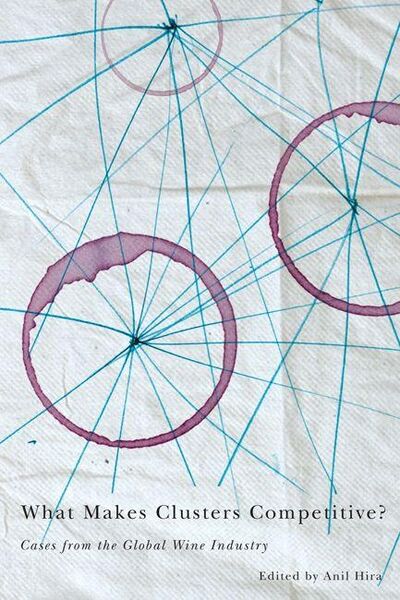
Produktbild: Hira, A: What Makes Clusters Competitive?

Hira, A: What Makes Clusters Competitive? Cases from the Global Wine Industry

45,99 €

inkl. gesetzl. MwSt., Versandkostenfrei


Beschreibung

While global competitiveness is increasingly invoked as necessary for economic success stories, there are few answers available about how it can be achieved or maintained. The idea of stimulating industries to spur on economies is often proposed, but industrial policy can be seen as a boondoggle of government...

Beschreibung

While global competitiveness is increasingly invoked as necessary for economic success stories, there are few answers available about how it can be achieved or maintained. The idea of stimulating industries to spur on economies is often proposed, but industrial policy can be seen as a boondoggle of government spending, and theorists of globalization are doubtful that such efforts can succeed in a world of fragmented supply chains. What Makes Clusters Competitive? tests fundamental theoretical hypotheses about what makes industries competitive in a globalized world by using the wine industries of several countries as case studies: Extremadura (Spain), Tuscany (Italy), South Australia, Chile, and British Columbia (Canada), Taking into account historical and location-specific characteristics, and drawing out policy lessons for other regions that would like to promote their industries, this volume demonstrates the value of applying cluster theory to understand market forces, while also describing the forces underlying the development of the wine industry in a range of different settings. An excellent resource for those interested in what makes industries succeed or struggle, What Makes Clusters Competitive? offers guidance for policymakers and the private sector on how to promote local industries. Contributors include David Aylward, Alexis Bwenge, Sara Daniele, F.J. Mesías Díaz, Christian Felzenstein, Husam Gabreldar, F. Pulido García, Sarah Giest, Elisa Giuliani, Andy Hira, Mike Howlett, A.F. Pulido Moreno, and Oriana Perrone.

Rezension

"What Makes Clusters Competitive? is an interesting, well-integrated contribution both as an application of cluster theory as well as an analysis of the forces underlying the development of the international wine industry." Kym Anderson, professor of economics and executive director of the Wine Economics Research Centre, University of Adelaide

Produktdetails

Einband

Taschenbuch

Erscheinungsdatum

27.11.2013

Verlag Mcgill-Queen's University Press
Seitenzahl

280

Produktdetails

Einband

Taschenbuch

Erscheinungsdatum

27.11.2013

Verlag Mcgill-Queen's University Press
Seitenzahl

280

Maße (L/B/H)

22,6/15/1,8 cm

Gewicht

408 g

Sprache

Englisch

ISBN

978-0-7735-4260-0

Herstelleradresse

Mare Nostrum Group B.V.
Doelen 72
4831 GR Breda
NL
gpsr@mare-nostrum.co.uk

Noch keine Bewertungen vorhanden

Verfassen Sie die erste Bewertung zu diesem Artikel

Helfen Sie anderen Kundinnen und Kunden durch Ihre Meinung.

Kundinnen und Kunden meinen

Bewertungen (0)

Die Leseprobe wird geladen.
  • Produktbild: Hira, A: What Makes Clusters Competitive?