KI-Beratung Beta

Gutscheinbedingungen

**Gültig bis 30.11.2026 auf Spielzeug, Schreibwaren, Filme, Geschenke & Trends, Musik, tolino eReader & Zubehör, Hörbücher und Hörbuch-Downloads, nicht preisgebundene Bücher und Kalender online auf thalia.at und in der Thalia App. Einzelne Artikel können ausgeschlossen sein. Aufgrund der Buchpreisbindung sind deutschsprachige Bücher und eBooks ausgenommen. Zusätzlich ausgenommen sind Abos & Flatrates, Games, Geschenkkarten/-boxen, Shelfies, Software, Zeitschriften sowie einzelne Artikel von tonies®. Pro Einkauf einmal einlösbar. Nur gültig mit im Onlineshop hinterlegter Bonuscard. Click & Collect nur bei Onlinevorabzahlung möglich. Keine Barauszahlung. Nicht kombinierbar mit anderen Aktionen und Gutscheinen. Gutschein wird auf max. 500€ Bestellwert angerechnet. Nicht gültig für Versandkosten und Services.

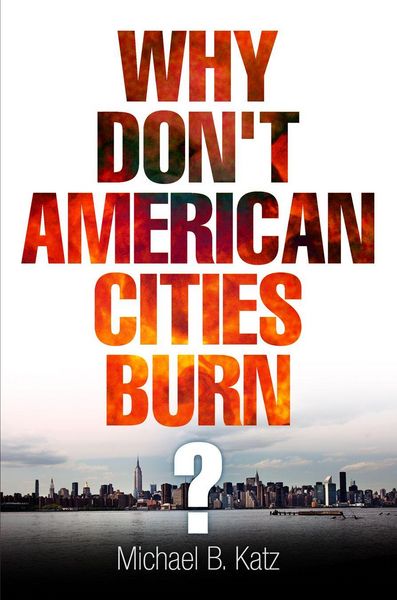
Produktbild: Why Don't American Cities Burn?

Why Don't American Cities Burn?

45,99 €

inkl. gesetzl. MwSt., Versandkostenfrei


Beschreibung

At 1:27 on the morning of August 4, 2005, Herbert Manes fatally stabbed Robert Monroe, known as Shorty, in a dispute over five dollars. It was a horrific yet mundane incident for the poor, heavily African American neighborhood of North Philadelphia-one of seven homicides to occur in the city that day...

Beschreibung

At 1:27 on the morning of August 4, 2005, Herbert Manes fatally stabbed Robert Monroe, known as Shorty, in a dispute over five dollars. It was a horrific yet mundane incident for the poor, heavily African American neighborhood of North Philadelphia-one of seven homicides to occur in the city that day and yet not make the major newspapers. For Michael B. Katz, an urban historian and a juror on the murder trial, the story of Manes and Shorty exemplified the marginalization, social isolation, and indifference that plague American cities.
Introduced by the gripping narrative of this murder and its circumstances, Why Don't American Cities Burn? charts the emergence of the urban forms that underlie such events. Katz traces the collision of urban transformation with the rightward-moving social politics of late twentieth- and early twenty-first-century America. He shows how the bifurcation of black social structures produced a new African American inequality and traces the shift from images of a pathological black "underclass" to praise of the entrepreneurial poor who take advantage of new technologies of poverty work to find the beginning of the path to the middle class. He explores the reasons American cities since the early 1970s have remained relatively free of collective violence while black men in bleak inner-city neighborhoods have turned their rage inward on one another rather than on the agents and symbols of a culture and political economy that exclude them.
The book ends with a meditation on how the political left and right have come to believe that urban transformation is inevitably one of failure and decline abetted by the response of government to deindustrialization, poverty, and race. How, Katz asks, can we construct a new narrative that acknowledges the dark side of urban history even as it demonstrates the capacity of government to address the problems of cities and their residents? How can we create a politics of modest hope?

Produktdetails

Einband

Taschenbuch

Erscheinungsdatum

17.10.2013

Abbildungen

15 illus.

Verlag University Of Pennsylvania Press

Produktdetails

Einband

Taschenbuch

Erscheinungsdatum

17.10.2013

Abbildungen

15 illus.

Verlag University Of Pennsylvania Press
Seitenzahl

224

Maße (L/B/H)

22,6/15/1,8 cm

Gewicht

386 g

Sprache

Englisch

ISBN

978-0-8122-2280-7

Herstelleradresse

Libri GmbH
Europaallee 1
36244 Bad Hersfeld
DE

Email: gpsr@libri.de

Noch keine Bewertungen vorhanden

Verfassen Sie die erste Bewertung zu diesem Artikel

Helfen Sie anderen Kundinnen und Kunden durch Ihre Meinung.

Kundinnen und Kunden meinen

Bewertungen (0)

Die Leseprobe wird geladen.
  • Produktbild: Why Don't American Cities Burn?