KI-Beratung Beta

Gutscheinbedingungen

**Gültig am 15.10.2026 auf Spielzeug, Schreibwaren, Filme, Geschenke & Trends, Musik, tolino eReader & Zubehör, Hörbücher und Hörbuch-Downloads, nicht preisgebundene Bücher und Kalender in der Thalia App. Einzelne Artikel können ausgeschlossen sein. Aufgrund der Buchpreisbindung sind deutschsprachige Bücher und eBooks ausgenommen. Zusätzlich ausgenommen sind Abos & Flatrates, Games, Geschenkkarten/-boxen, Shelfies, Software, Zeitschriften sowie einzelne Artikel von tonies®. Pro Einkauf einmal einlösbar. Click & Collect nur bei Onlinevorabzahlung möglich. Keine Barauszahlung. Nicht kombinierbar mit anderen Aktionen und Gutscheinen. Gutschein wird auf max. 500€ Bestellwert angerechnet. Nicht gültig für Versandkosten und Services.

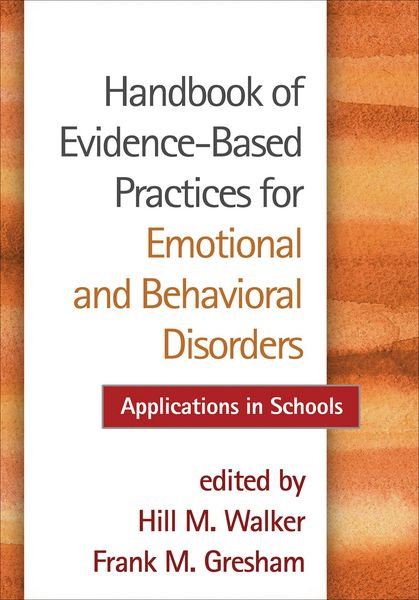
Produktbild: Handbook of Evidence-Based Practices for Emotional and Behavioral Disorders

Handbook of Evidence-Based Practices for Emotional and Behavioral Disorders Applications in Schools

167,99 €

inkl. gesetzl. MwSt., Versandkostenfrei


Beschreibung

Produktdetails

Einband

Gebundene Ausgabe

Erscheinungsdatum

13.09.2013

Herausgeber

Hill M. Walker + weitere

Verlag

KNV Besorgung

Seitenzahl

622

Maße (L/B/H)

26,1/18,4/4 cm

Gewicht

1290 g

Sprache

Englisch

ISBN

978-1-4625-1216-4

Beschreibung

Rezension

"Edited by two giants in the field, this handbook is logically organized into relevant sections, with thorough coverage ranging from educational interventions to genetic factors. Critical strengths include a focus on research foundations and evidence-based practices and a clear discussion of what is and is not known about this population. Chapter authors are outstanding scholars in their specialties. Far superior to other edited volumes in this area in terms of organization, coverage, and author quality, the Handbook is a 'must buy' for specialists in behavior disorders and challenges."--Dan Reschly, PhD, Department of Special Education, Peabody College of Vanderbilt University "Walker and Gresham have provided a major gift to the field. Leading experts on EBD present the foundations and specific intervention guidance needed by teachers, school psychologists, administrators, and researchers. The field of special education is changing--multi-tiered systems of support and integrated approaches to linking mental health, academic instruction, and behavioral intervention are now expected. This handbook defines the best science for assisting children with EBD and their families, while also addressing the organizational variables and data systems necessary to deliver this science. An impressive accomplishment."--Robert H. Horner, PhD, AlumniKnight Endowed Professor of Special Education, University of Oregon "I have adopted the Handbook of Evidence-Based Practices for Emotional and Behavioral Disorders as the central text for my Psychotherapeutic Interventions course. In my experience, the term 'best practice' is often thrown about without an adequate understanding of what it means. This volume provides a comprehensive look at the evidence base for a variety of assessment practices, interventions, and service delivery models used for children and adolescents with EBD, and helps students and practitioners examine current practices in light of research."--Adam D. Weaver, PhD, Department of Psychology, University of Nebraska at Omaha "While every educator now recognizes the importance of evidence-based practices with all students, busy K-12 practitioners do not have the time to read all the literature, separate research from opinion, and further separate quality research from the rest. That distillation process has been done for us by Walker and Gresham in this invaluable handbook. The volume provides an indispensable roadmap and travel guide to the implementation of best practices. When implemented well, these practices can transform the trajectories of our most challenging-to-teach students."--Randy Sprick, PhD, Director, Safe and Civil Schools

Portrait

Hill M. Walker, PhD, is Founder and Co-Director of the Institute on Violence and Destructive Behavior and Professor Emeritus in the Department of Special Education and Clinical Sciences at the University of Oregon, and is Senior Scientist at the Oregon Research Institute. The only faculty member to receive the University of Oregon's highest honor, the Presidential Medal, Dr. Walker is also a recipient of honors including the Distinguished Achievement Award from the Association of University Centers on Disabilities and the Kauffman-Hallahan Distinguished Researcher Award from the Division for Research of the Council for Exceptional Children. His research and more than 175 publications focus on social skills assessment, intervention and curricular development, early intervention and prevention with at-risk children and students, longitudinal research on students with EBD and their families, and behavioral-ecological approaches to school intervention.Frank M. Gresham, PhD, is Professor in the Department of Psychology at Louisiana State University. He is a Fellow of the American Psychological Association (APA) and of APA Divisions 16 (School Psychology), 5 (Quantitative and Qualitative Methods), and 53 (Society for Clinical Child and Adolescent Psychology). He is a recipient of the Lightner Witmer Award and the Senior Scientist Award from APA Division 16. Dr. Gresham is one of the few psychologists to be awarded Fellow status in the American Association for the Advancement of Science. His research and more than 260 publications address topics including social skills assessment and intervention, response to intervention, and assessment and interventions for students with emotional and behavioral disorders. He is codeveloper of the Social Skills Improvement System Rating Scales.
Produktdetails

Einband

Gebundene Ausgabe

Erscheinungsdatum

13.09.2013

Herausgeber

Verlag

KNV Besorgung

Seitenzahl

622

Maße (L/B/H)

26,1/18,4/4 cm

Gewicht

1290 g

Sprache

Englisch

ISBN

978-1-4625-1216-4

Herstelleradresse

Libri GmbH
Europaallee 1
36244 Bad Hersfeld
DE

Email: gpsr@libri.de

Noch keine Bewertungen vorhanden

Verfassen Sie die erste Bewertung zu diesem Artikel

Helfen Sie anderen Kundinnen und Kunden durch Ihre Meinung.

Kundinnen und Kunden meinen

Bewertungen (0)

Weitere Artikel finden Sie in

Die Leseprobe wird geladen.
  • Produktbild: Handbook of Evidence-Based Practices for Emotional and Behavioral Disorders
  • Prologue: On Following the Scientific Evidence, James M. KauffmanI. Foundations1. Evaluating the Evidence Base for Emotional and Behavioral Disorders in Schools, Frank M. Gresham and Hill M. Walker2. Empirically Supported School-Based Mental Health Programs Targeting Academic and Mental Health Functioning: An Update, Hilary B. Vidair, Danielle Sauro, Jacquelyn B. Blocher, Laura A. Scudellari, and Kimberly Eaton Hoagwood3. Multicultural Issues for Schools and Students with Emotional and Behavioral Disorders: Disproportionality in Discipline and Special Education, Russell J. Skiba, Laura V. Middelberg, and Maryellen Brunson McClain4. Legislation, Regulation, Litigation, and the Delivery of Support Services to Students with Emotional and Behavioral Disorders in School Settings, Mitchell L. Yell, Shelley Neilsen Gatti, and R. Allan Allday5. Longitudinal Outcomes and PostâEUR"High School Status of Students with Emotional and Behavioral Disorders, Mary Wagner6. The Interface between Child Psychiatry and Special Education in the Treatment of Students with Emotional and Behavioral Disorders in School Settings, Richard E. MattisonII. Screening, Performance Monitoring, and Assessment7. Screening and Identification Approaches for Detecting Students at Risk, Kathleen Lynne Lane, Wendy Peia Oakes, Holly Mariah Menzies, and Kathryn A. Germer8. Social Skills Assessment and Training in Emotional and Behavioral Disorders, Frank M. Gresham and Stephen N. Elliott9. Progress Monitoring Methods and Tools for Academic Performance, Mark R. Shinn10. Behavioral Universal Screening and Progress Monitoring with Web-Based Technology, Brion Marquez, Pamela Yeaton, and Claudia Vincent11. Systematic Progress Monitoring of Students with Emotional and Behavioral Disorders: The Promise of Change-Sensitive Brief Behavior Rating Scales, Clayton R. Cook, Robert J. Volpe, and John Delport12. Strength-Based Assessment Issues, Tools, and Practices in School-Related Contexts and Schools in the United States and Finland, Regina M. Oliver, Cynthia J. Cress, and Hannu Savolainen, and Michael H. Epstein13. Conducting Functional Behavior Assessments for Students with Emotional/Behavioral Disorders, Brian K. Martens and Tonya L. LambertIII. Interventions Targeting Specific Disorders and Settings14. Applying Positive Behavior Interventions and Supports in Alternative Education Programs and Secure Juvenile Facilities, Jeffrey R. Sprague, Kristine Jolivette, and C. Michael Nelson15. Bullying and Aggression in School Settings, Stephen S. Leff, Christine Waanders, Tracy Evian Waasdorp, and Brooke S. Paskewich16. Interventions for Students with Attention-Deficit/ Hyperactivity Disorder: School and Home Contexts, George J. DuPaul, Seth D. Laracy, and Matthew J. Gormley17. Empirically Based Targeted Prevention Approaches for Addressing Externalizing and Internalizing Behavior Disorders within School Contexts, John R. Seeley, Herbert H. Severson, and Amanda A. M. Fixsen18. Evidence-Based Intervention Approaches for Students with Anxiety and Related Disorders, Anna J. Swan, Colleen M. Cummings, Nicole E. Caporino, and Philip C. Kendall19. Secondary Education and Promising Practices for Students with Emotional/Behavioral Disorders, Douglas A. Cheney, Therese M. Cumming, and Tal SlemrodIV. Generic Intervention Approaches20. Addressing the Academic Problems and Challenges of Students with Emotional and Behavioral Disorders, J. Ron Nelson, Gregory J. Benner, and Janet Bohaty21. School-Based Wraparound for Adolescents: The RENEW Model for Transition-Age Youth with or at Risk Emotional and Behavioral Disorders, Lucille Eber, JoAnne M. Malloy, Jennifer Rose, and Ami Flamini22. The Role of School Mental Health Models in Preventing and Addressing ChildrenâEUR(TM)s Emotional and Behavioral Problems, Steven W. Evans, Tiffany Rybak, Holly Strickland, and Julie Sarno Owens23. Improving Transition Outcomes for Students with Emotional and Behavioral Disorders, Deanne K. Unruh and Christopher J.