Gutscheinbedingungen

**Gültig bis 06.07.2026 auf fremdsprachige Bücher online auf thalia.at, in der Thalia App ab einem Mindestbestellwert von 30€ und in allen Thalia Buchhandlungen in Österreich. In den Buchhandlungen nur gültig auf lagernde Ware. Einzelne Artikel können ausgeschlossen sein. Ausgenommen sind preisgebundene Artikel & eBooks. Pro Einkauf einmal einlösbar. Nur gültig gegen Vorlage oder im Onlineshop hinterlegter Bonuscard. Infos zur Einlösung in der Buchhandlung sind auf der Bonuscard-Vorteilspreisseite zu finden. Click & Collect nur bei Onlinevorabzahlung möglich. Keine Einlösung bei Scan & Go-Bezahlung. Keine Barauszahlung. Nicht kombinierbar mit anderen Aktionen und Gutscheinen. Gutschein wird auf max. 500€ Bestellwert angerechnet. Nicht gültig für Versandkosten und Services.

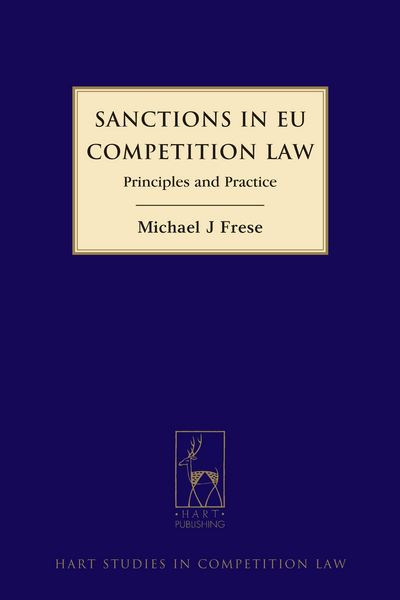
Produktbild: Sanctions in Eu Competition Law

Sanctions in Eu Competition Law Principles and Practice

203,99 €

inkl. gesetzl. MwSt., Versandkostenfrei


Beschreibung

Produktdetails

Einband

Gebundene Ausgabe

Erscheinungsdatum

01.03.2014

Verlag

Hart Publishing

Seitenzahl

312

Maße (L/B/H)

24/16,1/2,1 cm

Gewicht

637 g

Sprache

Englisch

ISBN

978-1-84946-518-2

Beschreibung

Produktdetails

Einband

Gebundene Ausgabe

Erscheinungsdatum

01.03.2014

Verlag

Hart Publishing

Seitenzahl

312

Maße (L/B/H)

24/16,1/2,1 cm

Gewicht

637 g

Sprache

Englisch

ISBN

978-1-84946-518-2

Herstelleradresse

Libri GmbH
Europaallee 1
36244 Bad Hersfeld
DE

Email: gpsr@libri.de

Noch keine Bewertungen vorhanden

Verfassen Sie die erste Bewertung zu diesem Artikel

Helfen Sie anderen Kundinnen und Kunden durch Ihre Meinung.

Kundinnen und Kunden meinen

Bewertungen (0)

Die Leseprobe wird geladen.
  • Produktbild: Sanctions in Eu Competition Law
  • 1 General Introduction
    2 The Decentralisation of EU Competition Law 6
    2.1 Introduction
    2.2 Shared Administration
    2.3 Sanctioning Autonomy
    2.4 Cooperation and Coordination
    2.5 Conclusion
    3 The Economics of Decentralisation
    3.1 Introduction
    3.2 Economic Considerations in the Allocation of Competences
    3.3 Transaction Costs and Diseconomies of Scale
    3.4 Information Advantages
    3.5 Accommodating Domestic Preferences
    3.6 Regulatory Competition
    3.7 Regulatory Innovation
    3.8 Conclusion
    4 Uncovering EU Sanctioning Principles
    4.1 Introduction
    4.2 EU Principles in the National Legal Order
    4.3 Sanctioning Principles in Articles 101 and 102 TFEU
    4.4 Sanctioning Principles in the Free Movement Rights
    4.5 Sanctioning Principles in the Fundamental Rights
    4.6 Sanctioning Principles in the Duty of Sincere Cooperation
    4.7 Conclusion
    5 The Development of Domestic Sanctioning Powers
    5.1 Introduction
    5.2 Institutional Enforcement Frameworks
    5.3 Interim Measures
    5.4 Early Resolution Measures
    5.5 Declaratory Findings
    5.6 Reparatory Sanctions
    5.7 Pecuniary Sanctions
    5.8 Custodial Sanctions
    5.9 Disqualification Orders
    5.10 Conclusion
    6 Economies and Diseconomies in the Division of Sanctioning Competences
    6.1 Introduction
    6.2 Cost-Reducing Sanctioning Principles and Convergence Tendencies
    6.3 Domestic Preferences and the Efficient Use of Enforcement Expenditures
    6.4 Innovation through Decentralisation
    7 General Conclusions
    7.1 Sanctioning Principles, Convergence Tendencies and Enforcement Costs
    7.2 Reflections and Recommendations