
Gutscheinbedingungen

**Gültig bis 17.08.2026 auf Schreibwaren & Office-Artikel online auf thalia.at, in der Thalia App und in teilnehmenden Thalia Buchhandlungen in Österreich mit Schulsortiment. In den Buchhandlungen nur gültig auf lagernde Ware. Einzelne Artikel können ausgeschlossen sein. Ausgenommen sind preisgebundene Artikel. Pro Einkauf einmal einlösbar. Nur gültig gegen Vorlage oder im Onlineshop hinterlegter Bonuscard. Infos zur Einlösung in der Buchhandlung sind auf der Bonuscard-Vorteilspreisseite zu finden. Click & Collect nur bei Onlinevorabzahlung möglich. Keine Einlösung bei Scan & Go-Bezahlung. Keine Barauszahlung. Nicht kombinierbar mit anderen Aktionen und Gutscheinen. Gutschein wird auf max. 500€ Bestellwert angerechnet. Nicht gültig für Geschenkkarten, Versandkosten und Services.

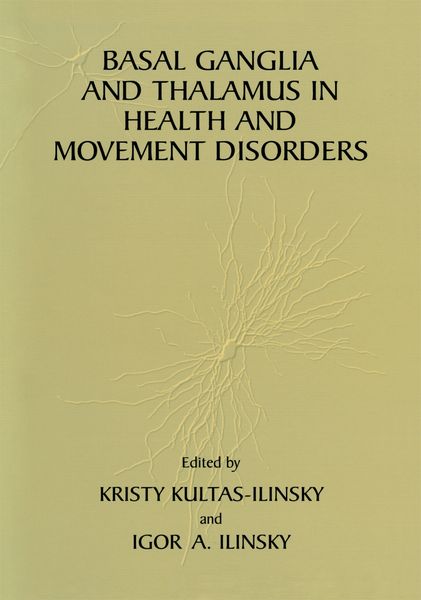
  • Produktbild: Basal Ganglia and Thalamus in Health and Movement Disorders
  • Produktbild: Basal Ganglia and Thalamus in Health and Movement Disorders

Basal Ganglia and Thalamus in Health and Movement Disorders

148,99 €

inkl. gesetzl. MwSt., Versandkostenfrei


Beschreibung

Produktdetails

Einband

Taschenbuch

Erscheinungsdatum

26.10.2012

Herausgeber

Kristy Kultas-Ilinsky + weitere

Verlag

Springer Us

Seitenzahl

378

Maße (L/B/H)

25,4/17,8/2,2 cm

Gewicht

758 g

Auflage

Softcover reprint of the original 1st ed. 2001

Sprache

Englisch

ISBN

978-1-4613-5454-3

Beschreibung

Produktdetails

Einband

Taschenbuch

Erscheinungsdatum

26.10.2012

Herausgeber

Verlag

Springer Us

Seitenzahl

378

Maße (L/B/H)

25,4/17,8/2,2 cm

Gewicht

758 g

Auflage

Softcover reprint of the original 1st ed. 2001

Sprache

Englisch

ISBN

978-1-4613-5454-3

Herstelleradresse

Springer-Verlag GmbH
Tiergartenstr. 17
69121 Heidelberg
DE

Email: GPSR Kontakt

Noch keine Bewertungen vorhanden

Verfassen Sie die erste Bewertung zu diesem Artikel

Helfen Sie anderen Kundinnen und Kunden durch Ihre Meinung.

Kundinnen und Kunden meinen

Bewertungen (0)

  • Produktbild: Basal Ganglia and Thalamus in Health and Movement Disorders
  • Produktbild: Basal Ganglia and Thalamus in Health and Movement Disorders
  • Part I: Basal Ganglia Circuitry in Movement Disorders: Historical Perspective and Overview of the Current Status of the Field. What We Know and What We Have Left to Learn; A.B. Young, J.B. Penney. Basal Ganglia Circuits in Movement and Movement Disorders; T. Wichmann, M. DeLong. Part II: Anatomical and Functional Organization of Basal Ganglia and Motor Thalamic Circuits. Microcircuits of the Striatum; J.P. Bolam, M.D. Bevan. Local and Efferent Neurons and Intrinsic Modular Arrangement of the Human Striatum; T. Leontovich. Efferent Connections of the Human Striatum and Pallidum: A Nauta Degeneration Study; A. Morel, et al. Cognitive Aspects of the Motor Function of the Striatum; B.F. Tolkunov, et al. Neuroanatomical Organization and Connections of the Motor Thalamus in Primates; I.A. Ilinsky, K. Kultas-Ilinsky. Pallidal and Cortical Determinants of Thalamic Activity; M.E. Anderson, et al. Physiological Evidence for Spinal Cord Input to the Motor Thalamus; R. Mackel. Part III: Neurotransmitters, Receptors and Their Role in Motor Behavior. Chemical Anatomy and Synaptic Connectivity of the Globus Pallidus and Subthalamic Nucleus; Y. Smith, et al. Effects of Dopamine Receptor Stimulation on Basal Ganglia Activity; J.R. Walters, et al. Physiological Roles of Multiple Metabotropic Glutamate Receptor Subtypes in the Rat Basal Ganglia; P.J. Conn, et al. Muscarinic Receptors of the Dorsal Striatum: Role in Regulation of Motor Behavior; K. Shapovalova. Part IV: Movement and Sleep Disorders as Related to Basal Ganglia-Thalamic Circuits. Functional Organization of Brainstem-Basal Ganglia Interactions as Viewed From the Pedunculopontine Region; G.L. Keating, D.B. Rye. Fatal Familial Insomnia: A Disease Model Emphasizing the Role of the Thalamus in the Regulation of the Sleep-Wake Cycle and Other Circadian Rhythms; P. Avoni, et al. Part V: Plasticity in Movement Disorders. Plasticity and Basal Ganglia Disorders; M. Hallet. Mechanisms of Subthalamic Dysfunction in Parkinson's Disease; M.-F. Chesselet, et al. Neurotransmitters and Receptors in the Primate Motor Thalamus and Potential for Plasticity; K. Kultas-Ilinsky, I.A. Ilinsky. Microelectrode Studies of Basal Ganglia and VA, VL and VP Thalamus in Patients with Dystonia: Dystonia-Related Activity and Somatic Sensory Reorganization; F.A. Lenz, et al. Part VI: Neuronal Activity in Movement Disorders. Physiology of Globus Pallidus Neurons in Movement Disorders; M. Filion. Physiology of Subthalmic Nucleus Neurons in Animal Models of Parkinson's Disease; A. Benazzouz, et al. The Motor Thalamus: Alteration of Neuronal Activity in the Parkinsonian State; C. Elder, J. Vitek. Neuronal Activity In Motor Thalamus of Parkinson's Disease Patients; J.O. Dostrovsky, et al. Electrophysiological Insights Into the Motor Control System in Parkinsonism; S. Raeva. Behavior of Thalamic Neurons in the Movement Disorders - Tremor and Dystonia; C. Ohye, T. Shibazaki. The Motor Control Output Forming in Healthy Subjects and Parkinson's Disease Patients; S. Romanov, M.G. Pchelin. Part VII: Mechanisms and Efficiency of Novel Treatments for Movement Disorders. How Are We Inhibiting Functional Targets with High Frequency Stimulation? A.L. Benabid, et al. Is There a Single Best Surgical Procedure for the Alleviation of Parkinson's Disease? T. Aziz, et al. Thalamic Surgery for Tremor; A. Lozano, et al. What is the Influence of Subthalamic Nuc