KI-Beratung Beta

Gutscheinbedingungen

**Gültig am 20.11.2026 ab einem Mindestbestellwert von 30€ auf Spielzeug, Schreibwaren, Filme, Geschenke & Trends, Musik, tolino eReader & Zubehör, Hörbücher und Hörbuch-Downloads, nicht preisgebundene Bücher und Kalender online auf thalia.at und in der Thalia App. Einzelne Artikel können ausgeschlossen sein. Aufgrund der Buchpreisbindung sind deutschsprachige Bücher und eBooks ausgenommen. Zusätzlich ausgenommen sind Abos & Flatrates, Games, Geschenkkarten/-boxen, Shelfies, Software, Zeitschriften sowie einzelne Artikel von tonies®. Pro Einkauf einmal einlösbar. Click & Collect nur bei Onlinevorabzahlung möglich. Keine Barauszahlung. Nicht kombinierbar mit anderen Aktionen und Gutscheinen. Gutschein wird auf max. 500€ Bestellwert angerechnet. Nicht gültig für Versandkosten und Services. Preisgebundene Artikel sind vom Mindestbestellwert ausgeschlossen.

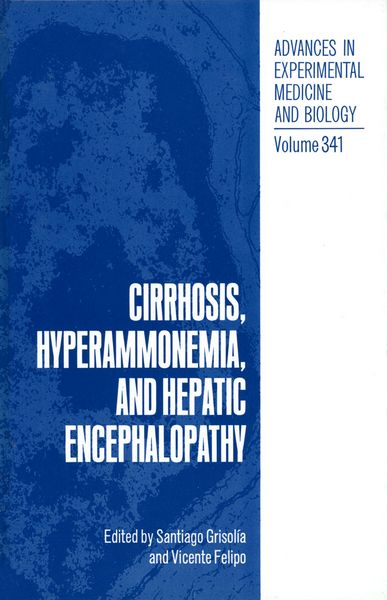
Produktbild: Cirrhosis, Hyperammonemia, and Hepatic Encephalopathy
Band 341

Cirrhosis, Hyperammonemia, and Hepatic Encephalopathy

51,99 €

inkl. gesetzl. MwSt., Versandkostenfrei


Beschreibung

This volume contains the papers presented in the International Summer Course on "Cirrhosis, Hyperammonemia and Hepatic Encephalopathy," which was one of the prestigious Summer Course, of the Complutense University of Madrid held in EI Escorial, Spain, during August 10-14, 1992. Liver cirrhosis is one...

Beschreibung

This volume contains the papers presented in the International Summer Course on "Cirrhosis, Hyperammonemia and Hepatic Encephalopathy," which was one of the prestigious Summer Course, of the Complutense University of Madrid held in EI Escorial, Spain, during August 10-14, 1992. Liver cirrhosis is one of the main causes of death in western countries. In addition there is a series of liver dysfunctions including fulminant hepatic failure, Reye's syndrome and congenital defects of urea cycle enzymes that could lead to hepatic encephalopathy, coma and death. As a consequence of impaired liver function, the ability to detoxify ammonia by its incorporation into urea is diminshed, resulting in increased ammonia levels in blood and brain. Hyperammonemia is considered one of the main factors in the mediation of hepatic encephalopathy and the classical clinical treatments are directed towards reducing blood ammonia levels. A part of the book is therefore devoted to the study of certain aspects of ammonia metabolism such as the regulation of the urea cycle, the main mechanism of ammonia detoxification in mammals, which is located mainly in the liver. The metabolism of ammonia in other tissues, including brain, is also presented, as well as the effects of hyperammonemia on brain metabolism and function and on brain microtubules. The control of cerebral protein breakdown is reviewed. The classical and some recently proposed clinical treatments as well as nutritional considerations in the management of patients with liver failure are also discussed.

Produktdetails

Einband

Taschenbuch

Erscheinungsdatum

05.11.2012

Abbildungen

VIII, 148 p.

Herausgeber Santiago Grisolía + weitere

Produktdetails

Einband

Taschenbuch

Erscheinungsdatum

05.11.2012

Abbildungen

VIII, 148 p.

Herausgeber
Verlag Springer Us
Seitenzahl

148

Maße (L/B/H)

25,4/17,8/0,9 cm

Gewicht

315 g

Auflage

1993

Sprache

Englisch

ISBN

978-1-4613-6058-2

Herstelleradresse

Springer-Verlag KG
Sachsenplatz 4-6
1201 Wien
AT

Email: ProductSafety@springernature.com

Noch keine Bewertungen vorhanden

Verfassen Sie die erste Bewertung zu diesem Artikel

Helfen Sie anderen Kundinnen und Kunden durch Ihre Meinung.

Kundinnen und Kunden meinen

Bewertungen (0)

  • Produktbild: Cirrhosis, Hyperammonemia, and Hepatic Encephalopathy
  • Control of Urea Synthesis and Ammonia Detoxification.- Brain Metabolism in Hepatic Encephalopathy and Hyperammonemia.- Ammonia Metabolism in Mammals: Interorgan Relationship.- Clinical Manifestations and Therapy of Hepatic Encephalopathy.- Nutritional Considerations in Patients with Hepatic Failure.- Do Benzodiazepine Ligands Contribute to Hepatic Encephalopathy?.- Effects of Hyperammonemia on Neuronal Function: NH4+, IPSP Cl—Extrusion.- Activation of NMDA Receptor Mediates the Toxicity of Ammonia and the Effects of Ammonia on the Microtubule-Associated Protein MAP-2.- Modulation of the Exocytotic Release of Neurotransmitter Glutamate by Protein Kinase C.- Controls of Cerebral Protein Breakdown.- Two Different Families of NMDA Receptors in Mammalian Brain: Physiological Function and Role in Neuronal Development and Degeneration.- Glanglioside GM1 and its Semisynthetic Lysogangliosides Reduce Glutamate Neurotoxicity by a Novel Mechanism.- Contributors.