Gutscheinbedingungen

**Gültig bis 15.06.2026 auf Spiele & Spielzeug online auf thalia.at, in der Thalia App ab einem Mindestbestellwert von 30€ und in allen Thalia Buchhandlungen in Österreich. In den Buchhandlungen nur gültig auf lagernde Ware. Einzelne Artikel können ausgeschlossen sein. Ausgenommen sind preisgebundene Artikel sowie online auf thalia.at und in der Thalia App einzelne Artikel von tonies®. Pro Einkauf einmal einlösbar. Nur gültig gegen Vorlage oder im Onlineshop hinterlegter Bonuscard. Infos zur Einlösung in der Buchhandlung sind auf der Bonuscard-Vorteilspreisseite zu finden. Click & Collect nur bei Onlinevorabzahlung möglich. Keine Einlösung bei Scan & Go-Bezahlung. Keine Barauszahlung. Nicht kombinierbar mit anderen Aktionen und Gutscheinen. Gutschein wird auf max. 500€ Bestellwert angerechnet. Nicht gültig für Geschenkkarten, Versandkosten und Services.

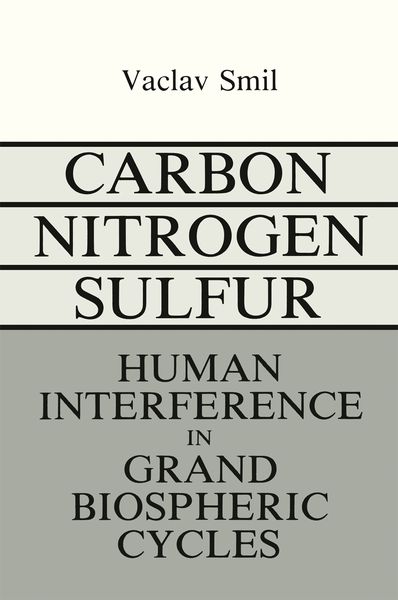
  • Produktbild: Carbon-Nitrogen-Sulfur
  • Produktbild: Carbon-Nitrogen-Sulfur

Carbon-Nitrogen-Sulfur Human Interference in Grand Biospheric Cycles

119,99 €

inkl. gesetzl. MwSt., Versandkostenfrei


Beschreibung

Produktdetails

Einband

Taschenbuch

Erscheinungsdatum

22.12.2012

Herausgeber

V. Smil

Verlag

Springer Us

Seitenzahl

460

Maße (L/B/H)

22,9/15,2/2,6 cm

Gewicht

689 g

Auflage

Softcover reprint of the original 1st ed. 1985

Sprache

Englisch

ISBN

978-1-4684-8841-8

Beschreibung

Produktdetails

Einband

Taschenbuch

Erscheinungsdatum

22.12.2012

Herausgeber

V. Smil

Verlag

Springer Us

Seitenzahl

460

Maße (L/B/H)

22,9/15,2/2,6 cm

Gewicht

689 g

Auflage

Softcover reprint of the original 1st ed. 1985

Sprache

Englisch

ISBN

978-1-4684-8841-8

Herstelleradresse

Springer-Verlag KG
Sachsenplatz 4-6
1201 Wien
AT

Email: ProductSafety@springernature.com

Kundinnen und Kunden meinen

0 Bewertungen

Informationen zu Bewertungen

Zur Abgabe einer Bewertung ist eine Anmeldung im Konto notwendig. Die Authentizität der Bewertungen wird von uns nicht überprüft. Wir behalten uns vor, Bewertungstexte, die unseren Richtlinien widersprechen, entsprechend zu kürzen oder zu löschen.

Die Bewertungen sind nach Format, Anzahl Sterne und Datum sortiert.

Verfassen Sie die erste Bewertung zu diesem Artikel

Helfen Sie anderen Kund*innen durch Ihre Meinung

Kundinnen und Kunden meinen

0 Bewertungen filtern

  • Produktbild: Carbon-Nitrogen-Sulfur
  • Produktbild: Carbon-Nitrogen-Sulfur
  • 1: Energy and the Environment.- 1.1. Fossil-Fueled Civilization.- 1.2. Ranking the Cycles.- 2: Carbon.- 2.1. Carbon and Biota.- 2.1.1. Primary Productivity.- 2.1.2. Global Storages and Fluxes.- 2.1.2.1. Ecosystem Areas and Changes.- 2.1.2.2. Productivity and Storage Estimates.- 2.1.2.3. Biomass Combustion.- 2.2. Fossil Fuel Combustion.- 2.2.1. Energy Consumption.- 2.2.1.1. Fuel Statistics.- 2.2.1.2. Coals.- 2.2.1.3. Hydrocarbons.- 2.2.2. CO2 Generation.- 2.3. Atmospheric CO2.- 2.3.1. Biospheric Carbon Links.- 2.3.2. Measurements and Concentrations.- 2.3.2.1. Monitoring CO2 Levels.- 2.3.2.2. Global CO2 Trends.- 2.3.2.3. Past and Future Concentrations.- 2.4. Concerns and Uncertainties.- 2.4.1. Warmer Planet?.- 2.4.1.1. Models and Predictions.- 2.4.1.2. Possible Effects: Land.- 2.4.1.3. Possible Effects: Ocean.- 2.4.2. Major Uncertainties.- 2.4.2.1. Atmospheric Response.- 2.4.2.2. Climatic Variations.- 2.4.2.3. Effects on Plants.- 2.5. Controlling CO2.- 3: Nitrogen.- 3.1. Complexities of the Nitrogen Cycle.- 3.1.1. Major Reservoirs.- 3.1.1.1. Rocks and Waters.- 3.1.1.2. Nitrogen in the Atmosphere.- 3.1.1.3. Soils and Biota.- 3.1.2. Natural and Anthropogenic Fluxes.- 3.1.2.1. Nitrogen in Soils.- 3.1.2.2. Summarizing the Transfers.- 3.2. Fertilization.- 3.2.1. Nitrogen Fixation by Living Organisms.- 3.2.1.1. Nitrogen-Fixing Systems.- 3.2.1.2. Rhizobium Nitrogen Fixation.- 3.2.1.3. Legumes.- 3.2.1.4. Limitations and Potentials.- 3.2.2. Organic Fertilizers.- 3.2.2.1. Crop Residues.- 3.2.2.2. Animal Wastes.- 3.2.2.3. Human Wastes and Other Organics.- 3.2.3. Synthetic Fertilizers.- 3.2.3.1. Nitrogenous Fertilizers: Emergence and Diffusion.- 3.2.3.2. Major Fertilizer Compounds.- 3.2.3.3. Energy Analysis.- 3.2.3.4. Financial Costs.- 3.2.3.5. Long-Term Options.- 3.2.4. Crop Response.- 3.2.4.1. Nitrogen Requirements of Crops.- 3.2.4.2. Response to Fertilization.- 3.3. Nitrogen from Combustion.- 3.3.1. Sources.- 3.3.1.1. Stationary Fossil Fuel Combustion.- 3.3.1.2. Mobile Sources.- 3.3.1.3. Other NO
    x
    Sources.- 3.3.2. Emissions, Concentrations, Reactions.- 3.3.2.1. Emissions and Concentrations.- 3.3.2.2. Reactions and Removals.- 3.4. Anthropogenic Nitrogen in the Environment.- 3.4.1. Nitrogen Losses in Agroecosystems.- 3.4.1.1. Volatilization.- 3.4.1.2. Denitrification.- 3.4.1.3. Nitrous Oxide and Stratospheric Ozone.- 3.4.1.4. Leaching and Erosion.- 3.4.1.5. Nitrogen in Waters.- 3.4.2. Mass Balances in Agroecosystems.- 3.4.2.1. Nitrogen Budgets.- 3.4.2.2. Nitrogen in United States Agroecosystem.- 3.4.2.3. Tropical Experience.- 3.4.3. Nitrogenous Compounds and Human Health.- 3.4.3.1. Nitrogen Oxides.- 3.4.3.2. Nitrates.- 3.4.3.3. Nitrites and Nitrosamines.- 3.5. Controls and Management Choices.- 3.5.1. Controlling Nitrogen Oxides.- 3.5.1.1. Controls of Mobile Sources.- 3.5.1.2. Controlling Stationary Combustion.- 3.5.2. Efficient Fertilizing.- 3.5.2.1. Minimizing the Losses.- 3.5.2.2. Inhibiting Nitrification.- 4: Sulfur.- 4.1. The Sulfur Cycle.- 4.1.1. Major Reservoirs.- 4.1.1.1. Lithosphere.- 4.1.1.2. Hydrosphere.- 4.1.1.3. Evaporation and Weathering.- 4.1.2. Atmospheric Fluxes.- 4.1.2.1. Volcanic Emissions and Sea Spray.- 4.1.2.2. Biogenic Emissions from the Ocean.- 4.1.2.3. Biogenic Emissions from the Continents.- 4.1.3. Anthropogenic Emissions.- 4.1.3.1. Coal Combustion.- 4.1.3.2. Hydrocarbon Processing and Combustion.- 4.1.3.3. Nonferrous Metallurgy.- 4.1.3.4. Minor Contributions.- 4.1.4. Uncertainties and Balances.- 4.1.4.1. Major Uncertainties.- 4.1.4.2. Balancing the Cycle.- 4.1.4.3. Comparing the Sources.- 4.2. Sulfur in the Atmosphere.- 4.2.1. Sulfur Dioxide.- 4.2.1.1. Physical and Chemical Properties.- 4.2.1.2. Measurements and Concentrations.- 4.2.1.3. Reactions and Removals.- 4.2.2. Sulfur Aerosols.- 4.2.2.1. Kinds and Properties.- 4.2.2.2. Concentrations and Removals.- 4.2.2.3. Sulfates and SO2.- 4.2.3. Residence Times and Transport.- 4.2.3.1. Residence Times.- 4.2.3.2. Long-Range Transport.- 4.3. Acid Deposition.- 4.3.1. Precipitation and Acidity.- 4.3.1.1. Acid Rain.- 4.3.1.2. Measurement Problems.- 4.3.1.3. Baseline Acidity.- 4.3.1.4. Acid—Base Considerations.- 4.3.1.5. Anthropogenic Contributions.- 4.3.2. Wet and Dry Sulfur Deposition.- 4.4. Effects.- 4.4.1. Atmospheric Effects.- 4.4.2. Weathering and Corrosion.- 4.4.3. Acid Deposition and Ecosystems.- 4.4.3.1. Acidification of Waters.- 4.4.3.2. Acidification of Soils.- 4.4.3.3. Effects on Crops.- 4.4.3.4. Effects on Forests.- 4.4.3.5. Ecosystemic Degradation.- 4.4.4. Sulfur Compounds and Human Health.- 4.5. Management Options.- 4.5.1. Underlying Uncertainties.- 4.5.2. Emission Controls.- 4.5.3. Clean Combustion.- 4.5.3.1. Coal Cleaning.- 4.5.3.2. Fluidized Bed Combustion.- 4.5.4. Flue Gas Desulfurization.- 4.5.4.1. Basic Techniques and Problems.- 4.5.4.2. Costs and Innovations.- 4.5.5. Liming.- 5: Lessons, Outlooks, Consequences.- 5.1. Climatic Change and the Biosphere.- 5.2. Nitrogen’s Essentiality and Losses.- 5.3. Causes and Costs of Acidification.- 5.4. The Choices.- Postscript.- References.