
KI-Beratung Beta

Gutscheinbedingungen

**Gültig bis 11.11.2026 auf Spielzeug, Schreibwaren, Filme, Geschenke & Trends, Musik, tolino eReader & Zubehör, Hörbücher und Hörbuch-Downloads, nicht preisgebundene Bücher und Kalender online auf thalia.at und in der Thalia App. Einzelne Artikel können ausgeschlossen sein. Aufgrund der Buchpreisbindung sind deutschsprachige Bücher und eBooks ausgenommen. Zusätzlich ausgenommen sind Abos & Flatrates, Games, Geschenkkarten/-boxen, Shelfies, Software, Zeitschriften sowie einzelne Artikel von tonies®. Pro Einkauf einmal einlösbar. Click & Collect nur bei Onlinevorabzahlung möglich. Keine Barauszahlung. Nicht kombinierbar mit anderen Aktionen und Gutscheinen. Gutschein wird auf max. 500€ Bestellwert angerechnet. Nicht gültig für Versandkosten und Services.

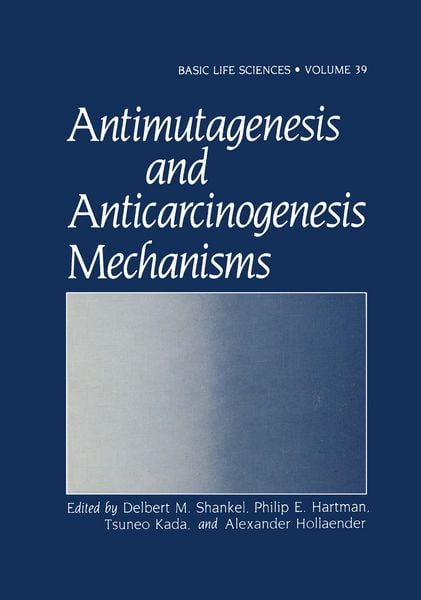
  • Produktbild: Antimutagenesis and Anticarcinogenesis Mechanisms
  • Produktbild: Antimutagenesis and Anticarcinogenesis Mechanisms
Band 39

Antimutagenesis and Anticarcinogenesis Mechanisms

Aus der Reihe Basic Life Sciences

99,99 €

inkl. gesetzl. MwSt., Versandkostenfrei


Beschreibung

Produktdetails

Einband

Taschenbuch

Erscheinungsdatum

25.11.2012

Abbildungen

618 p. 39 illus.

Herausgeber

Delbert M. Shankel + weitere

Verlag

Springer Us

Seitenzahl

618

Maße (L/B/H)

25,4/17,8/3,4 cm

Gewicht

1148 g

Auflage

Softcover reprint of the original 1st ed. 1986

Sprache

Englisch

ISBN

978-1-4684-5184-9

Beschreibung

Produktdetails

Einband

Taschenbuch

Erscheinungsdatum

25.11.2012

Abbildungen

618 p. 39 illus.

Herausgeber

Verlag

Springer Us

Seitenzahl

618

Maße (L/B/H)

25,4/17,8/3,4 cm

Gewicht

1148 g

Auflage

Softcover reprint of the original 1st ed. 1986

Sprache

Englisch

ISBN

978-1-4684-5184-9

Herstelleradresse

Springer-Verlag KG
Sachsenplatz 4-6
1201 Wien
AT

Email: ProductSafety@springernature.com

Noch keine Bewertungen vorhanden

Verfassen Sie die erste Bewertung zu diesem Artikel

Helfen Sie anderen Kundinnen und Kunden durch Ihre Meinung.

Kundinnen und Kunden meinen

Bewertungen (0)

  • Produktbild: Antimutagenesis and Anticarcinogenesis Mechanisms
  • Produktbild: Antimutagenesis and Anticarcinogenesis Mechanisms
  • Keynote Address.- Carcinogens and Anticarcinogens.- Activation and Inactivation of Mutagens and Carcinogens– –Part I.- The Relation of Activation and Inactivation to Antimutagenic Processes.- Cancer and Free Radicals.- Cytochromes P-450 and the Activation and Inactivation of Mutagens and Carcinogens.- Alteration of Mutagenic Potentials by Peroxidase, Catalase, and Superoxide Dismutase.- Activation and Inactivation of Mutagens and Carcinogens– –Part II.- Effects of Vitamins C and E on Carcinogen Formation and Action, and Relationship to Human Cancer.- Modifiers of Endogenous Nitrosamine Synthesis and Metabolism.- Glutathione Transferases and Carcinogenesis.- Natural Environmental Antimutagens.- Introduction: Natural Environmental Antimutagens.- Antioxidants/Antimutagens in Foods.- Role of Enzymes in Antimutagenes is of Human Saliva and Serum.- Isolation and Identification of Higher Plant Agents Active in Antimutagenic Assay Systems: Glycyrrhiza glabra.- Mechanism of Action of Antimutagens and Anticarcinogens.- Interception of Toxic Agents/Mutagens/Carcinogens: Some of Nature’s Novel Strategies.- Antimutagens and Their Modes of Action.- Avoidance of Errors in Dna.- Introduction: Avoidance of Spontaneously Occurring Errors in DNA.- Introduction: Avoidance of Errors After DNA Damage.- Alkylation and Oxidative Damages to DNA: Constitutive and Inducible Repair Systems.- Molecular Mechanism of Adaptive Response to Alkylating Agents.- Nucleotide Excision Repair Genes from the Yeast Saccharomyces cerevisiae.- The Fixation of Errors.- Introduction: Molecular Basis of Genomic Stability and Change.- Genetic Analyses of the Roles of UmuDC and MucAB in Mutagenesis.- Mechanisms of Spontaneous Mutagenesis: Clues from Altered Mutational Specificity in DNA Repair-DefectiveStrains.- Genetics and Molecular Biology of Mammalian Cells– –Part I.- Introduction: Comparative Responses to DNA Damage in Bacteria and Mammalian Cells.- Inducible Cellular Responses to DNA Damage in Mammalian Cells.- Single-Base Mutations Associated with Mouse Lymphomas.- The Mouse Mutant “Wasted”: An Animal Model for Ataxia-Telangiectasia.- Genetics and Molecular Biology of Mammalian Cells– –Part II.- Introduction: Oxygen Metabolism, DNA Repair, and the Origin of Spontaneous Genetic Instability.- Multiple Inducible Cytochromes P-450 in Yeast.- DNA Repair Genes of Mammalian Cells.- Genetic and Chemical Factors Affecting Chemical Mutagenesis in Cultured Mammalian Cells.- Mechanisms of Carcinogenicity and Anticarcinogenicity––Part I.- Mechanisms of Carcinogenicity and Anticarcinogenicity: Role of Dietary Components.- Reducing the Genotoxic Damage in the Oral Mucosa of Betel Quid/Tobacco Chewers.- The Concentration of Bile Acids in the Fecal Stream as a Risk Factor for Colon Cancer.- Hormones and Dietary Factors Controlling Gene Activation and Expression in Carcinogenesis.- Dietary Promoters and Antipromoters.- Mechanisms of Carcinogenicity and Anticarcinogenicity– –Part II.- A Mutagen Is a Mutagen, Not Necessarily a Carcinogen.- DNA Repair and Replication in Xeroderma Pigmentosum and Related Disorders.- Role of Intercellular Communication in Modifying the Consequences of Mutations in Somatic Cells.- Mechanisms of Carcinogenicity and Anticarcinogenicity– –Part III.- Genetic Aspects of Cancer Epidemiology.- Protective Effects of Beta-Carotene Against Psoralen Phototoxicity: Relevance to Protection Against Carcinogenesis.- Anticarcinogenic and Other Protective Effects of Dithiolthiones.- Antioxidants as Antitumor Promoters.- Future Directions forResearch in Antimutagenesis and Anticarcinogenesis.- Introduction: Future Directions for Research in Antimutagenesis and Anticarcinogenesis.- Inhibitors of Mutagenesis and Their Relevance to Carcinogenesis.- Population Consequences of Mutagenesis and Antimutagenesis.- A Summary––And a Look Ahead.- Poster Abstracts.- Organizing Committee.