
• Produktbild: Mechanisms of DNA Damage and Repair
  • Produktbild: Mechanisms of DNA Damage and Repair
Band 38

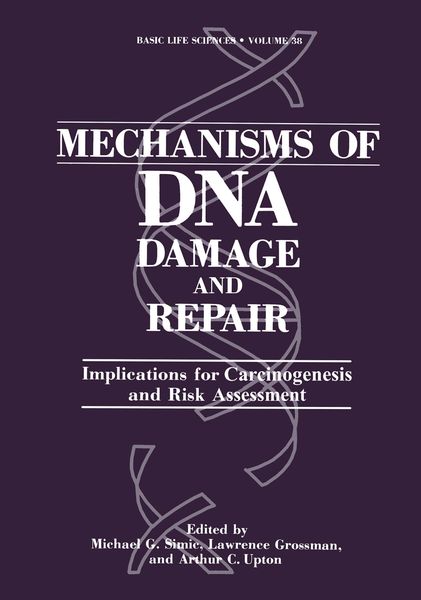
Mechanisms of DNA Damage and Repair Implications for Carcinogenesis and Risk Assessment

Aus der Reihe Basic Life Sciences

99,99 €

inkl. gesetzl. MwSt., Versandkostenfrei


Beschreibung

Produktdetails

Einband

Taschenbuch

Erscheinungsdatum

22.12.2012

Herausgeber

Michael G. Simic + weitere

Verlag

Springer Us

Seitenzahl

578

Maße (L/B/H)

25,4/17,8/3,2 cm

Gewicht

1104 g

Auflage

Softcover reprint of the original 1st ed. 1986

Sprache

Englisch

ISBN

978-1-4615-9464-2

Beschreibung

Produktdetails

Einband

Taschenbuch

Erscheinungsdatum

22.12.2012

Herausgeber

Verlag

Springer Us

Seitenzahl

578

Maße (L/B/H)

25,4/17,8/3,2 cm

Gewicht

1104 g

Auflage

Softcover reprint of the original 1st ed. 1986

Sprache

Englisch

ISBN

978-1-4615-9464-2

Herstelleradresse

Springer-Verlag KG
Sachsenplatz 4-6
1201 Wien
AT

Email: GPSR Kontakt

Noch keine Bewertungen vorhanden

Verfassen Sie die erste Bewertung zu diesem Artikel

Helfen Sie anderen Kundinnen und Kunden durch Ihre Meinung.

Kundinnen und Kunden meinen

Bewertungen (0)

  • Produktbild: Mechanisms of DNA Damage and Repair
  • Produktbild: Mechanisms of DNA Damage and Repair
  • to Mechanisms of DNA Damage and Repair.- History of Radiation Biology from a Personal Point of View.- DNA Damage.- Mechanisms of Damage.- Comparison of Mechansms for DNA Strand Break Formation by the Direct and Indirect Effect of Radiation.- Eletron Spin Resonance Studies of the Mechanism of Radiation Damage to DNA.- Free Radical Mechanisms of DNA Base Damage.- Peroxyl Radicals of Nucleic Acids and Their Components.- Radiation-Induced Peroxidation of DNA and Effects of Redox-Active Agents.- The Radiation Chemistry of the Purine Bases Within DNA and Related Model Compounds.- Bacteriophage DNA as a Model for Correlation of Radical Damage to DNA and Biological Effects.- Damage in Cells.- Ultrafast Chemical Repair of DNA Single and Double Strand Break Precursors in Irradiated V79 Cells.- Assessment of DNA Damage by Filter Elution Assays.- DNA Modification by Sulfur Mustards and Nitrosoureas and Repair of These Lesions.- Intragenomic Localization of Carcinogen-DNA Damage.- Ionizing Radiation Induced DNA Damage: Identities and DNA Repair.- Effects of LET? on the Fate of DNA Damage Induced in Rabbit Sensory Cells In Situ: Fundamental Aspects.- Radiation Damage to DNA in Various Animal Tissues: A Comparison of Yields and Repair In Vivo and In Vitro.- Differential Regulation of Base and Nucleotide Excision Repair in Mammalian Cells.- Immediate and Repair Induced DNA Double Strand Breaks in Mammalian Cells.- DNA-Protein Cross-Links: New Insights into their Formation and Repair in Irradiated Mammalian Cells.- DNA-to-Protein Crosslinks and Backbone Breaks Caused by Far-and Near-Ultraviolet and Visible Light Radiations in Mammalian Cells.- DNA Binding Drugs.- Sequence Specificity and Biological Consequences of Drugs that Bind Covalently in the Minor Groove of DNA.- Molecular Recognition of DNA Binding Agents: High-Field 1H and 31P One- and Two-Dimensional NMR Studies on the 1:1 Intercalation Complexes of Mitoxantrone with selected Oligodeoxyribonucleotides.- DNA Binding and Biological Properties of Bis and Tris Intrcalating Molecules.- Novel Types of DNA-Sugar Damage in Neocarzinostatin Cytotoxicity and Mutagenesis.- DNA-Drug Binding and Control of Genetic Information.- Computer-Aided Design of New DNA Intercalators.- DNA Repair and Consequences.- Differential Expression of SOS Genes in an E. Coli Mutant Producing Unstable LexA Protein Enhances Excision Repair But Inhibits Mutagenesis.- Mutagenic DNA Repair in Bacteria: The Role of UmuDC and MucAB.- The Repair of Pyrimidine Dimers Via a DNA-Glycosylase Mechanism.- The Involvement of an E. Coli Multiprotein Complex in the Complete Repair of UV-Damaged DNA.- Pyrimidine Dimer Induced Alteration of DNA Tertiary Structure Evidence for Unwinding and Shortening.- Mismatch Correction.- Molecular Approaches to the Study of Nucleotide Excision Repair in Eukaryotes.- Restoration of DNA Repair in UV-Sensitive Chinese Hamster Ovary Cell by the denV Gene from Bacteriophage T4.- The Adaptive Response of Mammalian Cells to Alkylating Agents.- DNA Glycosylases in DNA Repair.- Apurinic Sites as Common Intermediates in Mutagenesis.- The Repair of Uracil-Containing DNA.- Metabolic Consequences of DNA Damage: The Role of Poly (ADP-Ribose) Polymerase as Mediator of the Suicide Response.- DNA Damage, DNA Repair and Induced Mutagenesis: Some Enzymological and Structural Considerations.- Mechanisms of Mutagenesis of E. Coli by Ultraviolet Light.- Activation of H-ras-1 Oncogenes by Chemical Carcinogens.- Activation of the c-myc Oncogene.- Salmonella Tester Strains: Mutational Targets and Correlation with Animal Carcinogenicity and Teratogenicity.- Mechanisms of Spontaneous Mutagenesis: Clues from Mutational Specificity.- Risk Assessment.- Use of Gradient Denaturing Gels to Determine Mutational Spectrum in Human Cells.- Urinary N-Nitrosamino Acids as Indices of Endogenous Formation of N-Nitroso Compounds.- Application of Monoclonal Antibodies to Monitor Human Exposure to Aflatoxin Bl.- Blood Proteins as Carcinogen Dosimeters.- Development of an Avidin-Biotin Amplified Enzyme-Linked Immunoassay for Detection of DNA Adducts of the Human Bladder Carcinogen 4-Aminobiphenyl.- Intragenomic Heterogeneity in DNA Damage Processing: Potential Implications for Risk Assessment.- The Role of Pharmacokinetics in Risk Assessment.- Immunologic Quantification of Carcinogn-DNA Adducts.- Interpretation of Genotoxicity Data in Assessing the Risks of Genetic Diseases.- Background Levels of DNA Damage in the Population.- Use of Models in Low-Dose Extrapolation.- Problems in Interspecies Comparisons.- The Time to Tumor Approach in Risk Assessment.- The Role of Nutritional Factors in Cellular Protection Against DNA Damage, Altered Gene Expression and Malignant Transformation.- The Role of Risk Assessment in Food Safety Policy.- Contributors.