Gutscheinbedingungen

**Gültig bis 28.07.2026 auf Spielzeug, Schreibwaren, Filme, Geschenke & Trends, Musik, tolino eReader & Zubehör, Hörbücher und Hörbuch-Downloads (außer Abo), nicht preisgebundene Bücher und Kalender in der Thalia App. Einzelne Artikel können ausgeschlossen sein. Aufgrund der Buchpreisbindung sind deutschsprachige Bücher und eBooks ausgenommen. Zusätzlich ausgenommen sind preisgebundene Artikel, Abos & Flatrates, eBooks, Games, Geschenkkarten/-boxen, Shelfies, Software, Zeitschriften sowie einzelne Artikel von tonies®. Pro Einkauf einmal einlösbar. Click & Collect nur bei Onlinevorabzahlung möglich. Keine Barauszahlung. Nicht kombinierbar mit anderen Aktionen und Gutscheinen. Gutschein wird auf max. 500€ Bestellwert angerechnet. Nicht gültig für Versandkosten und Services.

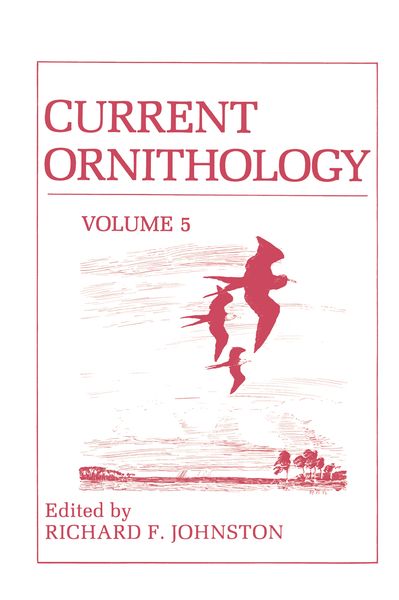
Produktbild: Current Ornithology
Band 1

Current Ornithology

Aus der Reihe Current Ornithology

99,99 €

inkl. gesetzl. MwSt., Versandkostenfrei


Beschreibung

Produktdetails

Einband

Taschenbuch

Erscheinungsdatum

22.12.2012

Herausgeber

Richard Johnston

Verlag

Springer Us

Seitenzahl

420

Maße (L/B/H)

22,9/15,2/2,4 cm

Gewicht

633 g

Auflage

Softcover reprint of the original 1st ed. 1988

Sprache

Englisch

ISBN

978-1-4615-6789-9

Beschreibung

Produktdetails

Einband

Taschenbuch

Erscheinungsdatum

22.12.2012

Herausgeber

Richard Johnston

Verlag

Springer Us

Seitenzahl

420

Maße (L/B/H)

22,9/15,2/2,4 cm

Gewicht

633 g

Auflage

Softcover reprint of the original 1st ed. 1988

Sprache

Englisch

ISBN

978-1-4615-6789-9

Herstelleradresse

Libri GmbH
Europaallee 1
36244 Bad Hersfeld
DE

Email: GPSR Kontakt

Noch keine Bewertungen vorhanden

Verfassen Sie die erste Bewertung zu diesem Artikel

Helfen Sie anderen Kundinnen und Kunden durch Ihre Meinung.

Kundinnen und Kunden meinen

Bewertungen (0)

  • Produktbild: Current Ornithology
  • 1 Form and Function in Avian Flight.- 1. Introduction.- 2. Flapping Flight Aerodynamics.- 2.1. Airfoil Action and Force Generation.- 2.2. Thrust from Flapping Wings.- 2.3. Vortex Action in Flapping Flight.- 2.4. Wingbeat Kinematics in Flying Birds.- 2.5. Theoretical Models of Flapping Flight Mechanics.- 2.6. Scaling and Avian Flight.- 2.7. Von Helmholtz’s Scaling Theory.- 3. Ecology and Wing Morphology in Flying Birds.- 3.1. Allometry of Wing Size.- 3.2. Principal Components Analysis (PCA) of Wing Morphology.- 3.3. The Mosaic of Adaptation.- 3.4. Comparison of Birds and Bats.- 3.5. Why Do Ducks Have Small Wings?.- 3.6. The Flight Muscles: Pectoralis and Supracoracoideus.- 4. Evolutionary Constraints on Flight Adaptation.- 4.1. The Energy Margin and the Upper Limit to Size.- 4.2. Scaling of Wingbeat Frequency.- 4.3. Constraints on Morphological Adaptation.- 4.4. Flight Morphology and Fitness.- References.- 2 Magnetic Orientation in Birds.- 1. The Magnetic Field of the Earth.- 1.1. Spatial Distribution of the Geomagnetic Field.- 1.2. Temporal Variations of the Magnetic Field.- 1.3. Experimental Magnetic Fields.- 2. The Magnetic Compass of Birds.- 2.1. Functional Characteristics.- 2.2. A Widespread Mechanism among Birds.- 2.3. Perception of Magnetic Fields.- 3. Role of the Magnetic Compass in Bird Orientation.- 3.1. The Magnetic Compass in Homing.- 3.2. The Magnetic Compass in Migratory Orientation.- 3.3. The Magnetic Compass as a Directional Reference System.- 4. Noncompass Use of the Magnetic Field.- 4.1. Controlling the Course of Migration.- 4.2. Magnetic Parameters in the Navigational “Map”.- References.- 3 Temporal Patterns of Pair Formation and Reproduction in Annual Cycles and Associated Endocrinology in Waterfowl.- 1. Introduction.- 2. Strategies of Reproduction and Breeding Patterns in Waterfowl.- 3. A Brief Review of Avian Endocrinology.- 3.1. The Hypothalamus and Hypothalamic Releasing Hormones and Factors.- 3.2. The Pituitary and Associated Hormones.- 3.3. Inhibitory Feedback by Steroids.- 3.4. Stimulatory Feedback by Steroids.- 3.5. Other Hormones Relevant to Reproduction.- 4. Summary of the Major Components of the Annual Cycle.- 5. Temporal Patterns of Molt in Waterfowl.- 5.1. Molt Chronology.- 5.2. Endocrine Correlates of Molt.- 6. Autumnal Gonadal Recrudescence.- 7. Autumnal Migration.- 7.1. Autumnal Migratory Chronology.- 7.2. Endocrine Correlates of Migration.- 8. Winter Period of Initial Pair Formation.- 8.1. Temporal Patterns of Pair Formation and Reproduction.- 8.2. Male Courtship and Reproductive Activity.- 8.3. Female Receptivity to Male Courtship.- 8.4. Mate Choice and Pair Formation in Waterfowl.- 9. Vernal Premigratory Changes and Early Migration.- 9.1. The Role of Photoperiod.- 9.2. Temporal Patterning of Pulsatile Hormone Release.- 9.3. Importance of the Timing of Nutrient Acquisition, Molt, and Spring Migration on Subsequent Time of Nesting.- 10. Late Spring Migration and Arrival on the Breeding Grounds.- 10.1. Social Factors Regulating Reproduction.- 10.2. Influence of the Flock and Social Facilitation on Reproduction.- 11. Nesting and Egg Laying.- 11.1. Clutch Size and Seasonal Patterns of Egg Laying.- 11.2. Genetic and Environmental Determinants of Reproductive Traits.- 11.3. Physiological Mechanisms and Endocrine Correlates of Egg Laying.- 12. Incubation and Renesting.- 12.1. Incubation and Renesting Behavior.- 12.2. Endocrine Correlates of Incubation and Renesting.- 13. Seasonal Decline and Termination of the Reproductive Phase.- 14. Summary.- References.- 4 Female-Biased Philopatry, Monogamy, and the Timing of Pair Formation in Migratory Waterfowl.- 1. Introduction.- 2. Waterfowl Breeding Systems.- 3. Why Monogamy, Early Pairing, and Female Philopatry?.- 3.1. Female Mate Choice.- 3.2. Female-Biased Philopatry.- 3.3. Influence of Inbreeding on Dispersal.- 3.4. Philopatry and Lifetime Monogamy in Swans and Geese.- 4. The Timing of Pairing in Winter.- 4.1. Mate Testing.- 4.2. Diet and the Timing of Pairing.- 4.3. Male-Male Competition and Pairing Date.- 4.4. Timing of Pairing and Accumulation of Nutrients.- 4.5. Male Costs and Female Benefits.- 5. Summary.- References.- 5 Colony Formation in Seabirds.- 1. Introduction.- 2. Formation of Colonies on Previously Used Sites.- 2.1. Site of Pair Formation.- 2.2. Appearance of Birds on the Nesting Site.- 2.3. Development of the Nest Site.- 2.4. Formation of Spatial Structure of Nesting Settlements.- 3. Formation of New Colonies.- 3.1. Colonization of New Colony Sites.- 3.2. Midseason Colony Site Changes.- 4. Supplementary Remarks on Colony Structure.- 4.1. Center and Edge Correlates of Colony Structure.- 4.2. Demographic Correlates of Colony Structure.- 4.3. Distributional Correlates of Colony Structure.- 5. Ecological and Social Factors in Colony Formation.- 5.1. Environmental Correlates of Nest Site Selection.- 5.2. Density-Dependent Correlates of Nest Site Selection.- 5.3. Behavioral Correlates of Nest Site Selection.- 5.4. Interaction of Ecological and Behavioral Correlates on Nest Site Selection.- 6. Concluding Remarks.- References.- 6 Mitochondrial DNA of Birds.- 1. Introduction.- 2. Isolation Procedures.- 3. Methods of Comparison.- 3.1. Restriction Fragment Analysis.- 3.2. Restriction Site Mapping.- 3.3. DNA Sequencing.- 4. Genome Size.- 5. Gene Mapping.- 6. Maternal Phylogenies.- 7. Intraspecific Comparisons.- 8. Interspecific Comparisons.- 9. Rates of Molecular Evolution in Birds.- 9.1. Controversy.- 9.2. Utility of mtDNA.- 9.3. Rates of mtDNA Evolution.- 9.4. Rates of mtDNA Evolution in Geese.- 10. Hybrid Zones and Gene Flow of mtDNA.- 11. Prospects.- References.- 7 Nongame Bird Conservation.- 1. Citizen Support.- 2. Funding.- 3. Planning.- 4. Data Acquisition and Data Management.- 5. Coordination.- 5.1. Intraagency Coordination.- 5.2. Interagency Coordination.- 5.3. Coordination with Private Organizations.- 6. Information and Education.- 7. Habitat Management.- 8. Species Management.- 9. Summary.- References.- 8 Experimental Design in Ornithology.- 1. Introduction.- 2. Can Ornithology Be Scientific?.- 3. Different Methods of Science.- 4. Internal and External Validity.- 5. Statistics and Experimental Design.- 5.1. What to Measure: The Dependent Variable.- 5.2. What to Manipulate: The Independent Variable.- 5.3. What to Control, What to Randomize: Secondary Variables.- 6. The Dual Problems of Subjects: Selection and Assignment.- 6.1. Counterbalancing.- 6.2. Within-Versus Between-Subject s Designs.- 6.3. Order Effects in Within-Subject Designs.- 6.4. Minimizing Residual Effects in Within-Subject Designs.- 6.5. Matched-Pairs Designs.- 6.6. Factorial Designs.- 7. Quasiexperimental Designs.- 8. Doing Research: A Recipe.- 9. Further Reading.- 10. Concluding Remarks.- References.- 9 Description of Bird Behavior for Comparative Purposes.- 1. Introduction.- 2. Description of Behavior.- 2.1. Descriptive Frames of Reference.- 2.2. Behavioral Units and Categories.- 2.3. Variation.- 2.4. Construction of Ethograms.- 3. Concluding Comments.- References.- Author Index.- Bird Name Index.