Gutscheinbedingungen

**Gültig bis 15.06.2026 auf Spiele & Spielzeug online auf thalia.at, in der Thalia App ab einem Mindestbestellwert von 30€ und in allen Thalia Buchhandlungen in Österreich. In den Buchhandlungen nur gültig auf lagernde Ware. Einzelne Artikel können ausgeschlossen sein. Ausgenommen sind preisgebundene Artikel sowie online auf thalia.at und in der Thalia App einzelne Artikel von tonies®. Pro Einkauf einmal einlösbar. Nur gültig gegen Vorlage oder im Onlineshop hinterlegter Bonuscard. Infos zur Einlösung in der Buchhandlung sind auf der Bonuscard-Vorteilspreisseite zu finden. Click & Collect nur bei Onlinevorabzahlung möglich. Keine Einlösung bei Scan & Go-Bezahlung. Keine Barauszahlung. Nicht kombinierbar mit anderen Aktionen und Gutscheinen. Gutschein wird auf max. 500€ Bestellwert angerechnet. Nicht gültig für Geschenkkarten, Versandkosten und Services.

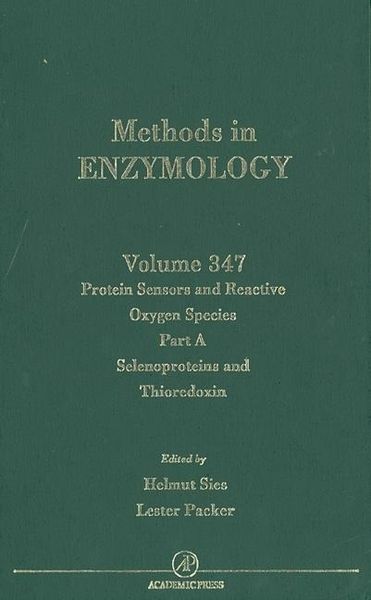
Produktbild: Protein Sensors of Reactive Oxygen Species, Part A: Selenopr

Protein Sensors of Reactive Oxygen Species, Part A: Selenopr Volume 347

177,99 €

inkl. gesetzl. MwSt., Versandkostenfrei


Beschreibung

Produktdetails

Einband

Gebundene Ausgabe

Erscheinungsdatum

01.03.2002

Herausgeber

Lester Packer + weitere

Verlag

Elsevier Science & Technology

Seitenzahl

511

Maße (L/B/H)

23,8/15,9/2,8 cm

Gewicht

988 g

Sprache

Englisch

ISBN

978-0-12-182248-4

Beschreibung

Rezension

PRAISE FOR THE SERIES
"The Methods in Enzymology series represents the gold-standard." --NEUROSCIENCE

"Incomparably useful." --ANALYTICAL BIOCHEMISTRY

"It is a true 'methods' series, including almost every detail from basic theory to sources of equipment and reagents, with timely documentation provided on each page." --BIO/TECHNOLOGY

"The series has been following the growing, changing and creation of new areas of science. It should be on the shelves of all libraries in the world as a whole collection." --CHEMISTRY IN INDUSTRY

"The appearance of another volume in that excellent series, Methods in Enzymology, is always a cause for appreciation for those who wish to successfully carry out a particular technique or prepare an enzyme or metabolic intermediate without the tiresome prospect of searching through unfamiliar literature and perhaps selecting an unproven method which is not easily reproduced." --AMERICAN SOCIETY OF MICROBIOLOGY NEWS

"If we had some way to find the work most often consulted in the laboratory, it could well be Colowick and Kaplan's multi-volume series Methods in Enzymology...a great work." --ENZYMOLOGIA

"A series that has established itself as a definitive reference for biochemists." --JOURNAL OF CHROMATOGRAPHY

Portrait

Lester Packer received a PhD in Microbiology and Biochemistry in 1956 from Yale University. In 1961, he joined the University of California at Berkeley serving as Professor of Cell and Molecular Biology until 2000, and then was appointed Adjunct Professor, Pharmacology and Pharmaceutical Sciences, School of Pharmacy at the University of Southern California. Dr Packer received numerous distinctions including three honorary doctoral degrees, several distinguished Professor appointments. He was awarded Chevalier de l'Ordre National du Merite (Knight of the French National Order of Merit) and later promoted to the rank of Officier. He served as President of the Society for Free Radical Research International (SFRRI), founder and Honorary President of the Oxygen Club of California. He has edited numerous books and published research; some of the most cited articles have become classics in the field of free radical biology: Dr Packer is a member of many professional societies and editorial boards. His research elucidated - the Antioxidant Network concept. Exogenous lipoic acid was discovered to be one of the most potent natural antioxidants and placed as the ultimate reductant or in the pecking order of the "Antioxidant Network regenerating vitamins C and E and stimulating glutathione synthesis, thereby improving the overall cellular antioxidant defense. The Antioxidant Network is a concept addressing the cell's redox status. He established a world-wide network of research programs by supporting and co-organizing conferences on free radical research and redox biology in Asia, Europe, and America. Helmut Sies is an Honorary Member of the American Society for Biochemistry and Molecular Biology. He received an Honorary Ph.D. from the University of Buenos Aires, Argentina in 1996. Dr. Sies is a member of the Northrhine-Westphalian Academy of Sciences, Germany, and a Corresponding Member of both the Academy of Sciences of Heidelberg, Germany, and the Academy of Medicine, Buenos Aires, Argentina. He has received many awards and prizes, including the FEBS Anniversary Prize awarded by the Federation of European Biochemical Societies, 1978; the Distinguished Foreign Scholar award, MASUA, 1985; the Silver Medal, Karolinska Institute, Stockholm, 1986; the Ernst Jung Preis fur Medizin, 1988; the Claudius-Galenus-Preis, 1990; and the ISFE-Preis, 1994. Dr. Sies sereves on the editorial board and advisory committee for twelve journals, has edited numerous books, and has published more than 400 original articles and chapters. He received his M.D. at the University of Munich in 1967 and currently serves as Full Professor and Chairman of the Department of Physiological Chemistry at the University of D sseldorf.

Produktdetails

Einband

Gebundene Ausgabe

Erscheinungsdatum

01.03.2002

Herausgeber

Verlag

Elsevier Science & Technology

Seitenzahl

511

Maße (L/B/H)

23,8/15,9/2,8 cm

Gewicht

988 g

Sprache

Englisch

ISBN

978-0-12-182248-4

EU-Ansprechpartner

Zeitfracht Medien GmbH
Ferdinand-Jühlke-Straße 7|99095|Erfurt|DE
produktsicherheit@zeitfracht.de

Herstelleradresse

Elsevier Science & Technology
125 London Wall|EC2Y 5AS|London|GB
tradeorders@elsevier.com

Kundinnen und Kunden meinen

0 Bewertungen

Informationen zu Bewertungen

Zur Abgabe einer Bewertung ist eine Anmeldung im Konto notwendig. Die Authentizität der Bewertungen wird von uns nicht überprüft. Wir behalten uns vor, Bewertungstexte, die unseren Richtlinien widersprechen, entsprechend zu kürzen oder zu löschen.

Die Bewertungen sind nach Format, Anzahl Sterne und Datum sortiert.

Verfassen Sie die erste Bewertung zu diesem Artikel

Helfen Sie anderen Kund*innen durch Ihre Meinung

Kundinnen und Kunden meinen

0 Bewertungen filtern

Weitere Artikel finden Sie in

Die Leseprobe wird geladen.
  • Produktbild: Protein Sensors of Reactive Oxygen Species, Part A: Selenopr
  • Section I: Selenoproteins

    [1]: Selenoprotein Biosynthesis: Purification and Assay of Components Involved in Selenocysteine Biosynthesis and Insertion in Escherichia coli

    [2]: Selenocysteine Insertion Sequence Element Characterization and Selenoprotein Expression

    [3]: Transfer RNAs That Insert Selenocysteine

    [4]: Purification and Analysis of Selenocysteine Insertion Sequence-Binding Protein 2

    [5]: Nonsense-Mediated Decay: Assaying for Effects on Selenoprotein mRNAs

    [6]: Novel Selenoproteins Identified from Genomic Sequence Data

    [7]: Semisynthesis of Proteins Containing Selenocysteine

    [8]: Mammalian Selenoprotein Gene Signature: Identification and Functional Analysis of Selenoprotein Genes Using Bioinformatics Methods

    [9]: Estimation of Individual Types of Glutathione Peroxidases

    [10]: High-Throughput 96-Well Microplate Assays for Determining Specific Activities of Glutathione Peroxidase and Thioredoxin Reductase

    [11]: Selenoprotein P

    [12]: Iodothyronine Deiodinases

    [13]: Expression and Regulation of Thioredoxin Reductases and Other Selenoproteins in Bone

    [14]: Selenoprotein W

    [15]: Genetic and Functional Analysis of Mammalian Sep15 Selenoprotein

    [16]: Selenocysteine Lyase from Mouse Liver

    [17]: Selenocysteine Methyltransferase

    [18]: Phospholipid-Hydroperoxide Glutathione Peroxidase in Sperm

    [19]: In Vivo Antioxidant Role of Glutathione Peroxidase: Evidence from Knockout Mice

    [20]: Recombinant Expression of Mammalian Selenocysteine-Containing Thioredoxin Reductase and Other Selenoproteins in Escherichia coli

    [21]: Mammalian Thioredoxln Reductases as Hydroperoxide Reductases

    [22]: Tryparedoxin and Tryparedoxin Peroxidase

    [23]: Trypanothione and Tryparedoxin in Ribonucleotide Reduction

    [24]: Selenium- and Vitamin E-Dependent Gene Expression in Rats: Analysis of Differentially Expressed mRNAs

    Section II: Thioredoxin

    [25]: Overview

    [26]: Thioredoxin and Glutaredoxin Isoforms

    [27]: Mammalian Thioredoxin Reductases

    [28]: Mitochondrial Thioredoxin Reductase and Thiol Status

    [29]: Protein Electrophoretic Mobility Shift Assay to Monitor Redox State of Thioredoxin in Cells

    [30]: Recycling of Vitamin C by Mammalian Thioredoxin Reductase

    [31]: Thioredoxin Cytokine Action

    [32]: Identification of Thioredoxin-Linked Proteins by Fluorescence Labeling Combined with Isoelectric Focusing/Sodium Dodecyl Sulfate-Polyacrylamide Gel Electrophoresis

    [33]: Thioredoxin and Mechanism of Inflammatory Response

    [34]: Redox State of Cytoplasmic Thioredoxin

    [35]: Thioredoxin, Thioredoxin Reductase, and Thioredoxin Peroxidase of Malaria Parasite Plasmodium falciparum

    [36]: Human Placenta Thioredoxin Reductase: Preparation and Inhibitor Studies

    [37]: Classification of Plant Thioredoxins by Sequence Similarity and Intron Position

    [38]: Ferredoxin-Dependent Thioredoxin Reductase: A Unique Iron-Sulfur Protein

    [39]: Plant Thioredoxin Gene Expression: Control by Light, Circadian Clock, and Heavy Metals

    [40]: Thioredoxin Genes in Lens: Regulation by Oxidative Stress

    [41]: Thioredoxin Overexpression in Transgenic Mice

    [42]: Multiplex Reverse Transcription-Polymerase Chain Reaction for Determining Transcriptional Regulation of Thioredoxin and Glutaredoxin Pathways

    [43]: Redox Regulation of Cell Signaling by Thioredoxin Reductases

    Author index

    Subject index