Beschreibung
Produktdetails
Einband
Taschenbuch
Erscheinungsdatum
01.03.2005
Abbildungen
Illustrationen, nicht spezifiziert
Herausgeber
Connelly John + weitereVerlag
University PressesSeitenzahl
316
Maße (L/B/H)
22,9/15,2/1,9 cm
Gewicht
544 g
Sprache
Englisch
ISBN
978-0-271-05862-7
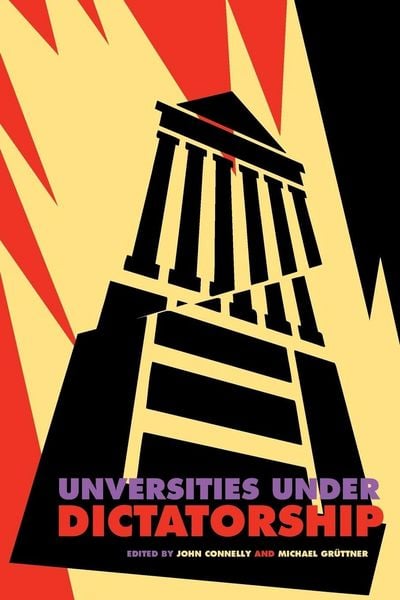
Dictatorships destroy intellectual freedom, yet universities need it. How, then, can universities function under dictatorships? Are they more a support or a danger for the system? In this volume, leading experts from five countries explore the many dimensions of accommodation and conflict, control and independence, as well as subservience and resistance that characterized the relationship of universities to dictatorial regimes in communist and fascist states during the twentieth century: Nazi Germany, Mussolini's Italy, Francoist Spain, Maoist China, the Soviet Union, and the Soviet bloc countries of Czechoslovakia, East Germany, Hungary, and Poland.
Comparisons across these cases reveal that the higher-education policies of modern dictatorships were characterized by a basic conflict of aims. On the one hand, universities were supposed to propagate reigning ideology and serve as training grounds for a dependable elite. Consequently, university autonomy was restricted, research used for political legitimation, personnel policies subjected to political calculus, and many undesired scholars simply put out on the street. On the other hand, modern dictatorships needed well-educated scientists, physicians, teachers, and engineers for the implementation of their political, economic, and military agendas.
Communist and fascist leaders thus confronted the basic question of whether universities should be seen primarily as producers of ideology and functionaries loyal to the party line or as places where indispensable knowledge was made available. Dictatorships that opted to subject universities to rigorous political control reduced their scholarly productivity. But if the institutes of higher learning were left with too much autonomy, there was a danger that they would go astray politically.
Besides the editors, the contributors are Ruth Ben-Ghiat, Michael David-Fox, Jan Havránek, Ralph Jessen, György Péteri, Miguel Ángel Ruiz Carnicer, and Douglas Stiffler.
Kundinnen und Kunden meinen
Verfassen Sie die erste Bewertung zu diesem Artikel
Helfen Sie anderen Kund*innen durch Ihre Meinung
Kurze Frage zu unserer Seite
Vielen Dank für Ihr Feedback
Wir nutzen Ihr Feedback, um unsere Produktseiten zu verbessern. Bitte haben Sie Verständnis, dass wir Ihnen keine Rückmeldung geben können. Falls Sie Kontakt mit uns aufnehmen möchten, können Sie sich aber gerne an unseren Kund*innenservice wenden.
zum Kundenservice