KI-Beratung Beta

Gutscheinbedingungen

**Gültig am 20.11.2026 ab einem Mindestbestellwert von 30€ auf Spielzeug, Schreibwaren, Filme, Geschenke & Trends, Musik, tolino eReader & Zubehör, Hörbücher und Hörbuch-Downloads, nicht preisgebundene Bücher und Kalender online auf thalia.at und in der Thalia App. Einzelne Artikel können ausgeschlossen sein. Aufgrund der Buchpreisbindung sind deutschsprachige Bücher und eBooks ausgenommen. Zusätzlich ausgenommen sind Abos & Flatrates, Games, Geschenkkarten/-boxen, Shelfies, Software, Zeitschriften sowie einzelne Artikel von tonies®. Pro Einkauf einmal einlösbar. Click & Collect nur bei Onlinevorabzahlung möglich. Keine Barauszahlung. Nicht kombinierbar mit anderen Aktionen und Gutscheinen. Gutschein wird auf max. 500€ Bestellwert angerechnet. Nicht gültig für Versandkosten und Services. Preisgebundene Artikel sind vom Mindestbestellwert ausgeschlossen.

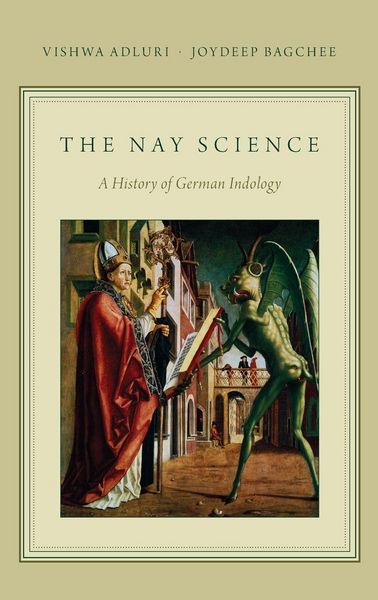
  • Produktbild: The Nay Science
  • Produktbild: The Nay Science

The Nay Science

287,99 €

inkl. gesetzl. MwSt., Versandkostenfrei


Beschreibung

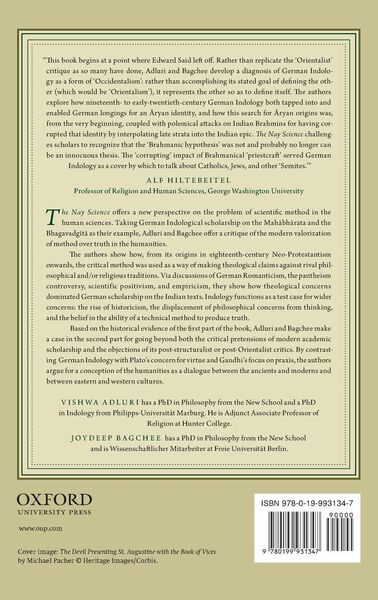
In The Nay-Science, Vishwa Adluri and Joydeep Bagchee undertake a careful and rigorous hermeneutical approach to nearly two centuries of German philological scholarship on the Mahabharata and the Bhagavad Gita.

Beschreibung

In The Nay-Science, Vishwa Adluri and Joydeep Bagchee undertake a careful and rigorous hermeneutical approach to nearly two centuries of German philological scholarship on the Mahabharata and the Bhagavad Gita.

Produktdetails

Einband

Gebundene Ausgabe

Erscheinungsdatum

30.05.2018

Verlag Oxford Academic
Seitenzahl

514

Produktdetails

Einband

Gebundene Ausgabe

Erscheinungsdatum

30.05.2018

Verlag Oxford Academic
Seitenzahl

514

Maße (L/B/H)

24/16,1/3,2 cm

Gewicht

931 g

Sprache

Englisch

ISBN

978-0-19-993134-7

Herstelleradresse

Libri GmbH
Europaallee 1
36244 Bad Hersfeld
DE

Email: gpsr@libri.de

Noch keine Bewertungen vorhanden

Verfassen Sie die erste Bewertung zu diesem Artikel

Helfen Sie anderen Kundinnen und Kunden durch Ihre Meinung.

Kundinnen und Kunden meinen

Bewertungen (0)

  • Produktbild: The Nay Science
  • Produktbild: The Nay Science

    • Introduction


    • A History of German Indology


    • The History of German Indology as a History of Method


    • The Origins of the Historical-Critical Method in Neo-Protestantism of the 18th Century


    • The Origins of Philology in the Argument for the Immortality of the Soul


    • Defining the Scope of Inquiry


    • Plan of Study


    • Chapter 1: Historical Identity and Narrative Constructs in an Indo-Germanic Setting


    • The Birth of German Mahabharata Studies


    • The Indo-Germanic Original Epic:


    • The Buddhist Poetic Composition


    • Buddhism and Protestantism


    • Protestantism, the Counter-Reformation, and the Prosecution of Heresy


    • The Twin Brahmanic Redactions


    • Brahmanism and Catholicism


    • Return to the Problem of Textual Reconstruction


    • Chapter 2: Text-Historical Reconstruction and the Struggle for an Objective Canon


    • The Bhagavad Gita in German Indology


    • The Theistic Gita: Richard Garbe


    • The Epic Gita: Hermann Jacobi


    • A Practical Gita: Hermann Oldenberg


    • The Trinitarian Gita: Rudolf Otto


    • The Soldier's Gita: Theodor Springmann


    • The Aryan Gita: Jakob Wilhelm Hauer


    • The Brahmanic Gita: Georg von Simson


    • What is the German Gita?: A Review


    • Chapter 3: German Indology in the Context of the European Geisteswissenschaften


    • Problems with the Critical Method


    • The Scientification of Protestant Theology in the Critical Method


    • The Secularization of Protestant Theology in the Study of the History of Religions


    • The Institutionalization of Protestant Theology in Indology


    • Three Notions of Science: Positivism, Historicism, and Empiricism


    • Criticisms of the Positivistic Notion of Truth


    • From Historicism to Hermeneutics


    • Conclusion


    • Writing under Erasure


    • Creating the Object of Scientific Research


    • Honest Heretics or Neo-Brahmins?


    • Afterword: Gandhi on the Gita Problem


    • Notes


    • Bibliography


    • Index