Gutscheinbedingungen

**Gültig am 28.06.2026 auf Spielzeug, Schreibwaren, Filme, Geschenke & Trends, Musik, tolino eReader & Zubehör, Hörbücher und Hörbuch-Downloads (außer Abo), nicht preisgebundene Bücher und Kalender online auf thalia.at und in der Thalia App. Einzelne Artikel können ausgeschlossen sein. Aufgrund der Buchpreisbindung sind deutschsprachige Bücher und eBooks ausgenommen. Zusätzlich ausgenommen sind preisgebundene Artikel, Abos & Flatrates, eBooks, Games, Geschenkkarten/-boxen, Shelfies, Software, Zeitschriften sowie einzelne Artikel von tonies®. Pro Einkauf einmal einlösbar. Click & Collect nur bei Onlinevorabzahlung möglich. Keine Barauszahlung. Nicht kombinierbar mit anderen Aktionen und Gutscheinen. Gutschein wird auf max. 500€ Bestellwert angerechnet. Nicht gültig für Versandkosten und Services.

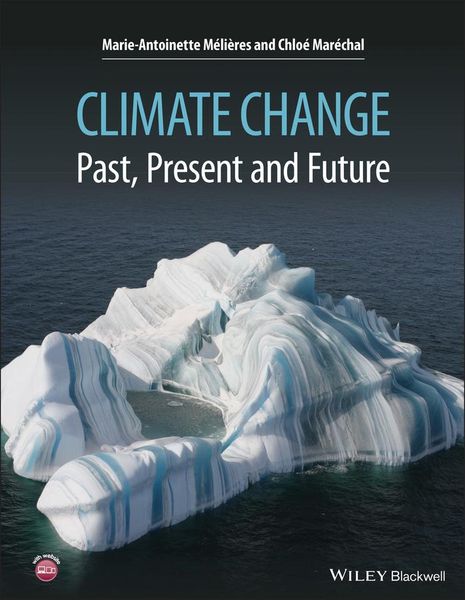
Produktbild: Climate Change

Climate Change Past, Present, and Future

194,99 €

inkl. gesetzl. MwSt., Versandkostenfrei


Beschreibung

Produktdetails

Einband

Gebundene Ausgabe

Erscheinungsdatum

04.05.2015

Verlag

John Wiley & Sons

Seitenzahl

416

Maße (L/B/H)

21,7/8,9/2,7 cm

Gewicht

1381 g

Auflage

1. Auflage

Sprache

Englisch

ISBN

978-1-118-70852-1

Beschreibung

Produktdetails

Einband

Gebundene Ausgabe

Erscheinungsdatum

04.05.2015

Verlag

John Wiley & Sons

Seitenzahl

416

Maße (L/B/H)

21,7/8,9/2,7 cm

Gewicht

1381 g

Auflage

1. Auflage

Sprache

Englisch

ISBN

978-1-118-70852-1

Kundinnen und Kunden meinen

0 Bewertungen

Informationen zu Bewertungen

Zur Abgabe einer Bewertung ist eine Anmeldung im Konto notwendig. Die Authentizität der Bewertungen wird von uns nicht überprüft. Wir behalten uns vor, Bewertungstexte, die unseren Richtlinien widersprechen, entsprechend zu kürzen oder zu löschen.

Die Bewertungen sind nach Format, Anzahl Sterne und Datum sortiert.

Verfassen Sie die erste Bewertung zu diesem Artikel

Helfen Sie anderen Kund*innen durch Ihre Meinung

Kundinnen und Kunden meinen

0 Bewertungen filtern

Die Leseprobe wird geladen.
  • Produktbild: Climate Change
  • Foreword xiii

    Acknowledgements xv

    About the companion website xvii

    Introduction 1

    PART I: THE CLIMATE ENGINE OF THE EARTH: ENERGY 5

    1. Why are there many different climates on Earth? 7

    2. Different climates . . . such diversity of life 11

    2.1. The different climates on Earth 11

    2.2. Climates, biomes and biodiversity 13

    2.3. Climate and society 17

    3. From a patchwork of climates to an average climate 19

    3.1. Temperature and thermal equilibrium 19

    3.2. The average temperature of the Earth's surface 21

    3.3. Precipitation 24

    3.4. Wind 25

    3.5. Three major items in energy consumption 26

    4. The global mean climate 27

    4.1. The Sun, source of energy 27

    4.2. The energy equilibrium at the Earth's surface 28

    5. Atmosphere and ocean: key factors in climate equilibrium 33

    5.1. Driving forces 34

    5.2. The atmosphere 34

    5.3. The oceans 42

    5.4. Heat transport from the Equator to the poles 51

    Part I: Summary 53

    Part I: Notes 54

    Part I: Further reading 54

    PART II: MORE ON THE ENERGY BALANCE OF THE PLANET 55

    6. Thermal radiation, solar and terrestrial radiation 57

    6.1. Thermal radiation from a black body 57

    6.2. The laws of black?]body radiation 58

    6.3. Solar and terrestrial radiation 59

    7. The impact of the atmosphere on radiation 61

    7.1. Scattering and reflection 61

    7.2. Absorption by a gas - the cut?]off approximation 62

    7.3. Absorption of solar and terrestrial radiation by atmospheric gases 64

    7.4. Direct transfer by the atmosphere 68

    7.5. Major atmospheric constituents involved in radiative transfer 69

    8. Radiative transfer through the atmosphere 73

    8.1. Three radiative mechanisms that heat or cool the Earth's surface 73

    8.2. The greenhouse effect 78

    8.3. Radiative transfer: the roles of the different constituents 83

    8.4. The radiation balance of the Earth 86

    9. The energy balance 87

    9.1. The energy balance at the surface of the Earth in the single?]layer model 87

    9.2. The Earth's energy balance at equilibrium 89

    9.3. The impact of human activity 91

    9.4. The present unbalanced global energy budget 91

    10. Climate forcing and feedback 93

    10.1. Climate forcing 93

    10.2. Feedbacks 95

    10.3. Climate sensitivity 98

    11. Climate modelling 99

    11.1. The Energy Balance and Radiative-Convective Models 99

    11.2. Three-dimensional Atmosphere Global Circulation Models 101

    11.3. Three-dimensional models: ever-increasing refinements 103

    11.4. Climate models - what for? 104

    Part II. Summary 105

    Part II. Notes 106

    Part II. Further reading 107

    PART III: THE DIFFERENT CAUSES OF CLIMATE CHANGE 109

    12. The choice of approach 111

    13. The Sun's emission 115

    13.1. The impact on the climate 115

    13.2. How emission varies 115

    13.3. What are the consequences? 117

    14. The position of the Earth with respect to the Sun 119

    14.1. An overview 119

    14.2. Irradiance, determined by orbital parameters 120

    14.3. Changes in obliquity: the impact on the seasons 120

    14.4. Changes in the Earth's orbit and eccentricity: the impact on the Earth-Sun distance 122

    14.5. Precession of the axis of rotation: the impact on the Earth-Sun distance at different seasons 124

    14.6. Changes in irradiance 127

    15. The composition of the atmosphere 129

    15.1. The effect on the climate: the mechanism 129

    15.2. How the composition has changed, and why 130

    15.3. What are the consequences? 133

    16. Heat transfer from the Equator to the poles 135

    16.1. The impact on the climate: the mechanism 135

    16.2. How and why can the transfer vary? 135

    16.3. What are the consequences? 136

    17. Oscillations due to ocean-atmosphere interactions 137

    17.1. The impact on the climate: the mechanism 137

    17.2. The El Niño Southern Oscillation and trade wind fluctuations 138

    17.3. The North Atlantic and Arctic Oscillations 142

    Part III. Summary 145

    Part III. Notes 146

    Part III. Further reading 147

    PART IV: LEARNING FROM THE PAST ... 149

    18. Memory of the distant past 151

    18.1. Over billions of years ... 151

    18.2. The past tens of millions of years: slow cooling 152

    18.3. The entry of Northern Hemisphere glaciations 156

    19. Since 2.6 million years ago: the dance of glaciations 161

    19.1. The archives of the dance 161

    19.2. The glacial-interglacial cycles 168

    19.3. Glacials and interglacials: very different climate stages 169

    19.4. Glacials and interglacials: similar but never identical 173

    19.5. Abrupt climate changes in the last climate cycle 174

    20. Glacial-interglacial cycles and the Milankovitch theory 181

    20.1. The leading role of the Northern Hemisphere 182

    20.2. Seasonal irradiance, the key parameter in Quaternary glaciations 182

    20.3. Two types of configuration 183

    20.4. The climate in the past 250,000 years 184

    20.5. Glacials and interglacials: similar situations, never identical 188

    20.6. The energy budget: radiative forcing and feedback 189

    21. The glaciation dance: consequences and lessons 191

    21.1. The impact on life of glacial-interglacial cycles 191

    21.2. Lessons to be drawn 196

    21.3. When will the next glaciation come? 198

    22. The past 12,000 years: the warm Holocene 201

    22.1. The Holocene 201

    22.2. Deciphering climate changes during the Holocene 202

    22.3. Slow changes in irradiance (Timescale 1: millennia) 203

    22.4. Slow cooling at middle and high latitudes in the Northern Hemisphere 203

    22.5. Strong monsoon in the Early Holocene: the 'Green Sahara' episode 206

    22.6. Solar fluctuations (Timescale 2: centuries) 214

    22.7. The Holocene and the birth of agriculture and animal husbandry 222

    23. Global and regional fluctuations (Timescale 3: decades) 225

    23.1. From global ... 226

    23.2. ... to regional: the North Atlantic Oscillation 229

    23.3. The Sun, the other source of change 230

    24. Future warming and past climates 231

    24.1. The global 'hot flush' of 55 million years ago 231

    24.2. Three million years ago 233

    24.3. Warmer periods in the past 2 million years? 233

    Part IV. Summary 235

    Part IV. Notes 236

    Part IV. Further reading 239

    PART V: CLIMATE CHANGE IN RECENT YEARS 241

    25. Recent climate change 243

    25.1. Changes in temperature 243

    25.2. Changes in precipitation, water vapour and extreme events 249

    25.3. An overview of the past few decades 255

    25.4. The impact of global warming: the key issue 255

    26. The impact of global warming on the cryosphere 257

    26.1. Sea ice, the 'canary' of our planet 257

    26.2. Changes in glaciers 261

    26.3. Ice?]sheet changes 264

    26.4. Changes in frozen soils 267

    26.5. Freeze?]up and snow cover 271

    27. The impact of warming on the ocean 273

    27.1. Change in sea level 274

    27.2. Regional changes in ocean salinity 278

    27.3. Is deep ocean circulation slowing? 279

    27.4. Changes in dissolved carbon dioxide and ocean acidification 280

    27.5. In summary: consistency over the globe 283

    28. The impact of warming on the biosphere 285

    28.1. Ongoing changes 285

    28.2. Oceans 286

    28.3. Land 289

    28.4. Portents of dysfunction 295

    29. Warming in the 20th century: natural or human?]induced? 297

    29.1. The carbon cycle prior to the industrial era 298

    29.2. The impact of human activity on the carbon cycle 305

    29.3. Changes related to human activity 310

    29.4. Natural causes: solar and volcanic activity 313

    29.5. An overview of all the causes: the major role of human activity 314

    Part V. Summary 320

    Part V. Notes 321

    Part V. Further reading 322

    PART VI: CLIMATE IN THE 21ST CENTURY: DIFFERENT SCENARIOS 323

    30. Two key factors 325

    30.1. Greenhouse gas emissions 325

    30.2. Population growth 328

    31. Projections: economic scenarios and climate models 329

    31.1. Successive steps in a projection 329

    31.2. Climate models 331

    32. Simulations: a survey 333

    32.1. Long?]term scenarios 333

    32.2. IPCC 2007 scenarios for the 21st century 336

    32.3. IPCC 2013 scenarios for the 21st century 339

    33. Future warming and its consequences 343

    33.1. Global warming 343

    33.2. The water cycle and precipitation 344

    33.3. Extreme events 347

    33.4. Snow and ice 347

    33.5. The sea level 348

    33.6. Ocean acidification 349

    33.7. Climate predictions: what degree of confidence? 350

    33.8. In summary, the future is already with us 354

    34. The choice 355

    34.1. Can future warming be counteracted naturally? 355

    34.2. Which choice of scenario? 356

    34.3. Global warming: no more than 2°C 360

    34.4. The 'Triple Zero' challenge 360

    35. Climate change in the present state of the planet 363

    35.1. Environmental degradation 363

    35.2. Depletion of energy resources 364

    35.3. Inexorable world population growth? 364

    35.4. A new type of development? 364

    Part VI. Summary 366

    Part VI. Notes 367

    Part VI. Further reading 368

    Conclusion 369

    References 373

    Index 383