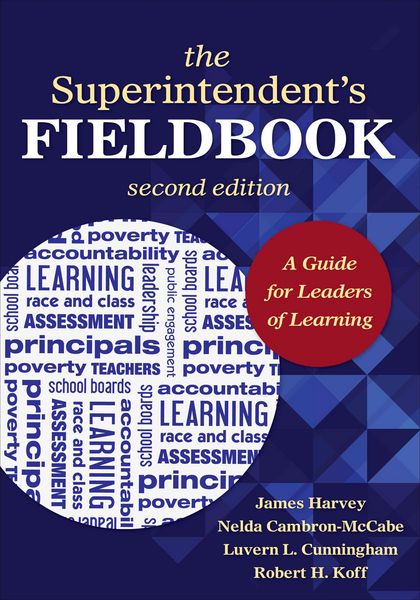
Produktbild: Harvey, J: Superintendent's Fieldbook

Harvey, J: Superintendent's Fieldbook

42,99 €

inkl. gesetzl. MwSt., Versandkostenfrei


Beschreibung

Produktdetails

Einband

Taschenbuch

Erscheinungsdatum

09.05.2013

Verlag

Sage Publications

Seitenzahl

400

Maße (L/B/H)

25,4/17,8/2,3 cm

Gewicht

1069 g

Auflage

2. Auflage

Sprache

Englisch

ISBN

978-1-4522-1749-9

Beschreibung

Rezension

"The Superintendent's Fieldbook accomplishes everything it sets out to do. This remarkable book for new as well as veteran superintendents is thoroughly researched, practical, and compelling. If I could have but one book on my shelf to support the all-encompassing work we do, The Superintendent's Fieldbook would be the one." Suzanne Cusick, Superintendent 20121114

Produktdetails

Einband

Taschenbuch

Erscheinungsdatum

09.05.2013

Verlag

Sage Publications

Seitenzahl

400

Maße (L/B/H)

25,4/17,8/2,3 cm

Gewicht

1069 g

Auflage

2. Auflage

Sprache

Englisch

ISBN

978-1-4522-1749-9

EU-Ansprechpartner

Kolibri 360 GmbH
Ettore-Bugatti-Straße 6-14
51149 Köln
DE
produktsicherheit@kolibri360.de

Herstelleradresse

SAGE Publications
1 Oliver's Yard 55 City Road
EC1Y 1SP London
GB
orders@sagepub.co.uk

Noch keine Bewertungen vorhanden

Verfassen Sie die erste Bewertung zu diesem Artikel

Helfen Sie anderen Kundinnen und Kunden durch Ihre Meinung.

Kundinnen und Kunden meinen

Bewertungen (0)

  • Produktbild: Harvey, J: Superintendent's Fieldbook
  • Preface to the Second Edition
    Acknowledgments
    About the Authors
    Part I: Orientation
    A. Introduction: Leading Learning in New Times
    B. Fifty Years of School Reform
    1. Why Have We Fallen Short, and Where Do We Go From Here?
    2. A Public Man Looks at Public Education
    3. Role of the Superintendent in a New Age and a Different World
    C. The "Commonplaces" of School Leadership
    D. Tools
    E. Reflective Practice
    Part II: Leading Your Schools
    A. Leadership Theory for the Theoretically Challenged
    1. The Leadership Literature Landscape
    B. Thinking About Your Organization
    1. Images of Organization
    C. Encouraging Adaptive Leadership
    1. Principles of Adaptive Leadership
    2. Questions for Getting on the Balcony
    D. From Lone Ranger to Lead Learner: One Superintendent's Journey
    E. Creating Your Learning Organization
    1. The Five Disciplines
    2. Archetypes of Systems Thinking
    3. The Iceberg
    F. Building a Core Learning Group
    G. From Theory to Practice
    1. Getting the Job
    2. Implementing Systems Thinking in a District
    3. How to Thrive as a Superintendent
    H. Tools
    1. The Ladder of Inference
    2. The Transition Conversation
    3. Dialogue: Suspending the Elephant Over the Table
    I. Reflective Practice
    Part III: Coping With Governance Challenges
    A. Privatization
    1. The Growth of Charters and Vouchers
    2. Ohio Study: Achievement in Charter Schools No Better Than in Traditional Public Schools
    B. The Challenges of Public Administration
    C. Changes in State Agencies
    D. Working With Images of Organization
    E. Working With Your Board
    1. Getting It Right With the Board
    2. Tips on Working With the Board
    3. School Finance 101: No Surprises Around Money
    F. Working With Your Unions
    1. A Primer on Labor-Management Relations and Contracts
    2. Do's and Don'ts in Contract Negotiations
    3. Bargain Like a Pro
    G. The Small-District Superintendent
    H. Tools
    1. Build an Entry Plan
    2. How Well Is Your Board Functioning?
    3. Leading While Surviving Professionally and Emotionally
    4. Ten Ground Rules for Survival
    I. Reflective Practice
    Part IV: Learning and Assessment
    A. The Shape of the New Discussion
    B. Principles of Learning
    1. Effort-Based Education
    C. Emerging Issues in Neuroscience
    1. The Neuroscience of Mindfulness
    2. The Embodied Brain
    D. Common Core State Standards
    1. The Case for the Common Core
    2. A Think Tank Examines the Common Core
    3. Local Educators Look at the Common Core
    E. The Achievement Gap
    1. It's Not Good Enough: A Personal Perspective on Urban Student Achievement
    2. Whistling Past the Schoolyard
    F. Value-Added Assessment of Teachers
    1. The Case for Value-Added Assessment
    2. The Case Against Value-Added Assessment
    3. A New Model for Teacher Evaluation and Compensation
    4. Another Model
    5. Central Office Practice Around Learning and Assessment
    G. Tools
    1. Effective State Accountability Systems
    2. Assessing Your State's Accountability System
    H. Reflective Practice
    Part V: Addressing Race and Class
    A. Why Race and Class?
    1. Holding Difficult Conversations
    2. Sabotaging the Conversation
    3. Crisis Facing Minority Males
    4. Thinking About Educating Men of Color
    5. Taking Risks Around Race
    B. Superintendents Consider Race and Class
    C. Can We Close the Gap?
    1. Race and District Complexity as Factors in Superintendents' Responses
    2. Schools Can't Do It Alone
    3. An Asset-Based Approach
    4. Twenty External Developmental Assets
    5. Twenty Internal Developmental Assets
    6. Deficits or Assets in Over-the-Rhine?
    7. A Pastor Looks at Assets
    D. Tools
    1. Kiva: A Tool for Talking
    2. The Kiva in Action
    3. Microlab, Peeling the Onion, and Active Listening
    E. Reflective Practice
    1. Thinking About Learners at the Fringes
    2. Questions for Reflective Practice
    Part VI: Developing Your Principals
    A. Leading Student Learning
    1. What Does It Take to Lead a School?
    2. The School Principal as Leader
    3. Help Wanted: Implications for District Leadership
    4. The Challenge of Pricipal Turnover
    B. Instructional Leadership
    C. Facilitating Change
    1. Nature of the Change Process
    2. The Hall Innovation Category Scale (HiC)
    3. The Leap of Faith
    4. Stages of Concern
    5. Bridging the Leap of Faith
    6. Your Task as a Superintendent
    D. Tools for Instructional Leaders
    1. Nine Tools for the Instructional Leader
    2. The Walkthrough
    E. Reflective Practice
    1. A Teaching or a Learning System?
    2. Questions for Reflective Practice
    Part VII: Collaborating With Your Allies
    A. What Is Collaboration?
    1. Build Boats, Not Houses
    2. A New Way of Thinking
    3. Picturing a New Way of Thinking
    B. Engage the Public in Terms It Can Understand
    C. Think Assets, Not Deficits
    D. Need for Early Care and Education
    1. Orientation
    2. Where Learning Begins: The Remarkable Human Brain
    3. The Need for and Value of Early Learning Programs
    E. Engaging Community in St. Martin Parish
    F. Tools
    1. First Steps: Getting Started
    2. Parental Involvement
    3. Parents and Steps to Success for Children
    4. Key Elements of Collaboration
    5. Identify Core Community Values
    G. Reflective Practice
    Part VIII: Engaging Your Community
    A. Public Engagement
    1. From Public Relations to Public Engagement
    2. Listening to Your Public
    3. A Seven-Stage Model of Engagement
    B. Public Engagement and Education
    C. Working With the Public on Education Reform
    1. Guidelines on Opinion Research
    D. Community Conversations in San Jose
    E. Working With Your News and Media Outlets
    1. Reframe--Inoculate--Communicate
    2. Sandy Hook Elementary: Catastrophe Strikes
    3. District Policy on Weapons and Gun Violence
    F. Communications Planning
    1. Communications: Internal and External
    2. A Communications Audit
    3. Vital Signs of Public Engagement
    G. Tools
    1. Tips on the Seven Stages
    2. Focus Groups and Surveys
    3. Community Conversations: A Tool for Public Engagement
    4. Framing Community Conversations
    5. Twenty Questions
    6. Creating a Newsworthy Statement
    7. Tackling the Media Interview
    H. Reflective Practice
    Part IX: So, What Does All This Mean?
    A. Reconciling "Commonplaces" and Images
    1. Inherited Images
    2. Emerging Images
    3. Mutually Exclusive?
    4. The New Governance Paradigm
    B. School Reform: A "Wicked" Problem
    C. A 15-Year Urban Case Study in the United States
    D. Are You and Educators Like You the Problem?
    1. Spending More and Getting Less?
    2. Student Achievement Declining?
    3. Threat to American International Competitiveness?
    4. Observations on Education Abroad
    5. China Is Not "Eating Our Lunch"
    E. Single-Loop or Double-Loop Thinking?
    1. Are We "Shifting the Burden" in Schools?
    F. Four Leadership Styles
    1. Leader as Poet, Prophet, Coach, or Therapist
    G. Reflective Practice
    Appendices
    Appendix A: The National Superintendents Roundtable and the Forum for the American School Superintendent
    Appendix B: Members of the Danforth Forum for the American School Superintendent
    Appendix C: Members of the National Superintendents Roundtable
    Appendix D: Contributors
    Index