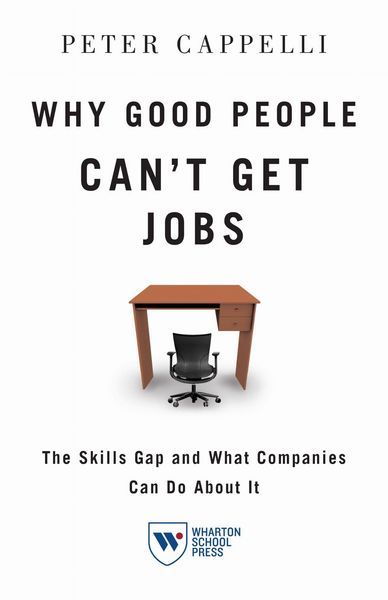
Why Good People Can't Get Job The Skills Gap and What Companies Can Do about It
-
- Taschenbuch ausgewählt
- eBook
-
Sprache:Englisch
15,99 €
inkl. gesetzl. MwSt.,
- Kostenlose Lieferung ab 30 € Einkaufswert
- Versandkostenfrei für Bonuscard-Kund*innen
Beschreibung
Produktdetails
Einband
Taschenbuch
Erscheinungsdatum
29.05.2012
Verlag
University Of Pennsylvania PressSeitenzahl
108
Maße (L/B/H)
21,6/13,9/1,7 cm
Gewicht
157 g
Sprache
Englisch
ISBN
978-1-61363-014-3
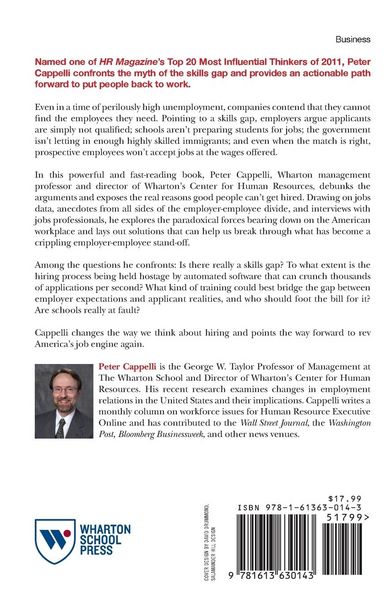
Peter Cappelli confronts the myth of the skills gap and provides an actionable path forward to put people back to work.
Even in a time of perilously high unemployment, companies contend that they cannot find the employees they need. Pointing to a skills gap, employers argue applicants are simply not qualified; schools aren't preparing students for jobs; the government isn't letting in enough high-skill immigrants; and even when the match is right, prospective employees won't accept jobs at the wages offered.
In this powerful and fast-reading book, Peter Cappelli, Wharton management professor and director of Wharton's Center for Human Resources, debunks the arguments and exposes the real reasons good people can't get hired. Drawing on jobs data, anecdotes from all sides of the employer-employee divide, and interviews with jobs professionals, he explores the paradoxical forces bearing down on the American workplace and lays out solutions that can help us break through what has become a crippling employer-employee stand-off.
Among the questions he confronts: Is there really a skills gap? To what extent is the hiring process being held hostage by automated software that can crunch thousands of applications an hour? What kind of training could best bridge the gap between employer expectations and applicant realities, and who should foot the bill for it? Are schools really at fault?
Named one of HR Magazine's Top 20 Most Influential Thinkers of 2011, Cappelli not only changes the way we think about hiring but points the way forward to rev America's job engine again.
Noch keine Bewertungen vorhanden
Verfassen Sie die erste Bewertung zu diesem Artikel
Helfen Sie anderen Kundinnen und Kunden durch Ihre Meinung.
Kurze Frage zu unserer Seite
Vielen Dank für Ihr Feedback
Wir nutzen Ihr Feedback, um unsere Produktseiten zu verbessern. Bitte haben Sie Verständnis, dass wir Ihnen keine Rückmeldung geben können. Falls Sie Kontakt mit uns aufnehmen möchten, können Sie sich aber gerne an unseren Kund*innenservice wenden.
zum Kundenservice