KI-Beratung Beta

Gutscheinbedingungen

**Gültig am 01.10.2026 ab einem Mindestbestellwert von 30€ auf Spielzeug, Schreibwaren, Filme, Geschenke & Trends, Musik, tolino eReader & Zubehör, Hörbücher und Hörbuch-Downloads, nicht preisgebundene Bücher und Kalender online auf thalia.at und in der Thalia App. Einzelne Artikel können ausgeschlossen sein. Aufgrund der Buchpreisbindung sind deutschsprachige Bücher und eBooks ausgenommen. Zusätzlich ausgenommen sind Abos & Flatrates, Games, Geschenkkarten/-boxen, Shelfies, Software, Zeitschriften sowie einzelne Artikel von tonies®. Pro Einkauf einmal einlösbar. Click & Collect nur bei Onlinevorabzahlung möglich. Keine Barauszahlung. Nicht kombinierbar mit anderen Aktionen und Gutscheinen. Gutschein wird auf max. 500€ Bestellwert angerechnet. Nicht gültig für Versandkosten und Services. Preisgebundene Artikel sind vom Mindestbestellwert ausgeschlossen.

  • Produktbild: Against the Consensus
  • Produktbild: Against the Consensus

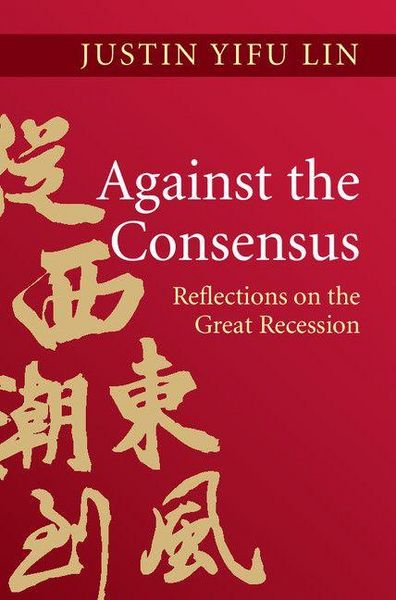
Against the Consensus Reflections on the Great Recession

53,99 €

inkl. gesetzl. MwSt., Versandkostenfrei


Beschreibung

Produktdetails

Einband

Gebundene Ausgabe

Erscheinungsdatum

04.07.2013

Verlag

Cambridge University Press

Seitenzahl

273

Maße (L/B/H)

23,5/15,7/2 cm

Gewicht

560 g

Sprache

Englisch

ISBN

978-1-107-03887-5

Beschreibung

Rezension

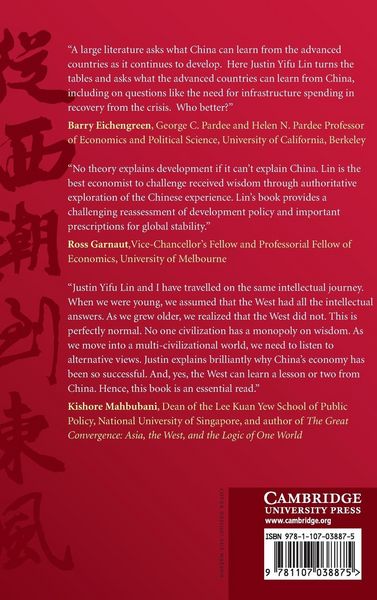
'A large literature asks what China can learn from the advanced countries as it continues to develop. Here Justin Yifu Lin turns the tables and asks what the advanced countries can learn from China, including on questions like the need for infrastructure spending in recovery from the crisis. Who better?' Barry Eichengreen, George C. Pardee and Helen N. Pardee Professor of Economics and Political Science, University of California, Berkeley

Zitat

'A large literature asks what China can learn from the advanced countries as it continues to develop. Here Justin Yifu Lin turns the tables and asks what the advanced countries can learn from China, including on questions like the need for infrastructure spending in recovery from the crisis. Who better?' Barry Eichengreen, George C. Pardee and Helen N. Pardee Professor of Economics and Political Science, University of California, Berkeley 'No theory explains development if it can't explain China. Lin is the best economist to challenge received wisdom through authoritative exploration of the Chinese experience. [His] book provides a challenging reassessment of development policy and important prescriptions for global stability.' Ross Garnaut, Vice-Chancellor's Fellow and Professorial Fellow of Economics, University of Melbourne 'Justin Yifu Lin and I have travelled on the same intellectual journey. When we were young, we assumed that the West had all the intellectual answers. As we grew older, we realized that the West did not. This is perfectly normal. No one civilization has a monopoly on wisdom. As we move into a multi-civilizational world, we need to listen to alternative views. Justin explains brilliantly why China's economy has been so successful. And, yes, the West can learn a lesson or two from China. Hence, this book is an essential read.' Kishore Mahbubani, Dean, Lee Kuan Yew School of Public Policy, National University of Singapore, and author of The Great Convergence: Asia, the West, and the Logic of One World

Produktdetails

Einband

Gebundene Ausgabe

Erscheinungsdatum

04.07.2013

Verlag

Cambridge University Press

Seitenzahl

273

Maße (L/B/H)

23,5/15,7/2 cm

Gewicht

560 g

Sprache

Englisch

ISBN

978-1-107-03887-5

Herstelleradresse

Libri GmbH
Europaallee 1
36244 Bad Hersfeld
DE

Email: gpsr@libri.de

Noch keine Bewertungen vorhanden

Verfassen Sie die erste Bewertung zu diesem Artikel

Helfen Sie anderen Kundinnen und Kunden durch Ihre Meinung.

Kundinnen und Kunden meinen

Bewertungen (0)

Die Leseprobe wird geladen.
  • Produktbild: Against the Consensus
  • Produktbild: Against the Consensus
  • Preface; Overview; Part I. What Caused the 2008-9 Global Crisis?: 1. The world economy and the 2008-9 crisis; 2. The real causes of the crisis; 3. Financial deregulation and the housing bubble; 4. What's wrong with the Eurozone; 5. Why China's reserves rose so much; Part II. A Win-Win Path to Recovery: 6. Infrastructure investments - beyond Keynesianism; 7. A massive global infrastructure initiative; Part III. How Poor Countries Can Catch up: Flying Geese and Leading Dragons: 8. The mystery of the great divergence; 9. The mechanics and benefits of structural change; 10. Lessons from the failures and successes of structural transformation; 11. Unique opportunities for poor countries; Part IV. Toward a Brave New World Monetary System: 12. The evolution of the international monetary system; 13. Emerging pressures and policy challenges; 14. (In)stability of the emerging multiple reserve currency system; 15. The thinking behind the main reform proposals; 16. Costs and benefits of major reform proposals; 17. A proposal for a new global reserve currency - paper gold ('p-gold'); 18. Why it still matters; References; Index.