KI-Beratung Beta

Gutscheinbedingungen

**Gültig bis 18.11.2026 auf englischsprachige Klassiker (klassiker-32728) online auf thalia.at und in der Thalia App. Einzelne Artikel können ausgeschlossen sein. Ausgenommen sind preisgebundene Artikel & eBooks. Pro Einkauf einmal einlösbar. Click & Collect nur bei Onlinevorabzahlung möglich. Keine Barauszahlung. Nicht kombinierbar mit anderen Aktionen und Gutscheinen. Gutschein wird auf max. 500€ Bestellwert angerechnet. Nicht gültig für Geschenkkarten, Versandkosten und Services.

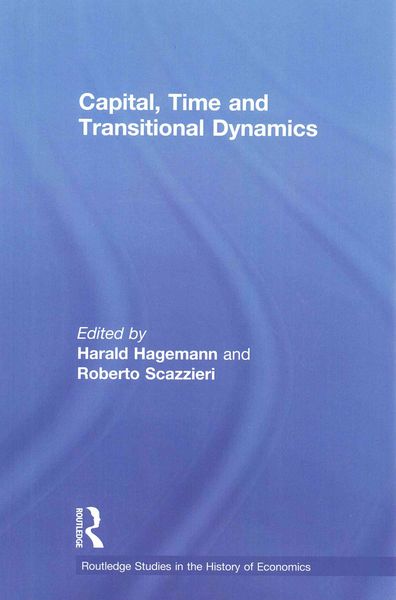
Produktbild: Capital, Time and Transitional Dynamics

Capital, Time and Transitional Dynamics

78,99 €

inkl. gesetzl. MwSt., Versandkostenfrei


Beschreibung

In the words of Robert M. Solow traverse analysis "is the easiest part of skiing, but the hardest part of economics". The aim of this volume is to assess the state and scope of modern traverse analysis as it had been initiated by John Hicks in his pioneering contribution Capital and Time (1973). The...

Beschreibung

In the words of Robert M. Solow traverse analysis "is the easiest part of skiing, but the hardest part of economics". The aim of this volume is to assess the state and scope of modern traverse analysis as it had been initiated by John Hicks in his pioneering contribution Capital and Time (1973). The analysis of an economy which originally had been in a growth equilibrium which was disturbed by technical progress is one of the most challenging problems in economics. This book takes Hicks' work as the point of departure for theoretical work on the macroeconomic theory of capital dynamics along transition non-steady state paths

The original contributions in this volume explore the manifold theoretical roots of traverse analysis in classical and post-classical literature, its features as a specific method of economic dynamics, and its applications in a variety of fields from monetary economics to development and international economics. The essays thereby focus on the ways ahead from Capital and Time that have been suggested and actively pursued by a number of scholars in recent years. Its central theme is the role of capital structures as critical factors in determining the actual dynamics of any given economic system. This volume is inspired by the belief that this state of affairs is not a satisfactory one, and outlines a new agenda for capital theory. Contributors include Edwin Burmeister, Jean-Luc Gaffard and Heinz Kurz.

Produktdetails

Einband

Taschenbuch

Erscheinungsdatum

15.04.2010

Abbildungen

schwarz-weiss Illustrationen, Zeichnungen, schwarz-weiss, Tabellen, schwarz-weiss

Herausgeber Harald Hagemann + weitere

Produktdetails

Einband

Taschenbuch

Erscheinungsdatum

15.04.2010

Abbildungen

schwarz-weiss Illustrationen, Zeichnungen, schwarz-weiss, Tabellen, schwarz-weiss

Herausgeber
Verlag Taylor and Francis
Seitenzahl

286

Maße (L/B/H)

23,4/15,6/1,5 cm

Gewicht

408 g

Sprache

Englisch

ISBN

978-0-415-58863-8

Herstelleradresse

Libri GmbH
Europaallee 1
36244 Bad Hersfeld
DE

Email: gpsr@libri.de

Noch keine Bewertungen vorhanden

Verfassen Sie die erste Bewertung zu diesem Artikel

Helfen Sie anderen Kundinnen und Kunden durch Ihre Meinung.

Kundinnen und Kunden meinen

Bewertungen (0)

Die Leseprobe wird geladen.
  • Produktbild: Capital, Time and Transitional Dynamics
  • Preface and Acknowledgements Harald Hagemann and Roberto Scazzieri Capital Structure and Economic Transitions: An Introductory Essay Harald Hagemann and Roberto Scazzieri 1. A Retrospective View of Hicks' Capital and Time: A Neo-Austrian Theory Edwin Burmeister 2. Hicks's Neo-Austrian Theory and Böhm-Bawerk's Theory of Capital Christian Gehrke and Heinz D. Kurz 3. Traverse Analysis and Methods of Economic Dynamics Roberto Scazzieri 4. Hicks's Traverse Analysis: From Capital and Growth to Capital and Time Harald Hagemann 5. Technical Change, Vertical and Horizontal Rigidities: a Neo-Austrian Approach Franco Nardini 6. Simulation of the Full Employment Traverse of Capital and Time Kazuhisa Taniguchi 7. Traverse, Division of Labour and Emerging Structures Massimo Ricottilli 8. Hicks's Traverse in a Small Open Economy Shin-Haing Kim 9. From Traverse to out-of-Equilibrium Processes of Change: the Role of Money Mario Amendola and Jean-Luc Gaffard