Gutscheinbedingungen

**Gültig bis 22.07.2026 ab einem Mindestbestellwert von 40€ auf Spielzeug, Schreibwaren, Filme, Geschenke & Trends, Musik, tolino eReader & Zubehör, Hörbücher und Hörbuch-Downloads (außer Abo), nicht preisgebundene Bücher und Kalender online auf thalia.at und in der Thalia App. Einzelne Artikel können ausgeschlossen sein. Aufgrund der Buchpreisbindung sind deutschsprachige Bücher und eBooks ausgenommen. Zusätzlich ausgenommen sind preisgebundene Artikel, Abos & Flatrates, eBooks, Games, Geschenkkarten/-boxen, Shelfies, Software, Zeitschriften sowie einzelne Artikel von tonies®. Pro Einkauf einmal einlösbar. Click & Collect nur bei Onlinevorabzahlung möglich. Keine Barauszahlung. Nicht kombinierbar mit anderen Aktionen und Gutscheinen. Gutschein wird auf max. 500€ Bestellwert angerechnet. Nicht gültig für Versandkosten und Services. Preisgebundene Artikel sind vom Mindestbestellwert ausgeschlossen.

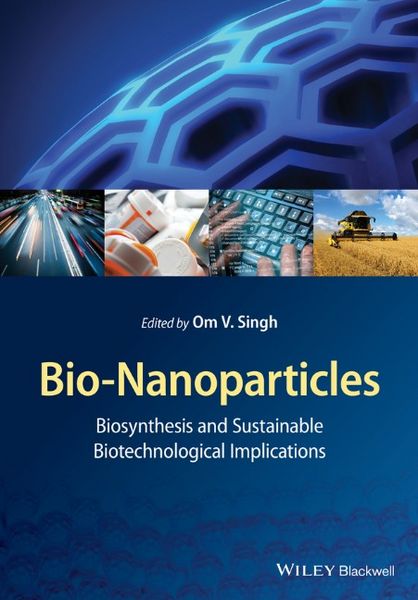
Produktbild: Bio-Nanoparticles

Bio-Nanoparticles Biosynthesis and Sustainable Biotechnological Implications

189,99 €

inkl. gesetzl. MwSt., Versandkostenfrei


Beschreibung

Produktdetails

Einband

Gebundene Ausgabe

Erscheinungsdatum

22.06.2015

Herausgeber

Om V. Singh

Verlag

John Wiley & Sons

Seitenzahl

384

Maße (L/B/H)

24,4/17,3/2,3 cm

Gewicht

748 g

Auflage

1. Auflage

Sprache

Englisch

ISBN

978-1-118-67768-1

Beschreibung

Produktdetails

Einband

Gebundene Ausgabe

Erscheinungsdatum

22.06.2015

Herausgeber

Om V. Singh

Verlag

John Wiley & Sons

Seitenzahl

384

Maße (L/B/H)

24,4/17,3/2,3 cm

Gewicht

748 g

Auflage

1. Auflage

Sprache

Englisch

ISBN

978-1-118-67768-1

Herstelleradresse

Libri GmbH
Europaallee 1
36244 Bad Hersfeld
DE

Email: GPSR Kontakt

Noch keine Bewertungen vorhanden

Verfassen Sie die erste Bewertung zu diesem Artikel

Helfen Sie anderen Kundinnen und Kunden durch Ihre Meinung.

Kundinnen und Kunden meinen

Bewertungen (0)

Die Leseprobe wird geladen.
  • Produktbild: Bio-Nanoparticles
  • List of Contributors xv

    Introduction xvii

    1 Diversity of Microbes in Synthesis of Metal Nanoparticles: Progress and Limitations 1
    Mahendra Rai, Irena Maliszewska, Avinash Ingle, Indarchand Gupta, and Alka Yadav

    1.1 Introduction 1

    1.2 Synthesis of Nanoparticles by Bacteria 2

    1.3 Synthesis of Nanoparticles by Fungi 9

    1.4 Synthesis of Nanoparticles by Algae 12

    1.5 Applications of Metal Nanoparticles 16

    1.5.1 Nanoparticles as Catalyst 16

    1.5.2 Nanoparticles as Bio?]membranes 17

    1.5.3 Nanoparticles in Cancer Treatment 17

    1.5.4 Nanoparticles in Drug Delivery 17

    1.5.5 Nanoparticles for Detection and Destruction of Pesticides 17

    1.5.6 Nanoparticles in Water Treatment 18

    1.6 Limitations of Synthesis of Biogenic Nanoparticles 18

    References 20

    2 Role of Fungi Toward Synthesis of Nano?]Oxides 31
    Rajesh Ramanathan and Vipul Bansal

    2.1 Introduction 31

    2.2 Fungus?]mediated Synthesis of Nanomaterials 34

    2.2.1 Biosynthesis of Binary Nano?]oxides using Chemical Precursors 34

    2.2.2 Biosynthesis of Complex Mixed?]metal Nano?]oxides using Chemical Precursors 39

    2.2.3 Biosynthesis of Nano?]oxides using Natural Precursors employing

    Bioleaching Approach 42

    2.2.4 Biosynthesis of nano?]oxides employing bio?]milling approach 44

    2.3 Outlook 46

    References 47

    3 Microbial Molecular Mechanisms in Biosynthesis of Nanoparticles 53
    Atmakuru Ramesh, Marimuthu Thiripura Sundari, and Perumal Elumalai Thirugnanam

    3.1 Introduction 53

    3.2 Chemical Synthesis of Metal Nanoparticles 54

    3.2.1 Brust-Schiffrin Synthesis 55

    3.3 Green Synthesis 57

    3.4 Biosynthesis of Nanoparticles 58

    3.5 Mechanisms for Formation or Synthesis of Nanoparticles 61

    3.5.1 Biomineralization using Magnetotactic Bacteria (MTB) 61

    3.5.2 Reduction of Tellurite using Phototroph Rhodobacter capsulatus 62

    3.5.3 Formation of AgNPs using Lactic Acid and Bacteria 62

    3.5.4 Microfluidic Cellular Bioreactor for the Generation of Nanoparticles 62

    3.5.5 Proteins and Peptides in the Synthesis of Nanoparticles 65

    3.5.6 NADH?]dependent Reduction by Enzymes 65

    3.5.7 Sulfate and Sulfite Reductase 66

    3.5.8 Cyanobacteria 67

    3.5.9 Cysteine Desulfhydrase in Rhodopseudomonas palustris 68

    3.5.10 Nitrate and Nitrite reductase 68

    3.6 E xtracellular Synthesis of Nanoparticles 69

    3.6.1 Bacterial Excretions 69

    3.6.2 Fungal Strains 71

    3.6.3 Yeast: Oxido?]reductase Mechanism 72

    3.6.4 Plant Extracts 73

    3.7 Conclusion 76

    References 78

    4 Biofilms in Bio?]Nanotechnology: Opportunities and Challenges 83
    Chun Kiat Ng, Anee Mohanty, and Bin Cao

    4.1 Introduction 83

    4.2 Microbial Synthesis of Nanomaterials 84

    4.2.1 Overview 84

    4.2.2 Significance of Biofilms in Biosynthesis of Nanomaterials 89

    4.2.3 Synthesis of Nanomaterials using Biofilms 90

    4.3 Interaction of Microbial Biofilms with Nanomaterials 90

    4.3.1 Nanomaterials as Anti?]biofilm Agents 90

    4.3.2 Nanomaterials as a Tool in Biofilm Studies 92

    4.4 Future Perspectives 93

    References 94

    5 Extremophiles and Biosynthesis of Nanoparticles: Current and Future Perspectives 101
    Jingyi Zhang, Jetka Wanner, and Om V. Singh

    5.1 Introduction 101

    5.2 Synthesis of Nanoparticles 104

    5.2.1 Microorganisms: An Asset in Nanoparticle Biosynthesis 104

    5.2.2 E xtremophiles in Nanoparticle Biosynthesis 104

    5.3 Mechanism of Nanoparticle Biosynthesis 108

    5.4 Fermentative Production of Nanoparticles 111

    5.5 Nanoparticle Recovery 114

    5.6 Challenges and Future Perspectives 115

    5.7 Conclusion 115

    References 116

    6 Biosynthesis of Size-Controlled Metal and Metal Oxide Nanoparticles by Bacteria 123
    Chung-Hao Kuo, David A. Kriz, Anton Gudz, and Steven L. Suib

    6.1 Introduction 123

    6.2 Intracellular Synthesis of Metal Nanoparticles by Bacteria 124

    6.3 E xtracellular Synthesis of Metal Nanoparticles by Bacteria 129

    6.4 Synthesis of Metal Oxide and Sulfide Nanoparticles by Bacteria 131

    6.5 Conclusion 135

    References 135

    7 Methods of Nanoparticle Biosynthesis for Medical and Commercial Applications 141
    Shilpi Mishra, Saurabh Dixit, and Shivani Soni

    7.1 Introduction 141

    7.2 Biosynthesis of Nanoparticles using Bacteria 144

    7.2.1 Synthesis of Silver Nanoparticles by Bacteria 144

    7.2.2 Synthesis of Gold Nanoparticles by Bacteria 145

    7.2.3 Synthesis of other Metallic Nanoparticles by Bacteria 145

    7.3 Biosynthesis of Nanoparticles using Actinomycete 146

    7.4 Biosynthesis of Nanoparticles using Fungi 147

    7.5 Biosynthesis of Nanoparticles using Plants 148

    7.6 Conclusions 149

    References 149

    8 Microbial Synthesis of Nanoparticles: An Overview 155
    Sneha Singh, Ambarish Sharan Vidyarthi, and Abhimanyu Dev

    8.1 Introduction 156

    8.2 Nanoparticles Synthesis Inspired by Microorganisms 157

    8.2.1 Bacteria in NPs Synthesis 162

    8.2.2 Fungi in NPs Synthesis 167

    8.2.3 Actinomycetes in NPs Synthesis 170

    8.2.4 Yeast in NPs Synthesis 171

    8.2.5 Virus in NPs Synthesis 173

    8.3 Mechanisms of Nanoparticles Synthesis 174

    8.4 Purification and Characterization of Nanoparticles 176

    8.5 Conclusion 177

    References 179

    9 Microbial Diversity of Nanoparticle Biosynthesis 187
    Raveendran Sindhu, Ashok Pandey, and Parameswaran Binod

    9.1 Introduction 187

    9.2 Microbial-mediated Nanoparticles 187

    9.2.1 Gold 188

    9.2.2 Silver 190

    9.2.3 Selenium 191

    9.2.4 Silica 192

    9.2.5 Cadmium 192

    9.2.6 Palladium 193

    9.2.7 Zinc 193

    9.2.8 Lead 194

    9.2.9 Iron 195

    9.2.10 Copper 195

    9.2.11 Cerium 196

    9.2.12 Microbial Quantum Dots 196

    9.2.13 Cadmium Telluride 197

    9.2.14 Iron Sulfide-greigite 198

    9.3 Native and Engineered Microbes for Nanoparticle Synthesis 198

    9.4 Commercial Aspects of Microbial Nanoparticle Synthesis 199

    9.5 Conclusion 200

    References 200

    10 S ustainable Synthesis of Palladium(0) Nanocatalysts and their Potential for Organohalogen Compounds Detoxification 205
    Michael Bunge and Katrin Mackenzie

    10.1 Introduction 205

    10.2 Chemically Generated Palladium Nanocatalysts for Hydrodechlorination: Current Methods and Materials 206

    10.2.1 Pd Catalysts 206

    10.2.2 Data Analysis 207

    10.2.3 Pd as Dehalogenation Catalyst 207

    10.2.4 Intrinsic Potential vs. Performance 208

    10.2.5 Concepts for Pd Protection 210

    10.3 Bio-supported Synthesis of Palladium Nanocatalysts 211

    10.3.1 Background 211

    10.4 Current Approaches for Synthesis of Palladium Catalysts in the Presence of Microorganisms 212

    10.4.1 Pd(II)-Tolerant Microorganisms for Future Biotechnological Approaches 213

    10.4.2 Controlling Size and Morphology during Bio-Synthesis 214

    10.4.3 Putative and Documented Mechanisms of Biosynthesis of Palladium Nanoparticles 215

    10.4.4 Isolation of Nanocatalysts from the Cell Matrix and Stabilization 216

    10.5 Bio-Palladium(0)-nanocatalyst Mediated Transformation of Organohalogen Pollutants 217

    10.6 Conclusions 218

    References 219

    11 E nvironmental Processing of Zn Containing Wastes and Generation of Nanosized Value-Added Products 225
    Abhilash and B.D. Pandey

    11.1 Introduction 225

    11.1.1 World Status of Zinc Production 226

    11.1.2 E nvironmental Impact of the Process Wastes Generated 226

    11.1.3 Production Status in India 227

    11.1.4 Recent Attempts at Processing Low-Grade Ores and Tailings 228

    11.2 Physical/Chemical/Hydrothermal Processing 229

    11.2.1 E xtraction of Pb-Zn from Tailings for Utilization and Production in China 229

    11.2.2 Vegetation Program on Pb-Zn Tailings 229

    11.2.3 Recovering Valuable Metals from Tailings and Residues 229

    11.2.4 E xtraction of Vanadium, Lead and Zinc from Mining Dump in Zambia 230

    11.2.5 Recovery of Zinc from Blast Furnace and other Dust/Secondary Resources 230

    11.2.6 Treatment and Recycling of Goethite Waste 231

    11.2.7 Other Hydrometallurgical Treatments of Zinc-based Industrial Wastes and Residues 231

    11.3 Biohydrometallurgical Processing: International Scenario 233

    11.3.1 Bioleaching of Zn from Copper Mining Residues by Aspergillus niger 233

    11.3.2 Bioleaching of Zinc from Steel Plant Waste using Acidithiobacillus ferrooxidans 234

    11.3.3 Bacterial Leaching of Zinc from Chat (Chert) Pile Rock and Copper from Tailings Pond Sediment 234

    11.3.4 Dissolution of Zn from Zinc Mine Tailings 234

    11.3.5 Microbial Diversity in Zinc Mines 234

    11.3.6 Chromosomal Resistance Mechanisms of A. ferrooxidans on Zinc 235

    11.3.7 Bioleaching of Zinc Sulfides by Acidithiobacillus ferrooxidans 235

    11.3.8 Bioleaching of High-sphalerite Material 235

    11.3.9 Bioleaching of Low-grade ZnS Concentrate and Complex Sulfides (Pb-Zn) using Thermophilic Species 236

    11.3.10 Improvement of Stains for Bio-processing of Sphalerite 236

    11.3.11 Tank Bioleaching of ZnS and Zn Polymetallic Concentrates 237

    11.3.12 Large-Scale Development for Zinc Concentrate Bioleaching 237

    11.3.13 Scale-up Studies for Bioleaching of Low-Grade Sphalerite Ore 238

    11.3.14 Zinc Resistance Mechanism in Bacteria 238

    11.4 Biohydrometallurgical Processing: Indian Scenario 238

    11.4.1 E lectro-Bioleaching of Sphalerite Flotation Concentrate 239

    11.4.2 Bioleaching of Zinc Sulfide Concentrate 239

    11.4.3 Bioleaching of Moore Cake and Sphalarite Tailings 239

    11.5 Synthesis of Nanoparticles 240

    11.6 Applications of Zinc-based Value-added Products/Nanomaterials 244

    11.6.1 Hydro-Gel for Bio-applications 244

    11.6.2 Sensors 244

    11.6.3 Biomedical Applications 245

    11.6.4 Antibacterial Properties 245

    11.6.5 Zeolites in biomedical applications 246

    11.6.6 Textiles 246

    11.6.7 Prospects of Zinc Recovery from Tailings and Biosynthesis of Zinc-based Nano-materials 246

    11.7 Conclusions and Future Directions 247

    References 248

    12 Interaction Between Nanoparticles and Plants: Increasing Evidence of Phytotoxicity 255
    Rajeshwari Sinha and S.K. Khare

    12.1 Introduction 255

    12.2 Plant-Nanoparticle Interactions 256

    12.3 E ffect of Nanoparticles on Plants 256

    12.3.1 Monocot Plants 257

    12.3.2 Dicot Plants 257

    12.4 Mechanisms of Nanoparticle?]induced Phytotoxicity 257

    12.4.1 Endocytosis 257

    12.4.2 Transfer through Ion Channels Post?]ionization 262

    12.4.3 Aquaporin Mediated 262

    12.4.4 Carrier Proteins Mediated 262

    12.4.5 Via Organic Matter 262

    12.4.6 Complex Formation with Root Exudates 262

    12.4.7 Foliar Uptake 263

    12.5 E ffect on Physiological Parameters 263

    12.5.1 Loss of Hydraulic Conductivity 263

    12.5.2 Genotoxic Effects 263

    12.5.3 Absorption and Accumulation 263

    12.5.4 Generation of Reactive Oxygen Species (ROS) 264

    12.5.5 Biotransformation of NPs 264

    12.6 Genectic and Molecular Basis of NP Phytotoxicity 266

    12.7 Conclusions and Future Perspectives 266

    References 267

    13 Cytotoxicology of Nanocomposites 273
    Horacio Bach

    13.1 Introduction 273

    13.2 Cellular Toxicity 274

    13.2.1 Mechanisms of Cellular Toxicity 274

    13.2.2 E ffect of Glutathione (GSH) in Oxidative Stress 276

    13.2.3 Damage to Cellular Biomolecules 277

    13.3 Nanoparticle Fabrication 281

    13.3.1 Physico?]chemical Characteristics of NPs 282

    13.3.2 Cellular Uptake 284

    13.3.3 Factors Affecting the Internalization of NPs 287

    13.4 Immunological Response 289

    13.4.1 Cytokine Production 289

    13.4.2 Cytotoxicity, Necrosis, Apoptosis, and Cell Death 290

    13.5 Factors to Consider to Reduce the Cytotoxic Effects of NP 292

    13.6 Conclusions and Future Directions 293

    References 294

    14 Nanotechnology: Overview of Regulations and Implementations 303
    Om V. Singh and Thomas Colonna

    14.1 Introduction 303

    14.2 Scope of Nanotechnology 305

    14.3 Safety Concerns Related to Nanotechnology 310

    14.4 Barriers to the Desired Regulatory Framework 311

    14.4.1 Regulatory Framework in the United States 312

    14.4.2 Global Efforts toward Regulation of Nanotechnology 315

    14.5 Biosynthesis of Microbial Bio?]nanoparticles: An Alternative Production Method 317

    14.6 Conclusion 325

    References 326

    Name index 331

    Subject index 333