Gutscheinbedingungen

**Gültig am 26.09.2026 auf fremdsprachige Mangas (mangas-29438) online auf thalia.at und in der Thalia App. Einzelne Artikel können ausgeschlossen sein. Ausgenommen sind preisgebundene Artikel & eBooks. Pro Einkauf einmal einlösbar. Click & Collect nur bei Onlinevorabzahlung möglich. Keine Barauszahlung. Nicht kombinierbar mit anderen Aktionen und Gutscheinen. Gutschein wird auf max. 500€ Bestellwert angerechnet. Nicht gültig für Geschenkkarten, Versandkosten und Services.

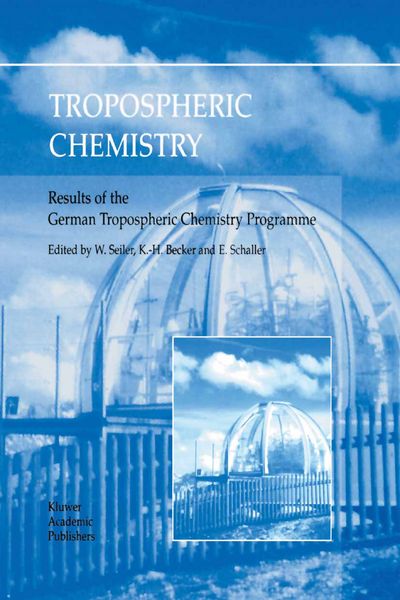
  • Produktbild: Tropospheric Chemistry
  • Produktbild: Tropospheric Chemistry

Tropospheric Chemistry Results of the German Tropospheric Chemistry Programme

148,99 €

inkl. gesetzl. MwSt., Versandkostenfrei


Beschreibung

Produktdetails

Einband

Taschenbuch

Erscheinungsdatum

13.09.2012

Abbildungen

VII, 492 p.

Herausgeber

W. Seiler + weitere

Verlag

Springer Netherland

Seitenzahl

492

Maße (L/B/H)

23,5/15,5/2,8 cm

Gewicht

756 g

Auflage

2002

Sprache

Englisch

ISBN

978-94-010-3921-5

Beschreibung

Produktdetails

Einband

Taschenbuch

Erscheinungsdatum

13.09.2012

Abbildungen

VII, 492 p.

Herausgeber

Verlag

Springer Netherland

Seitenzahl

492

Maße (L/B/H)

23,5/15,5/2,8 cm

Gewicht

756 g

Auflage

2002

Sprache

Englisch

ISBN

978-94-010-3921-5

Herstelleradresse

Springer-Verlag KG
Sachsenplatz 4-6
1201 Wien
AT

Email: ProductSafety@springernature.com

Noch keine Bewertungen vorhanden

Verfassen Sie die erste Bewertung zu diesem Artikel

Helfen Sie anderen Kundinnen und Kunden durch Ihre Meinung.

Kundinnen und Kunden meinen

Bewertungen (0)

  • Produktbild: Tropospheric Chemistry
  • Produktbild: Tropospheric Chemistry
  • Development and Application of a Mesoscale Model Hierarchy for the Diagnosis and Forecast of the Distribution of Pullutants over Germany and Europe.- An Empirical, Receptor-Based Procedure for Assessing the Effect of Different Ozone Mitigation Strategies.- Short-Term Ozone Forecasting with a Network Model System during Summer 1999.- Studying the City Plume of Berlin on 20 July 1998 with Three Different Modelling Approaches.- On the Importance of Reliable Background Concentrations of Ozone for Regional Scale Photochemical Modelling.- Comparison of Five Eulerian Air Pollution Forecasting Systems for the Summer of 1999 Using the German Ozone Monitoring Data.- On Modeling Dry Deposition of Long-Lived and Chemically Reactive Species over Heterogeneous Terrain.- Anthropogenic and Biogenic Emissions as Well as Deposition of Trace Gas Constituents.- Emission of Biogenic Volatile Organic Compounds: An Overview of Field, Laboratory and Modelling Studies Performed during the Tropospheric Research Program’ (TFS) 1997–2000.- Development of Emission Models and Improvement of Emission Data for Germany.- Evaluation of Modeled Spatially and Temporarily Highly Resolved Emission Inventories of Photosmog Precursors for the City of Augsburg: The Experiment EVA and Its Major Results.- Quality Assurance in TFS for Inorganic Compounds.- Quality Assurance of Hydrocarbon Measurements for the German Tropospheric Research Focus (TFS).- A Database for Volatile Organic Compounds.- Process Studies on the Formation of Oxidants and Oxidation Capacity.- Ozone and PAN Formation Inside and Outside of the Berlin Plume — Process Analysis and Numerical Process Simulation.- Chemical Mechanism Development: Laboratory Studies and Model Applications.- Free Radicals and Fast Photochemistry during BERLIOZ.-Verification of the Contribution of Vehicular Traffic to the Total NMVOC Emissions in Germany and the Importance of the NO3 Chemistry in the City Air.- Actinic Radiation and Photolysis Processes in the Lower Troposphere: Effect of Clouds and Aerosols.- Hydrogen Peroxide, Organic Peroxides and Higher Carbonyl Compounds Determined during the BERLIOZ Campaign.- Ground-Based and Airborne Measurements of Nonmethane Hydrocarbons in BERLIOZ: Analysis and Selected Results.