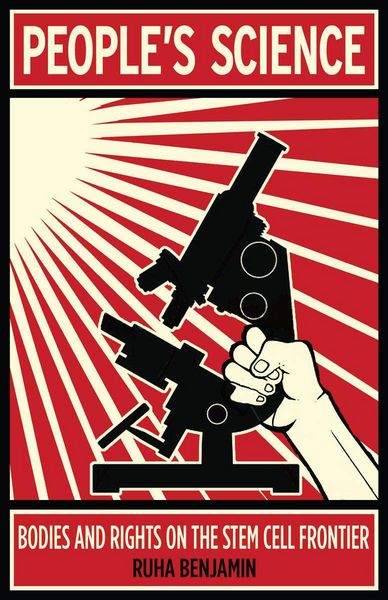
People's Science Bodies and Rights on the Stem Cell Frontier
-
- Hardcover
- Taschenbuch ausgewählt
- eBook
-
Sprache:Englisch
27,99 €
inkl. gesetzl. MwSt.,
- Kostenlose Lieferung ab 30 € Einkaufswert
- Versandkostenfrei für Bonuscard-Kund*innen
Beschreibung
Produktdetails
Einband
Taschenbuch
Erscheinungsdatum
05.06.2013
Abbildungen
2 figures
Verlag
Stanford University PressSeitenzahl
272
Maße (L/B/H)
21,2/13,6/1,7 cm
Gewicht
324 g
Sprache
Englisch
ISBN
978-0-8047-8297-5
Stem cell research has sparked controversy and heated debate since the first human stem cell line was derived in 1998. Too frequently these debates devolve to simple judgments-good or bad, life-saving medicine or bioethical nightmare, symbol of human ingenuity or our fall from grace-ignoring the people affected. With this book, Ruha Benjamin moves the terms of debate to focus on the shifting relationship between science and society, on the people who benefit-or don't-from regenerative medicine and what this says about our democratic commitments to an equitable society.
People's Science uncovers the tension between scientific innovation and social equality, taking the reader inside California's 2004 stem cell initiative, the first of many state referenda on scientific research, to consider the lives it has affected. Benjamin reveals the promise and peril of public participation in science, illuminating issues of race, disability, gender, and socio-economic class that serve to define certain groups as more or less deserving in their political aims and biomedical hopes. Under the shadow of the free market and in a nation still at odds with universal healthcare, the socially marginalized are often eagerly embraced as test-subjects, yet often are unable to afford new medicines and treatment regimes as patients.
Ultimately, Ruha Benjamin argues that without more deliberate consideration about how scientific initiatives can and should reflect a wider array of social concerns, stem cell research- from African Americans' struggle with sickle cell treatment to the recruitment of women as tissue donors-still risks excluding many. Even as regenerative medicine is described as a participatory science for the people, Benjamin asks us to consider if "the people" ultimately reflects our democratic ideals.
Noch keine Bewertungen vorhanden
Verfassen Sie die erste Bewertung zu diesem Artikel
Helfen Sie anderen Kundinnen und Kunden durch Ihre Meinung.
Kurze Frage zu unserer Seite
Vielen Dank für Ihr Feedback
Wir nutzen Ihr Feedback, um unsere Produktseiten zu verbessern. Bitte haben Sie Verständnis, dass wir Ihnen keine Rückmeldung geben können. Falls Sie Kontakt mit uns aufnehmen möchten, können Sie sich aber gerne an unseren Kund*innenservice wenden.
zum Kundenservice