KI-Beratung Beta

Gutscheinbedingungen

**Gültig am 01.10.2026 ab einem Mindestbestellwert von 30€ auf Spielzeug, Schreibwaren, Filme, Geschenke & Trends, Musik, tolino eReader & Zubehör, Hörbücher und Hörbuch-Downloads, nicht preisgebundene Bücher und Kalender online auf thalia.at und in der Thalia App. Einzelne Artikel können ausgeschlossen sein. Aufgrund der Buchpreisbindung sind deutschsprachige Bücher und eBooks ausgenommen. Zusätzlich ausgenommen sind Abos & Flatrates, Games, Geschenkkarten/-boxen, Shelfies, Software, Zeitschriften sowie einzelne Artikel von tonies®. Pro Einkauf einmal einlösbar. Click & Collect nur bei Onlinevorabzahlung möglich. Keine Barauszahlung. Nicht kombinierbar mit anderen Aktionen und Gutscheinen. Gutschein wird auf max. 500€ Bestellwert angerechnet. Nicht gültig für Versandkosten und Services. Preisgebundene Artikel sind vom Mindestbestellwert ausgeschlossen.

  • Produktbild: Innovation and Environment
  • Produktbild: Innovation and Environment

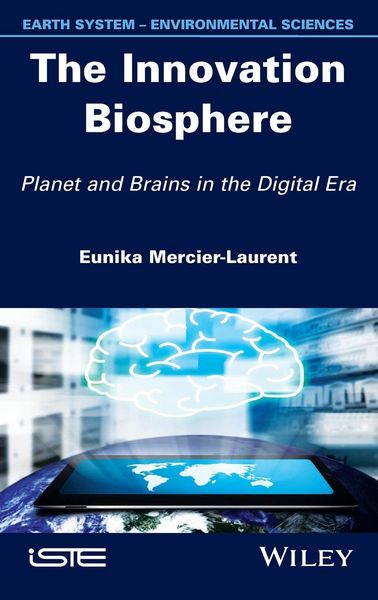
Innovation and Environment Planet and Brains in the Digital Era

Aus der Reihe ISTE Focus

199,99 €

inkl. gesetzl. MwSt., Versandkostenfrei


Beschreibung

Produktdetails

Einband

Gebundene Ausgabe

Erscheinungsdatum

22.06.2015

Verlag

John Wiley & Sons

Seitenzahl

230

Maße (L/B/H)

24/16,1/1,7 cm

Gewicht

519 g

Auflage

1. Auflage

Sprache

Englisch

ISBN

978-1-84821-556-6

Beschreibung

Produktdetails

Einband

Gebundene Ausgabe

Erscheinungsdatum

22.06.2015

Verlag

John Wiley & Sons

Seitenzahl

230

Maße (L/B/H)

24/16,1/1,7 cm

Gewicht

519 g

Auflage

1. Auflage

Sprache

Englisch

ISBN

978-1-84821-556-6

Herstelleradresse

Libri GmbH
Europaallee 1
36244 Bad Hersfeld
DE

Email: gpsr@libri.de

Noch keine Bewertungen vorhanden

Verfassen Sie die erste Bewertung zu diesem Artikel

Helfen Sie anderen Kundinnen und Kunden durch Ihre Meinung.

Kundinnen und Kunden meinen

Bewertungen (0)

Die Leseprobe wird geladen.
  • Produktbild: Innovation and Environment
  • Produktbild: Innovation and Environment
  • ACKNOWLEDGEMENTS ix
     
    FOREWORD xi
     
    INTRODUCTION xv
     
    ABBREVIATIONS AND ACRONYMS xxi
     
    CHAPTER 1. INNOVATION LANDSCAPE AND FIELDS 1
     
    1.1. From intensive industrialization to intensive innovation: consequences of global business 1
     
    1.2. Computer sciences, the Internet and mass media 7
     
    1.2.1. Example of applying environmental principles 11
     
    1.2.2. Artificial intelligence 17
     
    1.3. Medicine and biotechnologies 23
     
    1.3.1. Human spare parts and augmented human 25
     
    1.3.2. Ambient assisted living 26
     
    1.3.3. Biotechnology 27
     
    1.4. Nanotechnologies 30
     
    1.4.1. Biological risks of nanoparticles 32
     
    1.5. Agriculture and food industry 33
     
    1.6. Knowledge city, smart city, green city and wise city 38
     
    1.7. Tourism and business travel 41
     
    1.8. Fashion victims 41
     
    1.9. Responsible innovation? 43
     
    1.9.1. What alternative? 45
     
    CHAPTER 2. INNOVATION ECOSYSTEMS 49
     
    2.1. The innovation biosphere 49
     
    2.2. Some definitions 52
     
    2.3. Innovation life 58
     
    2.3.1. Continuous innovation and its context 58
     
    2.3.2. Innovation dynamics 60
     
    2.3.3. Balance: conditions for sustainable success 63
     
    2.3.4. Role of knowledge and skills 70
     
    2.4. Barriers, constraints and paradoxes 74
     
    2.5 Some paradoxes 76
     
    2.6. Measuring benefits78
     
    2.7. Trends and future innovation 79
     
    CHAPTER 3. CHALLENGES AND INNOVATION POLICIES 81
     
    3.1. Challenges for the next decades 81
     
    3.2. Main challenges: global, European and French perspectives 83
     
    3.2.1. Challenges for Europe 85
     
    3.2.2. Unemployment paradoxes and quick fixes 87
     
    3.2.3. Challenge for France 91
     
    3.2.4. Best practices in matching offer and demand 94
     
    3.3. Innovation policy 95
     
    3.3.1. Innovation policies in Europe 100
     
    3.3.2. French innovation policy 113
     
    3.4. Matching policy and challenges 118
     
    CHAPTER 4. EXPERIMENTATIONS AND RESULTS 123
     
    4.1. Ubiquitous or sustainable innovation 123
     
    4.2. Selected actions around the world 124
     
    4.2.1. Open Systems Science: Tokyo and Paris 129
     
    4.2.2. Qatar Foundation 135
     
    4.3. Europe 137
     
    4.3.1. From Living Labs and Enoll to Innovation 2.0 137
     
    4.3.2. Future Centers 144
     
    4.3.3. Green and eco-innovation 150
     
    4.3.4. Social and service innovation 152
     
    4.4. Experiments in France 153
     
    4.4.1. Merging for multidisciplinary (and cost saving) 156
     
    4.5. Results and perspectives 157
     
    CHAPTER 5. ENVIRONMENT AND SUSTAINABLE SUCCESS 159
     
    5.1. Know, appreciate and protect what we have 159
     
    5.2. Problem solving 161
     
    5.2.1. Motivation 162
     
    5.2.2. Understanding the problem to solve 163
     
    5.2.3. Solutions from the past and alternative solutions 163
     
    5.3. Innovating in harmony with environmental intelligence 164
     
    5.3.1. Minds of plants 165
     
    5.3.2. Copying nature: biomimicry 167
     
    5.4. Conditions for sustainable success 173
     
    5.4.1. Removing the barriers 177
     
    5.4.2. New professions: perspective for jobs 179
     
    CONDITIONS FOR A SUSTAINABLE FUTURE 181
     
    BIBLIOGRAPHY 185
     
    INDEX 201