Gutscheinbedingungen

**Gültig bis 25.06.2026 auf fremdsprachige Bücher online auf thalia.at und in der Thalia App. Einzelne Artikel können ausgeschlossen sein. Ausgenommen sind preisgebundene Artikel & eBooks. Pro Einkauf einmal einlösbar. Click & Collect nur bei Onlinevorabzahlung möglich. Keine Barauszahlung. Nicht kombinierbar mit anderen Aktionen und Gutscheinen. Gutschein wird auf max. 500€ Bestellwert angerechnet. Nicht gültig für Geschenkkarten, Versandkosten und Services.

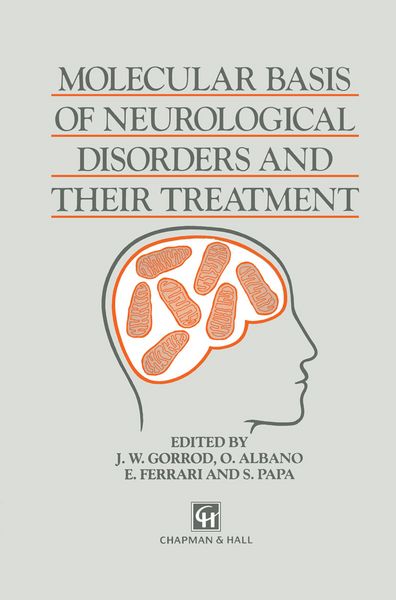
  • Produktbild: Molecular Basis of Neurological Disorders and Their Treatment
  • Produktbild: Molecular Basis of Neurological Disorders and Their Treatment
- 12%

Molecular Basis of Neurological Disorders and Their Treatment

12% sparen

192,99 € UVP 219,99 €

inkl. gesetzl. MwSt., Versandkostenfrei


Beschreibung

Produktdetails

Einband

Taschenbuch

Erscheinungsdatum

08.10.2012

Verlag

Springer Netherland

Seitenzahl

337

Maße (L/B/H)

23,5/15,5/2 cm

Gewicht

545 g

Auflage

Softcover reprint of the original 1st ed. 1991

Sprache

Englisch

ISBN

978-94-010-5379-2

Beschreibung

Rezension

It will be a vital reference source - Biomedicine and Pharmacology

Produktdetails

Einband

Taschenbuch

Erscheinungsdatum

08.10.2012

Verlag

Springer Netherland

Seitenzahl

337

Maße (L/B/H)

23,5/15,5/2 cm

Gewicht

545 g

Auflage

Softcover reprint of the original 1st ed. 1991

Sprache

Englisch

ISBN

978-94-010-5379-2

Herstelleradresse

Springer-Verlag GmbH
Tiergartenstr. 17
69121 Heidelberg
DE

Email: ProductSafety@springernature.com

Kundinnen und Kunden meinen

0 Bewertungen

Informationen zu Bewertungen

Zur Abgabe einer Bewertung ist eine Anmeldung im Konto notwendig. Die Authentizität der Bewertungen wird von uns nicht überprüft. Wir behalten uns vor, Bewertungstexte, die unseren Richtlinien widersprechen, entsprechend zu kürzen oder zu löschen.

Die Bewertungen sind nach Format, Anzahl Sterne und Datum sortiert.

Verfassen Sie die erste Bewertung zu diesem Artikel

Helfen Sie anderen Kund*innen durch Ihre Meinung

Kundinnen und Kunden meinen

0 Bewertungen filtern

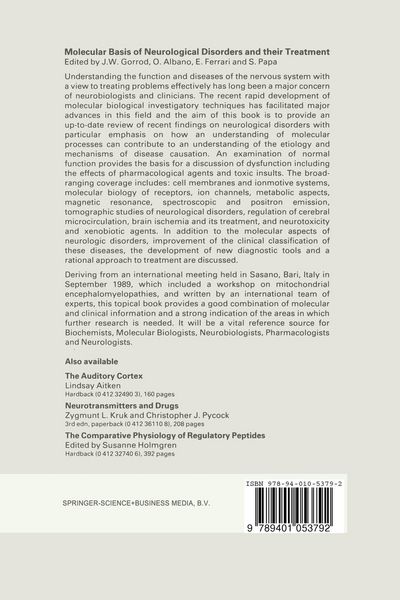
  • Produktbild: Molecular Basis of Neurological Disorders and Their Treatment
  • Produktbild: Molecular Basis of Neurological Disorders and Their Treatment
  • 1 Towards a molecular model of the acetylcholine receptor channel.- 2 Proton-motive ATP synthase and energy transfer in the cell.- 3 Comparative analysis of the amount of subunit I and subunit IV of the cytochrome c oxidase mRNAs in the cerebral hemispheres of senescent rat and effect of acetyl-l-carnitine.- 4 Cytochemical and immunocytochemical investigation of respiratory complexes in individual fibres of human skeletal muscle.- 5 Native myelin proteins and myelin assembly in the central nervous system.- 6 Regulation of immune cells by serine phospholipids.- 7 Cell adhesion molecules belonging to the immunoglobulin superfamily.- 8 Neurogenic control of cerebral blood vessels.- 9 The fine structural aspects of brain oedema and associated microvascular and glial changes.- 10 Image-guided localized nuclear magnetic resonance spectroscopy of human brain tumours.- 11 Neuroimaging study of frontal lobes.- 12 Biochemical indicators of ischaemic brain damage.- 13 Molecular basis of astroglial reaction to brain injury; regulation of glial fibrillary acidic protein mRNA in rat cerebral cortex and in primary astroglial cell cultures.- 14 Tissue plasminogen activator; acute thrombotic stroke.- 15 Lysosomal storage of a mitochondrial protein in Batten’s disease (ceroid lipofuscinosis).- 16 Leber’s hereditary optic neuropathy; from the clinical to the new biochemical and molecular findings for understanding the pathogenesis of the disorder.- 17 Types and mechanism of mitochondrial DNA mutations in mitochondrial myopathy and related diseases.- 18 Direct tandem duplications of mitochondrial DNA in mitochondrial myopathy.- 19 Mutations of mitochondrial DNA; the molecular basis of mitochondrial encephalomyopathies and ageing.- 20 Analysis of giant deletions of human mitochondrial DNA in progressive external opthalmoplegia.- 21 Biochemical and genetic investigations in eleven cases of mitochondrial myopathies.- 22 Familiar cases of mitochondrial myopathies; mitochondrial DNA deletions and genetic analysis.- 23 The correlation between pathology, biochemistry and molecular genetics in mitochondrial encephalomyopathies.- 24 Various clinical presentation of mytochondriopathies; clinical and therapeutic considerations.- 25 Voltage-gated sodium channels as target for pharmacologic agents.- 26 A K+ channel opener in vascular smooth muscle; pharmacology and mechanism of action of cromakalim.- 27 Molecular and cellular mechanisms involves in high resistance neonatal brain resistance to anoxia.- 28 Metabolic activation and mechanisms of MPTP toxicity.- 29 Neurochemical changes produced by perinatal exposure to lead.- 30 Electrophoretic studies of the interaction of neuroleptic drugs with brain tissue.