Beschreibung
Produktdetails
Einband
Gebundene Ausgabe
Erscheinungsdatum
31.07.2013
Herausgeber
Ronald G. Knapp + weitereVerlag
University Of Hawaii PressSeitenzahl
208
Maße (L/B/H)
27,1/20,6/1,8 cm
Gewicht
888 g
Sprache
Englisch
ISBN
978-0-8248-3585-9
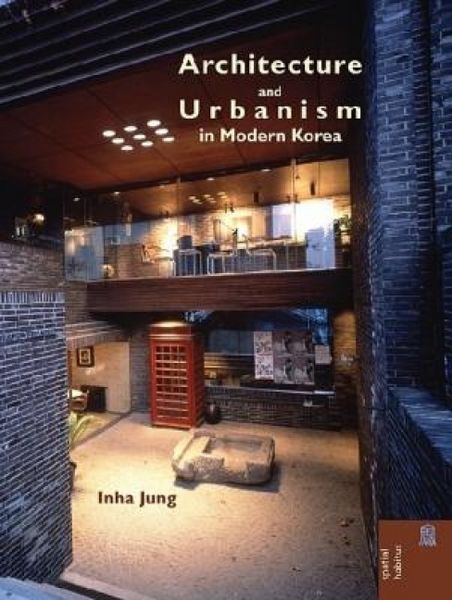
Although modernisation in Korea started more than a century later than in the West, it has worked as a prominent ideology throughout the past century—in particular it has brought radical changes in Korean architecture and cities. Traditional structures and ways of life have been thoroughly uprooted in modernity’s continuous negation of the past. This book presents a comprehensive overview of architectural development and urbanization in Korea within the broad framework of modernization.
Twentieth-century Korean architecture and cities form three distinctive periods. The first, defined as colonial modern, occurred between the early twentieth century and 1945, when Western civilization was transplanted to Korea via Japan, and a modern way of life, albeit distorted, began taking shape. The second is the so-called developmental dictatorship period. Between 1961 and 1988, the explosive growth of urban populations resulted in large-scale construction booms, and architects delved into modern identity through the locality of traditional architecture. The last period began in the mid-1990s and may be defined as one of modernization settlement and a transition to globalization. With city populations levelling out, urbanization and architecture came to be viewed from new perspectives.
Inha Jung, however, contends that what is more significant is the identification of elements that have remained unchanged. Jung identifies continuities that have been formed by long-standing relationships between humans and their built environment and, despite rapid modernization, are still deeply rooted in the Korean way of life. For this reason, in the twentieth century, regionalism exerted a great influence on Korean architects. Various architectural and urban principles that Koreans developed over a long period while adapting to the natural environment have provided important foundations for architects’ works. By exploring these sources, this carefully researched and amply illustrated book makes an original contribution to defining modern identity in Korea’s architecture, housing, and urbanism.
Noch keine Bewertungen vorhanden
Verfassen Sie die erste Bewertung zu diesem Artikel
Helfen Sie anderen Kundinnen und Kunden durch Ihre Meinung.
Kurze Frage zu unserer Seite
Vielen Dank für Ihr Feedback
Wir nutzen Ihr Feedback, um unsere Produktseiten zu verbessern. Bitte haben Sie Verständnis, dass wir Ihnen keine Rückmeldung geben können. Falls Sie Kontakt mit uns aufnehmen möchten, können Sie sich aber gerne an unseren Kund*innenservice wenden.
zum Kundenservice