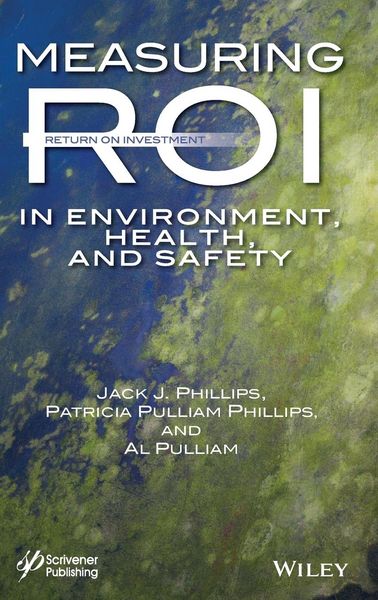
Produktbild: Measuring ROI in Environment, Health, and Safety

Measuring ROI in Environment, Health, and Safety

109,99 €

inkl. gesetzl. MwSt., Versandkostenfrei


Beschreibung

Produktdetails

Einband

Gebundene Ausgabe

Erscheinungsdatum

28.01.2014

Verlag

John Wiley & Sons

Seitenzahl

488

Maße (L/B/H)

24/16,1/3,1 cm

Gewicht

894 g

Auflage

1. Auflage

Sprache

Englisch

ISBN

978-1-118-63978-8

Beschreibung

Produktdetails

Einband

Gebundene Ausgabe

Erscheinungsdatum

28.01.2014

Verlag

John Wiley & Sons

Seitenzahl

488

Maße (L/B/H)

24/16,1/3,1 cm

Gewicht

894 g

Auflage

1. Auflage

Sprache

Englisch

ISBN

978-1-118-63978-8

Herstelleradresse

Libri GmbH
Europaallee 1
36244 Bad Hersfeld
DE

Email: gpsr@libri.de

Noch keine Bewertungen vorhanden

Verfassen Sie die erste Bewertung zu diesem Artikel

Helfen Sie anderen Kundinnen und Kunden durch Ihre Meinung.

Kundinnen und Kunden meinen

Bewertungen (0)

Die Leseprobe wird geladen.
  • Produktbild: Measuring ROI in Environment, Health, and Safety
  • Preface xxi

    List of Authors xxxi

    1 Environment, Health and Safety is Everywhere 1

    1.1 The New Role of EHS 2

    1.2 Environmental Initiatives 2

    1.3 Safety Initiatives 6

    1.4 Health and Fitness 13

    1.5 Managing Change in EHS 17

    1.6 Final Thoughts 19

    2 Is It Worth It? 21

    2.1 EHS Killers 22

    2.2 Value Redefi ned 28

    2.3 Why Now? 31

    2.4 EHS Chain of Impact 35

    2.5 Shortcomings of Current Measurement and Evaluation Systems 38

    2.6 EHS Leadership: A Requirement for Success 43

    2.7 Challenges Along the Way 44

    2.8 Final Thoughts 47

    3 Investing in Environment, Safety and Health Initiatives 49

    3.1 Overview 49

    3.2 Strategy 1: Avoid the Investment 50

    3.3 Strategy 2: Invest the Minimum 55

    3.4 Strategy 3: Invest with the Rest 58

    3.5 Strategy 4: Invest Until It Hurts 62

    3.6 Strategy 5: Invest as Long as there is Payoff 66

    3.7 Final Thoughts 70

    4 The ROI Methodology: A Tool to Measure and Improve 73

    4.1 A Brief Overview 74

    4.2 Results Framework 74

    4.3 Results Framework and Business Alignment 79

    4.4 Benefi ts of Developing the Chain of Impact 82

    4.5 The ROI Process Model 83

    4.6 Operating Standards and Philosophy 96

    4.7 Case Application and Practice 96

    4.8 Implementation 97

    4.9 Benefi ts of Applying the ROI Methodology 98

    4.10 Final Thoughts 101

    5 Project Positioning 103

    5.1 Creating Business Alignment 104

    5.2 Determining Payoff Needs 107

    5.3 Determining Business Needs 111

    5.4 Determining Performance Needs 118

    5.5 Determining Learning Needs 120

    5.6 Determining Preference Needs 121

    5.7 Developing Objectives for EHS Projects and Programs 122

    5.8 Case Study Examples 126

    5.9 Final Thoughts 134

    6 Measuring Reaction and Learning 135

    6.1 Why Measure Reaction? 135

    6.2 Sources of Data for Measuring Reaction 138

    6.3 Areas of Feedback 139

    6.4 Data Collection Timing for Measuring Reaction 140

    6.5 Data Collection Methods for Measuring Reaction 141

    6.6 Use of Reaction Data 142

    6.7 Why Measure Learning? 143

    6.8 Challenges and Benefi ts of Measuring Learning 144

    6.9 Learning Measurement Issues 146

    6.10 Data Collection Methods for Measuring Learning 147

    6.11 Use of Learning Data 149

    6.12 Final Thoughts 150

    7 Measuring Application, Implementation and Impact 151

    7.1 Why Measure Application and Implementation? 152

    7.2 Application Measurement Issues 153

    7.3 Data Collection Methods for Measuring Application 157

    7.4 Barriers to Application 159

    7.5 Use of Application Data 160

    7.6 Why Measure Impact? 160

    7.7 Impact Measurement Issues 161

    7.8 Data Collection Methods for Measuring Impact 165

    7.9 Considerations for Selecting Data Collection Methods 169

    7.10 Measuring the Hard to Measure 172

    7.11 Final Thoughts 173

    8 Isolating the Impact of EHS Projects 175

    8.1 Why the Concern About Isolating Project Impact? 176

    8.2 Preliminary Issues 179

    8.3 Methods to Isolate the Impact of Projects 181

    8.4 Considerations When Selecting Isolation Methods 198

    8.5 Final Thoughts 199

    9 Converting Impact Data to Money 201

    9.1 Why the Concern About Converting Data to Monetary Values? 202

    9.2 Five Steps to Convert Data to Money 204

    9.3 The Five Steps to Convert Data in Practice 206

    9.4 Methods to Convert Impact Measures to Money 207

    9.5 Considerations When Selecting Data Conversion Methods 215

    9.6 Intangible Benefi ts of EHS Projects 219

    9.7 Final Thoughts 226

    10 Calculating the ROI 227

    10.1 Why the Concern About Project Costs? 228

    10.2 Fundamental Cost Issues 229

    10.3 Fully Loaded Cost Profi le 233

    10.4 Cost Classifi cations 235

    10.5 The ROI Calculation 236

    10.6 ROI Misuse 238

    10.7 ROI Targets 240

    10.8 Intangibles Revisited 241

    10.9 Other ROI Measures 241

    10.10 Final Thoughts 243

    11 Reporting Results 245

    11.1 Why the Concern About Communicating Results? 246

    11.2 Principles of Communicating Results 247

    11.3 The Process for Communicating Results 250

    11.4 The EHS Scorecard 261

    11.5 Final Thoughts 268

    12 Implementing and Sustaining ROI 271

    12.1 The Concern About Implementing and Sustaining ROI 272

    12.2 Implementing the Process: Overcoming Resistance 273

    12.3 Assessing the Climate 274

    12.4 Developing Roles and Responsibilities 274

    12.5 Establishing Goals and Plans 278

    12.6 Revising or Developing Policies and Guidelines 279

    12.7 Preparing the Project Team 280

    12.8 Initiating ROI Projects 282

    12.9 Preparing Sponsors and Management Team 283

    12.10 Removing Obstacles 284

    12.11 Monitoring Progress 286

    12.12 Final Thoughts 287

    13 Measuring ROI in Safety Management for Project Leaders 291

    13.1 Background 291

    13.2 Why Evaluate this Program? 294

    13.3 The ROI Process 295

    13.4 Planning for Evaluation 297

    13.5 Data Collection Plan 297

    13.6 ROI Analysis Plan 297

    13.7 Action Planning: A Key to ROI Analysis 300

    13.8 ROI Forecast with Reaction Data 303

    13.9 Improving Response Rates 305

    13.10 Results 306

    13.11 Communication Strategy 316

    13.12 Lessons Learned 316

    13.13 Discussion Questions 317

    14 Measuring ROI in a Modular/Reusable Safety Railing System 319

    14.1 Background 320

    14.2 Problem Defi nition 321

    14.3 Project Background 322

    14.4 Business Alignment 323

    14.5 Evaluation Methodology 323

    14.6 Evaluation Results 328

    14.7 Communication Strategy 336

    14.8 Lessons Learned 336

    14.9 Questions For Discussion 337

    15 Measuring ROI in an Ergonomics-Based Risk Management Intervention 339

    15.1 Background 339

    15.2 Evaluation Methodology 343

    15.3 Evaluation Results 350

    15.4 Communication Strategy 356

    15.5 Lessons Learned 356

    16 Measuring ROI in Stress Management 361

    16.1 Background 361

    16.2 Why ROI? 365

    16.3 Program Results 373

    16.4 Communication Strategies 384

    16.5 Policy and Practice Implications 385

    16.6 Questions for Discussion 385

    17 Measuring ROI in a Safety Incentive Program 387

    17.1 Background 387

    17.2 The Solution 389

    17.3 Data Collection and Analysis 391

    17.4 Data Interpretation and Conclusion 393

    17.5 Calculating the Return on Investment 394

    17.6 Communication of Results 395

    17.7 Questions for Discussion 396

    18 Measuring ROI in a Job Safety Training Program at a Major Food Retailer 397

    18.1 Background 398

    18.2 Evaluation Methodology 400

    18.3 Calculating ROI 406

    18.4 Barriers and Enablers 408

    18.5 Communication Plan 409

    18.6 Conclusion 411

    18.7 About the Author 411

    19 Measuring ROI in a Work-at-Home Program 413

    19.1 FMI: PART A 414

    19.2 FMI: PART B 421

    19.3 FMI: PART C 424

    19.4 FMI: PART D 427

    19.5 FMI: PART E 428

    19.6 FMI: PART F 432

    19.7 Questions for Discussion 440

    19.8 FMI: PART G 440

    19.9 Questions for Discussion 442

    Index 443