Gutscheinbedingungen

**Gültig von 22.06.2026 ab 19 Uhr bis 23.06.2026 24 Uhr auf Spielzeug, Schreibwaren, Filme, Geschenke & Trends, Musik, tolino eReader & Zubehör, Hörbücher und Hörbuch-Downloads (außer Abo), nicht preisgebundene Bücher und Kalender online auf thalia.at und in der Thalia App. Einzelne Artikel können ausgeschlossen sein. Aufgrund der Buchpreisbindung sind deutschsprachige Bücher und eBooks ausgenommen. Zusätzlich ausgenommen sind preisgebundene Artikel, Abos & Flatrates, eBooks, Games, Geschenkkarten/-boxen, Shelfies, Software, Zeitschriften sowie einzelne Artikel von tonies®. Pro Einkauf einmal einlösbar. Click & Collect nur bei Onlinevorabzahlung möglich. Keine Barauszahlung. Nicht kombinierbar mit anderen Aktionen und Gutscheinen. Gutschein wird auf max. 500€ Bestellwert angerechnet. Nicht gültig für Versandkosten und Services.

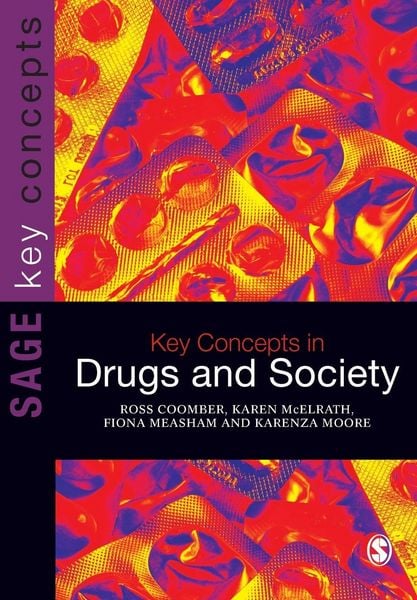
  • Produktbild: Key Concepts in Drugs and Society
  • Produktbild: Key Concepts in Drugs and Society
- 10%

Key Concepts in Drugs and Society

Aus der Reihe SAGE Key Concepts series
10% sparen

39,99 € UVP 44,70 €

inkl. gesetzl. MwSt., Versandkostenfrei


Beschreibung

Produktdetails

Einband

Taschenbuch

Erscheinungsdatum

29.04.2013

Verlag

Sage Publications

Seitenzahl

208

Maße (L/B/H)

24,4/17/1,1 cm

Gewicht

369 g

Sprache

Englisch

ISBN

978-1-84787-485-6

Beschreibung

Rezension

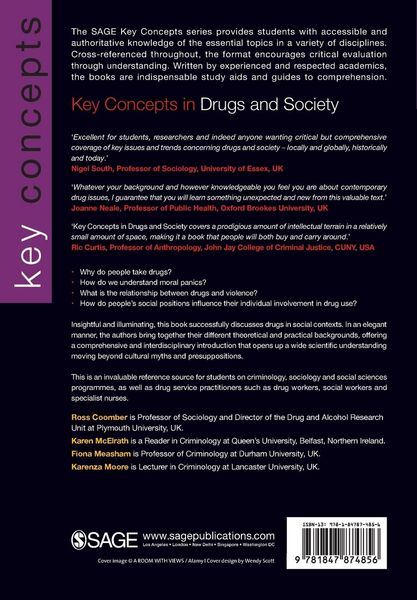
This is a great resource that does what it promises and reflects the huge expertise of the authors. It will be welcomed by students, researchers and indeed anyone wanting critical but comprehensive coverage of key issues and trends concerning drugs and society - locally and globally, historically and today. Nigel South

Zitat

This is a great resource that does what it promises and reflects the huge expertise of the authors. It will be welcomed by students, researchers and indeed anyone wanting critical but comprehensive coverage of key issues and trends concerning drugs and society - locally and globally, historically and today.
Nigel South
Professor of Sociology, University of Essex This is a terrific book that for me does sit in a grey area between a textbook and a reference book. Dick Hobbs
Professor, Essex University, UK Scholars, students or even a lay audiences, will find "Key Concepts" useful for grounding themselves in a broad understanding of the roles that drugs play in human society. Major topics in the field are examined more comprehensively and in more depth than is the case with many current approaches, like encyclopedias, that make the big picture difficult to discern. Key Concepts is a welcome addition to the tool box: it helps restore a learning style that has been largely displaced by an MTV-style of learning that blasts factoids in a pastiche of information with no apparent rhyme, reason or theoretical foundation to support it. Key Concepts covers a prodigious amount of intellectual terrain in a relatively small amount of space, making it a book that people might both buy and carry around. Key Concepts could very well become the "Key Words" (Raymond Williams) of the drug field.
Ric Curtis
Professor of Anthropology, John Jay College of Criminal Justice, CUNY, USA This highly accessible book provides informative, balanced and contextualized insights into the relationships between people and drugs. Whatever your background and however knowledgeable you feel you are about contemporary drug issues, I guarantee that you will learn something unexpected and new from this valuable text.
Joanne Neale
Professor of Public Health, Oxford Brookes University, UK This broad and thorough text provides the reader with great insight into the reality of substance use in society. It eagerly challenges the readers' assumptions and beliefs about drug use and drug users with sound international evidence. All of us who work in areas relating to drug use, whether that be pertaining to education, legislation, criminal justice or clinical practice would do well to read this book and remember the historical and socio-political context in which we work. A pleasurable and page turning read!
Anna Nelson
Programme Manager, Matua Raki National Addiction Workforce Development Centre, New Zealand

Produktdetails

Einband

Taschenbuch

Erscheinungsdatum

29.04.2013

Verlag

Sage Publications

Seitenzahl

208

Maße (L/B/H)

24,4/17/1,1 cm

Gewicht

369 g

Sprache

Englisch

ISBN

978-1-84787-485-6

EU-Ansprechpartner

Zeitfracht Medien GmbH
Ferdinand-Jühlke-Straße 7|99095|Erfurt|DE

Herstelleradresse

SAGE Publications
1 Oliver's Yard 55 City Road|EC1Y 1SP|London|GB

Kundinnen und Kunden meinen

0 Bewertungen

Informationen zu Bewertungen

Zur Abgabe einer Bewertung ist eine Anmeldung im Konto notwendig. Die Authentizität der Bewertungen wird von uns nicht überprüft. Wir behalten uns vor, Bewertungstexte, die unseren Richtlinien widersprechen, entsprechend zu kürzen oder zu löschen.

Die Bewertungen sind nach Format, Anzahl Sterne und Datum sortiert.

Verfassen Sie die erste Bewertung zu diesem Artikel

Helfen Sie anderen Kund*innen durch Ihre Meinung

Kundinnen und Kunden meinen

0 Bewertungen filtern

  • Produktbild: Key Concepts in Drugs and Society
  • Produktbild: Key Concepts in Drugs and Society
  • PART ONE: TYPES OF DRUGS AND PATTERNS OF USE
    What Is a Drug/Medicine?
    Prevalence and Trends in Illicit Drug Use
    Why Do People Take Drugs?
    Addiction
    Legal Drugs: Alcohol and Tobacco
    Polydrug Use/Polysubstance Use
    Common Illicit Drugs
    Typologies of Drug Use: Use-Misuse-Abuse and Problematic-Recreational Use
    Binge-Drinking
    Raves and Circuit Parties
    Dance Drugs/Club Drugs
    Cross-cultural and Traditional Drug Use
    Gender, Ethnicity and Social Class
    Normalisation
    PART TWO: DRUG EFFECTS
    Drug Effects: Drug, Set and Setting
    Medical Marijuana and Other Therapeutic Uses of Illicit Drugs
    Prescribed and Over-the-Counter (OTC) Drugs
    Novel Psychoactive Substances
    The Gateway Hypothesis/Stepping Stone Theory
    Drug-related Violence
    Drugs and Crime
    Drug Risks and Health Harms
    Injecting Drug Use
    HIV/AIDS and Other Blood-borne Viruses
    PART THREE: DRUG POLICY, TREATMENT AND PERCEPTIONS OF THE DRUG PROBLEM
    Drug Treatment and Quasi-compulsory Treatment (QCT)
    Harm Reduction
    Substitute Prescribing
    The New Recovery Approach
    Prevention: Primary, Secondary and Tertiary
    International Drug Control History/Prohibition
    Drugs in Sport
    Drug Scares and Moral Panics
    Drug Dealers
    Drug Markets: Difference and Diversity
    Drug Trafficking
    Crop Eradication, Crop Substitution and Legal Cultivation
    War on Drugs
    Drug Testing in Schools and Workplaces
    Drug Courts
    Decriminalisation, Legalisation and Legal Regulation
    Liberalisation