KI-Beratung Beta

Gutscheinbedingungen

**Gültig bis 30.11.2026 auf Spielzeug, Schreibwaren, Filme, Geschenke & Trends, Musik, tolino eReader & Zubehör, Hörbücher und Hörbuch-Downloads, nicht preisgebundene Bücher und Kalender online auf thalia.at und in der Thalia App. Einzelne Artikel können ausgeschlossen sein. Aufgrund der Buchpreisbindung sind deutschsprachige Bücher und eBooks ausgenommen. Zusätzlich ausgenommen sind Abos & Flatrates, Games, Geschenkkarten/-boxen, Shelfies, Software, Zeitschriften sowie einzelne Artikel von tonies®. Pro Einkauf einmal einlösbar. Nur gültig mit im Onlineshop hinterlegter Bonuscard. Click & Collect nur bei Onlinevorabzahlung möglich. Keine Barauszahlung. Nicht kombinierbar mit anderen Aktionen und Gutscheinen. Gutschein wird auf max. 500€ Bestellwert angerechnet. Nicht gültig für Versandkosten und Services.

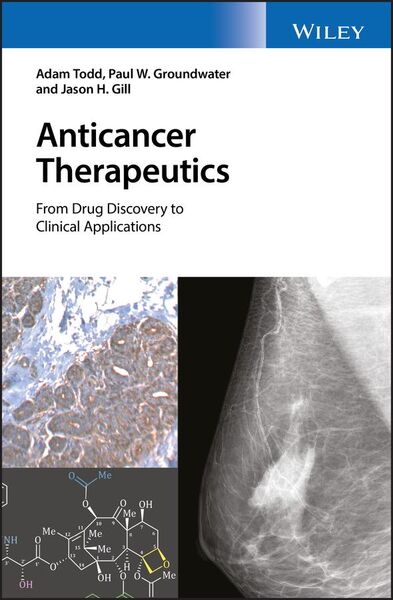
Produktbild: Anticancer Therapeutics

Anticancer Therapeutics From Drug Discovery to Clinical Applications

215,99 €

inkl. gesetzl. MwSt., Versandkostenfrei


Beschreibung

An integrated presentation of the basic science and clinical applications of anticancer agents   Aimed at both undergraduate and postgraduate readers, this unique text provides readers with a fully-integrated presentation of all aspects of the science of anticancer drugs, including their chemistry, pharmacology,...

Beschreibung

An integrated presentation of the basic science and clinical applications of anticancer agents
 
Aimed at both undergraduate and postgraduate readers, this unique text provides readers with a fully-integrated presentation of all aspects of the science of anticancer drugs, including their chemistry, pharmacology, and clinical applications.
 
After heart disease, cancer is the number one killer worldwide, and the tumor microenvironment is forever changing, creating an ever-greater demand for safer, more effective anticancer agents. In response to that demand, the $100 billion cancer drug market continues to grow, with our increased understanding of cancer leading to new drugs being used clinically almost every year.
 
Anticancer Therapeutics is divided into three sections. Section 1 is an introduction to cancer and therapeutics, and covers the etiology and cellular and molecular basis of cancer. In Section 2, the authors focus on the anticancer agents -- their discovery, synthesis, mode of action, mechanisms of resistance, and adverse reactions. Section 3 focuses on specific cancers, explaining how and why the various agents discussed in Section 2 are used, both individually and in combination, to treat different cancers.
* Integrates aspects of basic science, including chemistry and pharmacology and clinical medicine in relation to cancer therapeutics
* Written by an author team comprising specialists in medicinal chemistry, pharmacology, and oncology
* Features full-color images throughout illustrating how drugs bind to cellular targets and exert their pharmacological effect
* Divided into three sections, covering the etiology and cellular and molecular basis of cancer, anticancer agents, and drug applications for different cancers.
 
Providing the reader with an integrated understanding of all aspects of the science of anticancer agents, this is an ideal textbook for undergraduates studying medicine, nursing, medicinal chemistry, pharmacy, pharmacology and other allied heath / life sciences. It is also a valuable bench reference for pharmacists, medics, and pharmaceutical researchers working in both academia and industry.

Produktdetails

Einband

Gebundene Ausgabe

Erscheinungsdatum

27.02.2018

Verlag John Wiley & Sons Inc
Seitenzahl

448

Produktdetails

Einband

Gebundene Ausgabe

Erscheinungsdatum

27.02.2018

Verlag John Wiley & Sons Inc
Seitenzahl

448

Maße (L/B/H)

24,6/17,3/2,8 cm

Gewicht

1043 g

Auflage

1. Auflage

Sprache

Englisch

ISBN

978-1-118-62212-4

Herstelleradresse

Libri GmbH
Europaallee 1
36244 Bad Hersfeld
DE

Email: gpsr@libri.de

Noch keine Bewertungen vorhanden

Verfassen Sie die erste Bewertung zu diesem Artikel

Helfen Sie anderen Kundinnen und Kunden durch Ihre Meinung.

Kundinnen und Kunden meinen

Bewertungen (0)

Die Leseprobe wird geladen.
  • Produktbild: Anticancer Therapeutics
  • Preface xi

    Section 1: Introduction 1

    1.1 The Global Burden of Cancer 3

    References 11

    1.2 Cancer Staging and Classification 13

    1.2.1 Benign Tumour (or neoplasm) 13

    1.2.2 Malignant Tumour (or cancer) 14

    1.2.3 Tumour Nomenclature and Classification 14

    1.2.4 Cellular Differentiation and Tumour Grade 21

    1.2.5 Tumour Invasion and Metastasis 24

    1.2.6 Clinical Staging of Cancer 26

    References 36

    1.3 Cellular and Molecular Basis of Cancer 39

    1.3.1 Oncogenes 40

    1.3.2 Tumour Suppressor Genes 45

    1.3.3 Role of Epigenetics and Gene Promoter Regulation in Tumourigenesis 49

    1.3.4 Multistage Tumourigenesis 53

    1.3.5 Oncogene Addiction 54

    1.3.6 Hallmarks of Cancer 55

    1.3.7 Principles of Cancer Treatment 73

    References 77

    Section 2: The Anticancer Agents 81

    2.1 Agents Which Act Directly on DNA 83

    2.1.1 Nitrogen Mustards and Nitrosoureas 83

    References 96

    2.1.2 Temozolomide 98

    References 106

    2.1.3 Platinum¿containing Agents 108

    References 118

    2.1.4 Gemcitabine 120

    References 128

    2.1.5 Camptothecin and Its Analogues 128

    References 139

    2.1.6 Podophyllotoxins 141

    References 150

    2.1.7 Anthracyclines 151

    References 160

    2.1.8 Epigenetic Targeting Agents 162

    References 177

    2.2 Antimetabolites 181

    2.2.1 Cytarabine 181

    References 183

    2.2.2 Methotrexate 184

    References 195

    2.2.3 5¿Fluorouracil 196

    References 205

    2.2.4 6¿Mercaptopurine 206

    References 210

    2.3 Antimicrotubule Agents 211

    2.3.1 Taxanes 211

    References 224

    2.3.2 Vinca Alkaloids 225

    References 231

    2.4 Anti¿hormonal Agents 233

    2.4.1 Bicalutamide 233

    References 239

    2.4.2 Tamoxifen 240

    References 247

    2.4.3 Anastrozole 248

    References 254

    2.5 Kinase Inhibitors 257

    2.5.1 Discovery 257

    2.5.2 Synthesis 262

    2.5.3 Mode of Action 267

    2.5.4 Mechanism of Resistance 268

    2.5.5 Adverse Drug Reactions 268

    References 271

    Section 3: The Cancers 275

    3.1 Breast Cancer 277

    Key points 277

    3.1.1 Epidemiology 277

    3.1.2 Presentation 279

    3.1.3 Diagnosis 282

    3.1.4 Staging 283

    3.1.5 Treatments 285

    References 289

    3.2 Colorectal Cancer 293

    Key points 293

    3.2.1 Epidemiology 293

    3.2.2 Presentation 294

    3.2.3 Diagnosis 296

    3.2.4 Staging 298

    3.2.5 Treatments 299

    References 303

    3.3 Leukaemia 307

    Key points 307

    3.3.1 Epidemiology 307

    3.3.2 Presentation 310

    3.3.3 Diagnosis 311

    3.3.4 Staging 313

    3.3.5 Treatments 314

    References 319

    3.4 Lung Cancer 323

    Key points 323

    3.4.1 Epidemiology 323

    3.4.2 Presentation 327

    3.4.3 Diagnosis 327

    3.4.4 Staging 330

    3.4.5 Treatments 330

    References 337

    3.5 Oesophageal Cancer 339

    Key points 339

    3.5.1 Epidemiology 339

    3.5.2 Presentation 340

    3.5.3 Diagnosis 341

    3.5.4 Staging 344

    3.5.5 Treatments 346

    References 350

    3.6 Ovarian Cancer 353

    Key points 353

    3.6.1 Epidemiology 353

    3.6.2 Presentation 354

    3.6.3 Diagnosis 356

    3.6.4 Staging 357

    3.6.5 Treatments 357

    References 363

    3.7 Pancreatic Cancer 367

    Key points 367

    3.7.1 Epidemiology 367

    3.7.2 Presentation 368

    3.7.3 Diagnosis 370

    3.7.4 Staging 371

    3.7.5 Treatments 373

    References 375

    3.8 Prostate Cancer 379

    Key points 379

    3.8.1 Epidemiology 379

    3.8.2 Presentation 381

    3.8.3 Diagnosis 382

    3.8.4 Staging 384

    3.8.5 Treatments 387

    References 391

    3.9 Skin Cancers 393

    Key points 393

    3.9.1 Epidemiology 393

    3.9.2 Presentation 394

    3.9.3 Diagnosis 395

    3.9.4 Staging 396

    3.9.5 Treatments 399

    References 403

    3.10 Testicular Cancer 405

    Key points 405

    3.10.1 Epidemiology 405

    3.10.2 Presentation 407

    3.10.3 Diagnosis 407

    3.10.4 Staging 409

    3.10.5 Treatments 409

    References 414

    Index 417