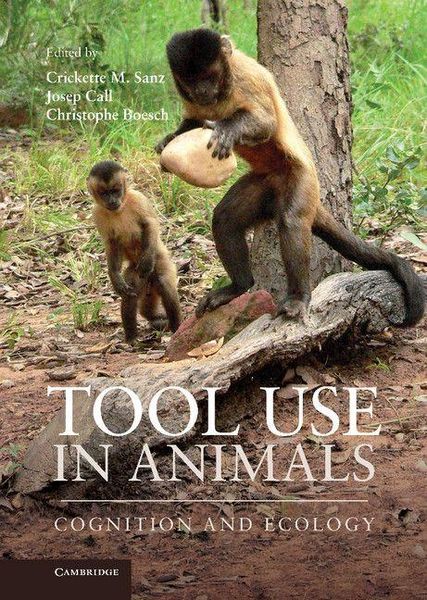

Tool Use in Animals Cognition and Ecology
-
- Hardcover ausgewählt
- Taschenbuch
- eBook
-
Sprache:Englisch
117,99 €
inkl. gesetzl. MwSt.,
Beschreibung
Produktdetails
Einband
Gebundene Ausgabe
Erscheinungsdatum
10.04.2014
Herausgeber
Crickette M. Sanz + weitereVerlag
Cambridge AcademicSeitenzahl
324
Maße (L/B/H)
25/17,5/2,2 cm
Gewicht
790 g
Sprache
Englisch
ISBN
978-1-107-01119-9
The last decade has witnessed remarkable discoveries and advances in our understanding of the tool using behaviour of animals. Wild populations of capuchin monkeys have been observed to crack open nuts with stone tools, similar to the skills of chimpanzees and humans. Corvids have been observed to use and make tools that rival in complexity the behaviours exhibited by the great apes. Excavations of the nut cracking sites of chimpanzees have been dated to around 4-5 thousand years ago. Tool Use in Animals collates these and many more contributions by leading scholars in psychology, biology and anthropology, along with supplementary online materials, into a comprehensive assessment of the cognitive abilities and environmental forces shaping these behaviours in taxa as distantly related as primates and corvids.
Noch keine Bewertungen vorhanden
Verfassen Sie die erste Bewertung zu diesem Artikel
Helfen Sie anderen Kundinnen und Kunden durch Ihre Meinung.
Kurze Frage zu unserer Seite
Vielen Dank für Ihr Feedback
Wir nutzen Ihr Feedback, um unsere Produktseiten zu verbessern. Bitte haben Sie Verständnis, dass wir Ihnen keine Rückmeldung geben können. Falls Sie Kontakt mit uns aufnehmen möchten, können Sie sich aber gerne an unseren Kund*innenservice wenden.
zum Kundenservice