Gutscheinbedingungen

**Gültig bis 06.07.2026 auf fremdsprachige Bücher online auf thalia.at, in der Thalia App ab einem Mindestbestellwert von 30€ und in allen Thalia Buchhandlungen in Österreich. In den Buchhandlungen nur gültig auf lagernde Ware. Einzelne Artikel können ausgeschlossen sein. Ausgenommen sind preisgebundene Artikel & eBooks. Pro Einkauf einmal einlösbar. Nur gültig gegen Vorlage oder im Onlineshop hinterlegter Bonuscard. Infos zur Einlösung in der Buchhandlung sind auf der Bonuscard-Vorteilspreisseite zu finden. Click & Collect nur bei Onlinevorabzahlung möglich. Keine Einlösung bei Scan & Go-Bezahlung. Keine Barauszahlung. Nicht kombinierbar mit anderen Aktionen und Gutscheinen. Gutschein wird auf max. 500€ Bestellwert angerechnet. Nicht gültig für Versandkosten und Services.

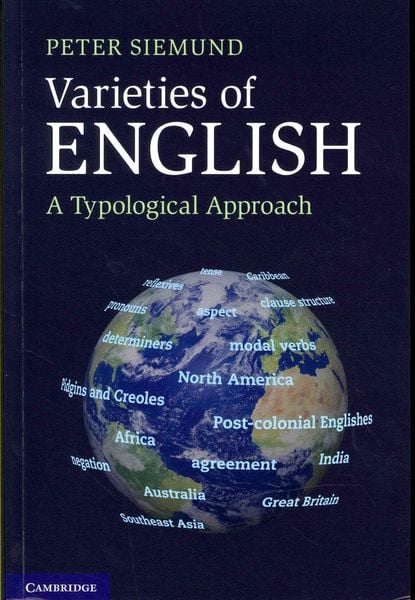
  • Produktbild: Varieties of English
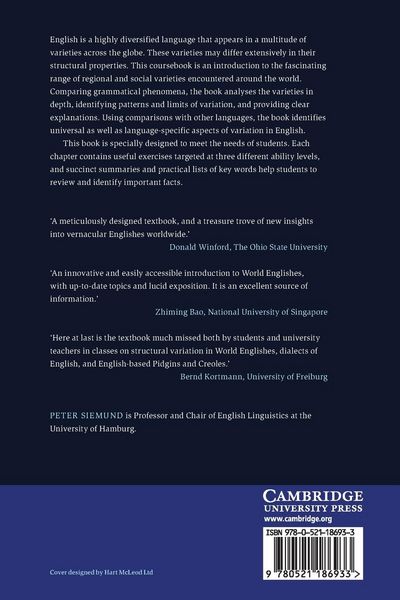
  • Produktbild: Varieties of English

Varieties of English A Typological Approach

41,99 €

inkl. gesetzl. MwSt., Versandkostenfrei


Beschreibung

Produktdetails

Einband

Taschenbuch

Erscheinungsdatum

09.05.2013

Verlag

Cambridge University Press

Seitenzahl

325

Maße (L/B/H)

22,9/15,2/1,8 cm

Gewicht

520 g

Sprache

Englisch

ISBN

978-0-521-18693-3

Beschreibung

Rezension

'This book offers a unique exploration of morphosyntactic variation across varieties of English from a functional typological perspective. It is a meticulously designed textbook, and a treasure trove of new insights into vernacular Englishes worldwide.' Donald Winford, Ohio State University

Zitat

Advance praise: 'This book offers a unique exploration of morphosyntactic variation across varieties of English from a functional typological perspective. It is a meticulously designed textbook, and a treasure trove of new insights into vernacular Englishes worldwide.' Donald Winford, Ohio State University Advance praise: 'Professor Siemund's textbook is an innovative and easily accessible introduction to World Englishes, with up-to-date topics and lucid exposition. It is an excellent source of information on the grammatical consequences of the spread of English, and is of immense interest not only to students of World Englishes but also to students of general dialectological and typological issues.' Zhiming Bao, National University of Singapore Advance praise: 'Here at last is the textbook much missed both by students and university teachers in classes on structural variation in World Englishes, dialects of English, and English-based Pidgins and Creoles. Developed and refined in numerous linguistics classes, it is thought-provoking and yet easily digestible for advanced undergraduate and graduate students (and likewise for a more senior readership), an effect enhanced not least by well-chosen sets of exercises following each of the chapters.' Bernd Kortmann, University of Freiburg Advance praise: '... based on a wide range of data from varieties of English all over the world, Peter Siemund's book on Varieties of English: A Typological Approach manages to build a much needed bridge between linguistic typology and variationist study of language. It provides the reader with a balanced discussion of morphosyntactic features common to, or different between, varieties of English and seeks explanations for them in terms of linguistic universals and/or sociohistorical background factors.' Markku Filppula, University of Eastern Finland, Joensuu

Produktdetails

Einband

Taschenbuch

Erscheinungsdatum

09.05.2013

Verlag

Cambridge University Press

Seitenzahl

325

Maße (L/B/H)

22,9/15,2/1,8 cm

Gewicht

520 g

Sprache

Englisch

ISBN

978-0-521-18693-3

Herstelleradresse

Libri GmbH
Europaallee 1
36244 Bad Hersfeld
DE

Email: gpsr@libri.de

Noch keine Bewertungen vorhanden

Verfassen Sie die erste Bewertung zu diesem Artikel

Helfen Sie anderen Kundinnen und Kunden durch Ihre Meinung.

Kundinnen und Kunden meinen

Bewertungen (0)

Die Leseprobe wird geladen.
  • Produktbild: Varieties of English
  • Produktbild: Varieties of English
  • 1. Introduction; 2. Reflexivity and reflexive marking; 3. Pronominal gender; 4. Pronominal case; 5. Determiners; 6. Tense marking; 7. Aspect marking; 8. Modal verbs; 9. Negation; 10. Subject-verb agreement; 11. Ditransitive constructions; 12. Interrogative constructions; 13. The formation of relative clauses; 14. Summary and outlook.