KI-Beratung Beta

Gutscheinbedingungen

**Gültig bis 05.10.2026 ab einem Mindestbestellwert von 30€ auf Spielzeug, Schreibwaren, Filme, Geschenke & Trends, Musik, tolino eReader & Zubehör, Hörbücher und Hörbuch-Downloads, nicht preisgebundene Bücher und Kalender online auf thalia.at und in der Thalia App. Einzelne Artikel können ausgeschlossen sein. Aufgrund der Buchpreisbindung sind deutschsprachige Bücher und eBooks ausgenommen. Zusätzlich ausgenommen sind Abos & Flatrates, Games, Geschenkkarten/-boxen, Shelfies, Software, Zeitschriften sowie einzelne Artikel von tonies®. Pro Einkauf einmal einlösbar. Nur gültig mit im Onlineshop hinterlegter Bonuscard. Click & Collect nur bei Onlinevorabzahlung möglich. Keine Barauszahlung. Nicht kombinierbar mit anderen Aktionen und Gutscheinen. Gutschein wird auf max. 500€ Bestellwert angerechnet. Nicht gültig für Versandkosten und Services. Preisgebundene Artikel sind vom Mindestbestellwert ausgeschlossen.

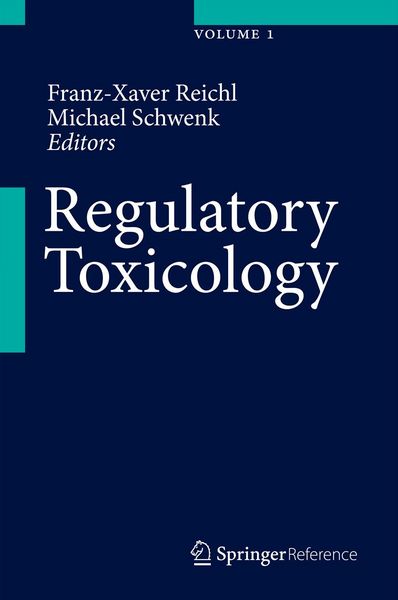
Produktbild: Regulatory Toxicology
- 13%

Regulatory Toxicology

13% sparen

523,99 € UVP 604,99 €

inkl. gesetzl. MwSt., Versandkostenfrei


Beschreibung

Produktdetails

Einband

Set mit diversen Artikeln

Erscheinungsdatum

27.03.2014

Abbildungen

XXIV, 144 illus., 70 illus. in color. In 2 volumes, not available separately., farbige Illustrationen, schwarz-weiss Illustrationen

Herausgeber

Franz-Xaver Reichl + weitere

Verlag

Springer Berlin

Seitenzahl

946

Maße (L/B/H)

24,1/16/6,5 cm

Gewicht

1750 g

Auflage

2014

Sprache

Englisch

ISBN

978-3-642-35373-4

Beschreibung

Portrait

Franz-Xaver Reichl studied Microbiology and Medicine in Munich, Germany. He is Head of the Department of Dental Toxicology at the Department of Operative/Restorative Dentistry, Periodontology and Pedodontics, LMU Munich and Head of the International Advisory Centre for the toxicology and biocompatibility of dental materials. His field of research cover studies on cytotoxic, mutagenic, carcinogenic and embryotoxic effects of chemical compounds (e.g. dental materials) in human and animal cells, abrasion of composites and elution of dental composite components during the chewing situation in the chewing simulator MUC/3 and in vitro- and in vivo studies on toxicokinetic and toxicodynamic effects of chemical compounds (e.g. dental materials). He also work on studies on the pathways and on the analysis of intermediates in the metabolism of dental composite components in biological systems and risk assessments of xenobiotics (e.g. dental materials). Michael Schwenk studied Biochemistry and Medicine in Tuebingen, Germany. He then qualifiedas a toxicologist and pharmacologist and worked in universities, industry and a health agency. He initially focused on experimental cell toxicology, but later shifted to the measurement of chemical residues in humans and to study the health effects of such exposures in different populations. He was active in various national regulatory committees, advised the colleagues of the public health service of Baden-Württemberg and received practical experience in all major areas of regulatory toxicology.

Produktdetails

Einband

Set mit diversen Artikeln

Erscheinungsdatum

27.03.2014

Abbildungen

XXIV, 144 illus., 70 illus. in color. In 2 volumes, not available separately., farbige Illustrationen, schwarz-weiss Illustrationen

Herausgeber

Verlag

Springer Berlin

Seitenzahl

946

Maße (L/B/H)

24,1/16/6,5 cm

Gewicht

1750 g

Auflage

2014

Sprache

Englisch

ISBN

978-3-642-35373-4

Herstelleradresse

Springer Heidelberg
Tiergartenstr. 17
69121 Heidelberg
DE
buchhandel-buch@springer.com

Noch keine Bewertungen vorhanden

Verfassen Sie die erste Bewertung zu diesem Artikel

Helfen Sie anderen Kundinnen und Kunden durch Ihre Meinung.

Kundinnen und Kunden meinen

Bewertungen (0)

  • Produktbild: Regulatory Toxicology
  • Aims and mission of  regulatory toxicology.- Working areas of regulatory toxicology.- National and international collaboration in regulatory toxicology.- The regulatory process in toxicology.- Quality assurance in regulatory toxicology.- Toxicological risk assessment.- Characterization of physicochemical parameters in toxicology.- Examination of acute and chronic toxicity.- Examination of organ-toxicity.- Specific toxicity tests for neurotoxicity , immunotoxicity, allergy, irritation, reprotoxicity and carcinogenicity.- Toxicity testing in vitro. Regulatory aspects.- New and future toxicological assays and their regulation.- Computer-based prediction models in regulatory toxicology.- Metabolism tests  in regulatory toxicology.- Toxicokinetic tests.- Toxicodynamic tests.- Omics in  toxicology.- International regulation of toxicological test systems.- Epidemiological methods in regulatory toxicology.- Studies in volunteers and its regulation.- Statistical evaluation methods in toxicology.- Dose-Response analysis, Identification of threshold levels for chemicals.- Extrapolation-procedures for carcinogenic and non-carcinogenic compounds.- Probabilistic methods in  toxicology.- Toxicodynamic models.- Toxicokinetic models.- Exposure analysis for indoor contaminants.- Exposure scenarios in  toxicology.- Quality criteria for primary literature in  toxicology.- Data-mining  in  toxicology.- Principles of analytical chemistry for  toxicology.- Principles of analytical chemistry for  toxicology.- Benchmark dose in regulatory toxicology.- Uncertainty analysis in exposure assessment. Relevance for regulatory toxicology.- Do carcinogens have a threshold dose? pro and contra.- Single compounds vs combination effects in toxicology.- Biomolecules vs smaller chemicals in toxicology.- Sensitive humans vs average persons in toxicology.- Extrapolation factors and safety factors in toxicology.- Background exposure vs additional exposure in human biomonitoring.- Adverse effects vs non-adverse effects in toxicology.- Health based threshold ADI vs MOS in  toxicology.- Precaution principle vs danger prevention in toxicology.- Hygenic vs toxicological approaches in regulation.- Protected property and  protection level in regulatory toxicology.- Ethical issues in Science. Focus on regulatory toxicology.- Current  role of the risk concept in regulatory toxicology.- Risk cycles in  toxicology.- Risk minimization in drug development.  Regulatory aspects.- Importance of physical-chemical properties for toxicological risk assessment.- Importance of intrinsic toxic properties for risk assessment.- Importance of metabolism. Mechanistic considerations relevant for toxicological regulation.- Dose Response Relationship and Extrapolation in Toxicology. Mechanistic and statistical considerations.- Importance of exposure level for risk toxicological assessment.- Risk characterization in regulatory toxicology.- Risk evaluation regulatory toxicology.- Risk comparision in toxicology.- Risk-benefit considerations in toxicology.- Toxicological risk assessment in different jurisdictions.- Purpose of risk management in regulatory toxicology.- Assessment of limit values in regulatory toxicology.- Limit value setting in different  areas of regulatory toxicology.- Registration and approval in regulatory toxicology.- Classification and labelling regulatory toxicology.- Human Biomonitoring. Its importance in toxicological regulation.- Restrictions and prohibitions as tools in regulatory toxicology.- Observance of susceptible population groups in regulatory toxicology.- Toxicological  report.- Risk managment in toxicological disasters.- Institutionalized participation in regulatory toxicology.- Risk communication.- Dealing with diseases that have been attributed to chemical exposures.- Reach (and CLP). Its role in regulatory toxicology.- Bridging. The regulation of toxic mixtures.- Regulatory aspects of food toxicology.- Notification of Cosmetic Products and dangerous mixtures in regulatory toxicology.- Checklist: Toxicological risk assessment in practice.- Glossary of  toxicology and risk terms.- Limit values and guideline values in regulatory toxicology.-