Beschreibung
Produktdetails
Einband
Gebundene Ausgabe
Erscheinungsdatum
25.01.2018
Abbildungen
13 line art; 7 b&w halftones
Verlag
Oxford University PressSeitenzahl
288
Maße (L/B/H)
24/16,1/2 cm
Gewicht
599 g
Sprache
Englisch
ISBN
978-0-19-992950-4
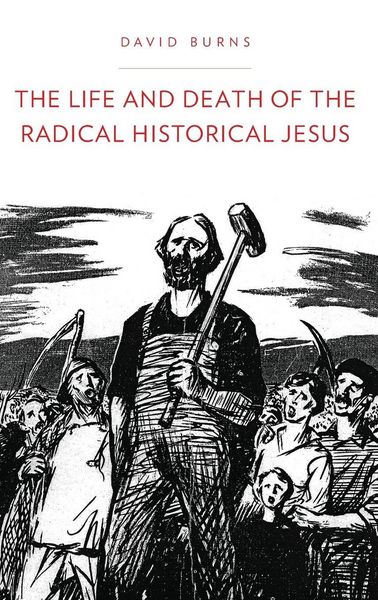
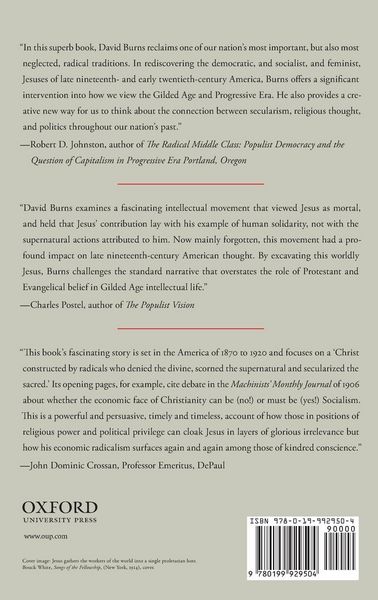
In this cultural and intellectual history, David Burns contends that the influence of biblical criticism in America was more widespread than previously thought. Burns proves this point by uncovering the hidden history of the radical historical Jesus, a construct created and sustained by freethinkers, feminists, socialists and anarchists during the Gilded Age and Progressive Era. The result of this exploration is a new narrative revealing that Cyrenus Osborne Ward, Caroline Bartlett, George Herron, Bouck White, and other radical religionists had an impact on the history of religion in America rivaling that of recognized religious intellectuals such as Shailer Mathews, Charles Briggs, Francis Peabody, and Walter Rauschenbusch.
The methods and approaches utilized by radical religionists were different from those employed by elite liberal divines, however, and part of a larger struggle over the relationship between religion and civilization. There were numerous reasons for this conflict, but, as Burns argues, the primary one was that radicals used Ernest Renan's The Life of Jesus to create an imaginative brand of biblical criticism that struck a balance between the demands of reason and the doctrines of religion. Thus, while radical religionists like Robert Ingersoll, Elizabeth Cady Stanton, and Eugene Debs were secular-minded thinkers who sought to purge Christianity of its supernatural dimensions, they believed the religious imagination that enabled modern day radicals to make common cause with an ancient peasant from Galilee was something wonderful.
This provocative blend of reason and religion produced a vibrant countercultural movement that spanned communities, classes, and creeds and makes The Life and Death of the Radical Historical Jesus a book that deserves a wide readership in an era when public intellectuals and politicians on both the left and right draw rigid lines between the secular and the sacred.
Noch keine Bewertungen vorhanden
Verfassen Sie die erste Bewertung zu diesem Artikel
Helfen Sie anderen Kundinnen und Kunden durch Ihre Meinung.
Kurze Frage zu unserer Seite
Vielen Dank für Ihr Feedback
Wir nutzen Ihr Feedback, um unsere Produktseiten zu verbessern. Bitte haben Sie Verständnis, dass wir Ihnen keine Rückmeldung geben können. Falls Sie Kontakt mit uns aufnehmen möchten, können Sie sich aber gerne an unseren Kund*innenservice wenden.
zum Kundenservice