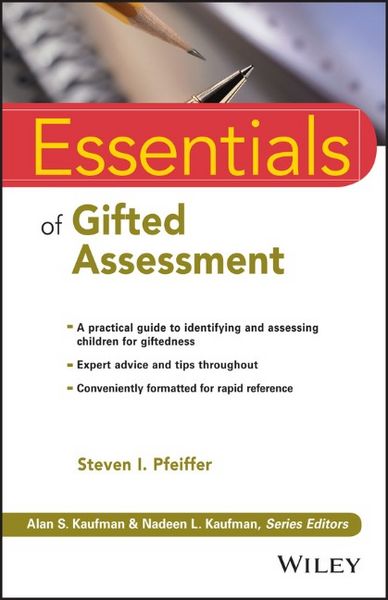
Produktbild: Essentials of Gifted Assessment
- 11%

Essentials of Gifted Assessment

11% sparen

48,99 € UVP 55,50 €

inkl. gesetzl. MwSt., Versandkostenfrei


Beschreibung

Produktdetails

Einband

Taschenbuch

Erscheinungsdatum

27.04.2015

Herausgeber

Alan S Kaufman + weitere

Verlag

John Wiley & Sons Inc

Seitenzahl

192

Maße (L/B/H)

21,3/13,7/1,5 cm

Gewicht

227 g

Auflage

1. Auflage

Sprache

Englisch

ISBN

978-1-118-58920-5

Beschreibung

Produktdetails

Einband

Taschenbuch

Erscheinungsdatum

27.04.2015

Herausgeber

Verlag

John Wiley & Sons Inc

Seitenzahl

192

Maße (L/B/H)

21,3/13,7/1,5 cm

Gewicht

227 g

Auflage

1. Auflage

Sprache

Englisch

ISBN

978-1-118-58920-5

Herstelleradresse

Libri GmbH
Europaallee 1
36244 Bad Hersfeld
DE

Email: gpsr@libri.de

Kundinnen und Kunden meinen

0 Bewertungen

Informationen zu Bewertungen

Zur Abgabe einer Bewertung ist eine Anmeldung im Konto notwendig. Die Authentizität der Bewertungen wird von uns nicht überprüft. Wir behalten uns vor, Bewertungstexte, die unseren Richtlinien widersprechen, entsprechend zu kürzen oder zu löschen.

Die Bewertungen sind nach Format, Anzahl Sterne und Datum sortiert.

Verfassen Sie die erste Bewertung zu diesem Artikel

Helfen Sie anderen Kund*innen durch Ihre Meinung

Kundinnen und Kunden meinen

0 Bewertungen filtern

Die Leseprobe wird geladen.
  • Produktbild: Essentials of Gifted Assessment
  • Series Preface xi

    Acknowledgments xiii

    One Introduction to Gifted Assessment 1

    Who Are the Gifted? 1

    Brief History of Gifted Education 3

    Giftedness as a Social Construction 6

    Tripartite Model 7

    Should We Identify Gifted Students? 13

    Purposes of Gifted Assessment 14

    Two Conceptions of Giftedness Guide Gifted Assessment 17

    Traditional Psychometric View 19

    Talent Development Models 21

    Differentiated Model of Giftedness and Talent 22

    Subotnik's Developmental Transitions in Giftedness and Talent 23

    Stanley's Talent Search Model 27

    Renzulli's Three-Ring Conception of Giftedness 29

    Expert Performance Perspective 30

    Multiple Intelligences Model 32

    Theory of Successful Intelligence: WICS 33

    Synthesis of Divergent Views of Giftedness 35

    Conclusion 40

    Three Gifted Assessment: Guiding Principles and Fundamental Beliefs 44

    Fundamental Beliefs of Gifted Assessment 44

    Key Principles in Gifted Assessment 48

    How We Define Gifted Is Important 48

    Assessment Should Consider Types of Available Gifted Programs 49

    Psychometrics Count 51

    People, Not Test Scores, Should Make Diagnostic Decisions 52

    Multiple Measures Are an Advantage 53

    Local Norms and Recurring Assessment Are Advantages 53

    Beliefs and Principles Conclusion 57

    Decision-Making or Selection Models 58

    Four Measuring Intellectual and Academic Ability 63

    Why and When to Use Tests of Cognitive and Academic Ability 64

    Where Does Abstract Reasoning Fit In? 65

    What Tests of Cognitive Ability Measure 67

    General and Specific Abilities 68

    Hierarchical Models: Cattell-Horn-Carroll 68

    Abstract Reasoning 70

    General Intelligence (g) 71

    Clinical Insights 73

    General Ability Index 73

    Clinical Considerations and Adaptations for High-Ability Students 75

    Tests with High Ceilings 75

    Testing the Limits 76

    Extended Norms 77

    Levels of Intellectual Giftedness 78

    Some Popular IQ Tests Used in Gifted Assessment 79

    Wechsler Intelligence Scale for Children-Fifth Edition 80

    Wechsler Preschool and Primary Scale of Intelligence-Fourth Edition 81

    Stanford-Binet Intelligence Scales, Fifth Edition 82

    Woodcock-Johnson IV Tests of Cognitive Abilities 83

    Differential Ability Scales, Second Edition 84

    Kaufman Assessment Battery for Children, Second Edition 85

    Cognitive Assessment System, Second Edition 86

    Reynolds Intellectual Assessment Scales 87

    A Few Illustrative Academic Measures 88

    Conclusion and Recommendations 88

    Five Identifying and Assessing Creativity 92

    Defining Creativity 92

    Measuring Creativity 97

    Divergent Thinking: Torrance Tests of Creative Thinking 97

    Divergent Thinking: Profile of Creative Abilities 100

    Self-Report: Abedi Test of Creativity 101

    Teacher Checklist: Gifted Rating

    Scales-Creativity Scale 102

    Consensual Assessment Technique 104

    Creativity, Intelligence, and Talent Development 106

    Unanswered Questions 108

    Six Alternative Gifted Assessment Methods 110

    Teacher and Parent Nominations 110

    Portfolio Assessment 111

    Nonverbal Measures 115

    Teacher Ratings 115

    The GRS as a Measure of Change 124

    Assessing Readiness for Grade Acceleration 124

    Types of Acceleration 124

    Iowa Acceleration Scale 126

    Seven Frequently Asked Questions About Gifted Assessment 129

    Six Questions 129

    1. Should Nonverbal Tests Be Used as Part of Gifted Assessment, and If So, When? 130

    2. How Should We Approach the Assessment and Identification of Typically Underrepresented Gifted Populations? 131

    3. What Constitutes a Complete Gifted Assessment Test Battery? 134

    4. Should Social Competence, Passion for Learning, Motivation, and Emotional Intelligence Be Included in Gifted Assessment? 135

    5. Should We Be Concerned About Multipotentiality When Testing High-Ability Students? 137

    6. Are There Any Recommendations for Assessment of the Twice-Exceptional Learner? 138

    Concluding Comments 140

    References 143

    About the Author 163

    Index 165