Gutscheinbedingungen

**Gültig nur für Bestellungen an die Wunsch-Poststation bis 10.06.2026 auf Spielzeug, Schreibwaren, Filme, Geschenke & Trends, Musik, tolino eReader & Zubehör, Hörbücher und Hörbuch-Downloads (außer Abo), nicht preisgebundene Bücher und Kalender online auf thalia.at und in der Thalia App. Einzelne Artikel können ausgeschlossen sein. Aufgrund der Buchpreisbindung sind deutschsprachige Bücher und eBooks ausgenommen. Zusätzlich ausgenommen sind preisgebundene Artikel, Abos & Flatrates, eBooks, Games, Geschenkkarten/-boxen, Shelfies, Software, Zeitschriften sowie einzelne Artikel von tonies®. Pro Einkauf einmal einlösbar. Kein Click & Collect möglich. Keine Barauszahlung. Nicht kombinierbar mit anderen Aktionen und Gutscheinen. Gutschein wird auf max. 500€ Bestellwert angerechnet. Nicht gültig für Versandkosten und Services.

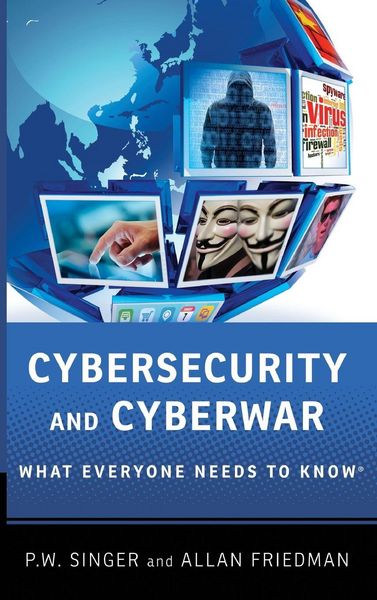
  • Produktbild: Cybersecurity and Cyberwar
  • Produktbild: Cybersecurity and Cyberwar

Cybersecurity and Cyberwar What Everyone Needs to Know

74,99 €

inkl. gesetzl. MwSt., Versandkostenfrei


Beschreibung

Produktdetails

Einband

Gebundene Ausgabe

Erscheinungsdatum

07.12.2010

Verlag

Oxford University Press

Seitenzahl

320

Maße (L/B/H)

23,5/15,7/2,2 cm

Gewicht

488 g

Sprache

Englisch

ISBN

978-0-19-991809-6

Beschreibung

Rezension

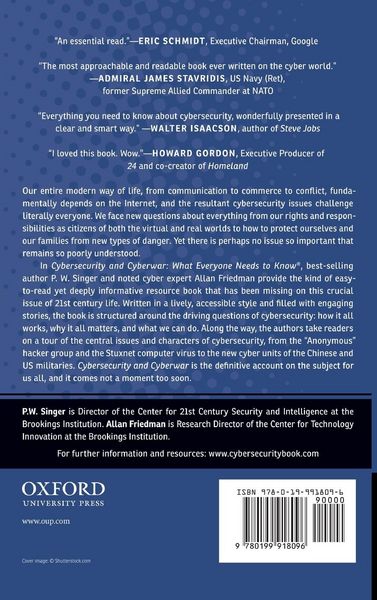
In our digital age, the issues of cybersecurity are no longer just for the technology crowd; they matter to us all. Whether you work in business or politics, the military or the media -- or are simply an ordinary citizen -- this is an essential read. Eric Schmidt, Executive Chairman, Google

Produktdetails

Einband

Gebundene Ausgabe

Erscheinungsdatum

07.12.2010

Verlag

Oxford University Press

Seitenzahl

320

Maße (L/B/H)

23,5/15,7/2,2 cm

Gewicht

488 g

Sprache

Englisch

ISBN

978-0-19-991809-6

Herstelleradresse

Libri GmbH
Europaallee 1
36244 Bad Hersfeld
DE

Email: gpsr@libri.de

Kundinnen und Kunden meinen

0 Bewertungen

Informationen zu Bewertungen

Zur Abgabe einer Bewertung ist eine Anmeldung im Konto notwendig. Die Authentizität der Bewertungen wird von uns nicht überprüft. Wir behalten uns vor, Bewertungstexte, die unseren Richtlinien widersprechen, entsprechend zu kürzen oder zu löschen.

Die Bewertungen sind nach Format, Anzahl Sterne und Datum sortiert.

Verfassen Sie die erste Bewertung zu diesem Artikel

Helfen Sie anderen Kund*innen durch Ihre Meinung

Kundinnen und Kunden meinen

0 Bewertungen filtern

Die Leseprobe wird geladen.
  • Produktbild: Cybersecurity and Cyberwar
  • Produktbild: Cybersecurity and Cyberwar
    • 1. Why cyberspace is wonderful... and complicated

    • What is cyberspace?

    • Why do people talk about the difference of a networked world?

    • How does the Internet actually work?

    • Who owns this thing?

    • Wait... You mean no one runs the internet?

    • What can governments do online? What are the limits of state power?

    • Just how dependent are we on cyberspace?

    • 2. Security and Insecurity Online

    • What do we mean by a "secure " system?

    • What is the difference between an attack on a network and an attack on a system?

    • How does anti-virus software work?

    • How do you defend a network?

    • Why is anonymity a problem online? Why is it relatively easy to act without accountability?

    • How can you authenticate some one to be sure they are who they say they are?

    • How do we keep data secure in cyberspace?

    • 3. Threats and Bad Actors

    • o Differentiating threats

    • o Value at risk

    • What are the bad guys after? What can you really do with a computer?

    • What's the worst you can do? Can a hacker really turn off the power grid?

    • o Different motivations of attackers

    • o Different types of attacks

    • o What is Cyber Terrorism, actually?

    • What does "cyberwarfare" mean?

    • How are countries militarizing cyberspace? Why?

    • So if we just built better systems, could we have a secure internet?

    • 4. Case Studies / Examples of attacks

    • o Aurora / Google {phishing, attribution}

    • o Stuxnet {Critical infrastructure, intelligence}

    • o Wikileaks data breach and fallout {data protection, DoS}

    • o Israel-Syria Air Defense {Cyber-Kinetic Crossover, cyberwar}

    • -

    • 5. Why securing cyberspace is hard

    • What are some mechanisms that enable us to trust systems or data?

    • What is the difference between espionage and exploitation?

    • Why not just write better software?

    • Why can't network operators detect bad behavior?

    • Why security through obscurity doesn't work

    • How do we know what has happened after a cyber incident?

    • How does the rise in "cloud computing " change the dynamics of cyber security?

    • What makes mobile computing different?

    • If everyone's systems are vulnerable, can't defenders just interrupt the attacker's systems?

    • Why is it so hard to know who the attackers are?

    • Why does attribution matter?

    • How do we measure a cyber risk?

    • Why aren't users able to protect themselves?

    • Don't vendors and service providers have enough incentives to provide good security?

    • Why aren't companies investing enough to protect themselves?

    • 6. International Dimensions

    • What changes when cyber problems cross international borders?

    • How do countries differ in their approach to cyberspace?

    • Who has the biggest cyber armies?

    • What constitutes an act of war?

    • How does law enforcement deal with international boundaries?

    • What are existing international organizations currently doing?

    • What international treaties are in place?

    • Why don't the classic models of military deterrence work for cyberspace?

    • What are the obstacles to international cooperation to resolve cybersecurity issues?

    • 7.The path forward to a more secure cyberspace

    • It sounds like every aspect of modern life is vulnerable. Are things really that bad?

    • Why can't we just re-built the technology to prevent bad behavior?

    • Can we impose accountability through national control of cyberspace?

    • How can private firms be incentivized to internalize their risk?

    • If a company or government agency was willing to invest in cyber security defenses, what would stand in their way?

    • Can internet service providers do more to identity and stop bad behavior?

    • How can we make it harder for bad actors to profit from successful attacks

    • What can I do to protect myself?