Gutscheinbedingungen

**Gültig bis 06.07.2026 auf fremdsprachige Bücher online auf thalia.at, in der Thalia App ab einem Mindestbestellwert von 30€ und in allen Thalia Buchhandlungen in Österreich. In den Buchhandlungen nur gültig auf lagernde Ware. Einzelne Artikel können ausgeschlossen sein. Ausgenommen sind preisgebundene Artikel & eBooks. Pro Einkauf einmal einlösbar. Nur gültig gegen Vorlage oder im Onlineshop hinterlegter Bonuscard. Infos zur Einlösung in der Buchhandlung sind auf der Bonuscard-Vorteilspreisseite zu finden. Click & Collect nur bei Onlinevorabzahlung möglich. Keine Einlösung bei Scan & Go-Bezahlung. Keine Barauszahlung. Nicht kombinierbar mit anderen Aktionen und Gutscheinen. Gutschein wird auf max. 500€ Bestellwert angerechnet. Nicht gültig für Versandkosten und Services.

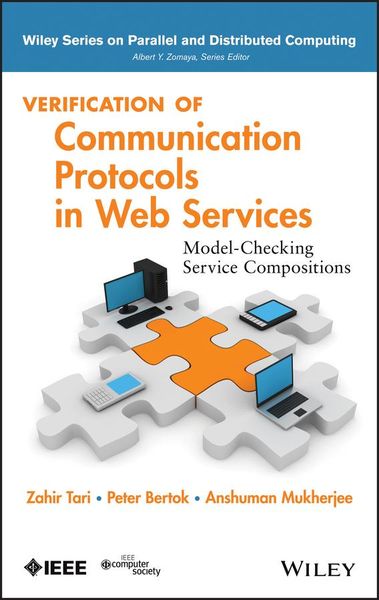
Produktbild: Verification of Communication Protocols in Web Services

Verification of Communication Protocols in Web Services Model-Checking Service Compositions

164,99 €

inkl. gesetzl. MwSt., Versandkostenfrei


Beschreibung

Produktdetails

Einband

Gebundene Ausgabe

Erscheinungsdatum

04.12.2013

Verlag

John Wiley & Sons

Seitenzahl

272

Maße (L/B/H)

24,1/15,9/2 cm

Gewicht

591 g

Auflage

1. Auflage

Sprache

Englisch

ISBN

978-0-470-90539-5

Beschreibung

Produktdetails

Einband

Gebundene Ausgabe

Erscheinungsdatum

04.12.2013

Verlag

John Wiley & Sons

Seitenzahl

272

Maße (L/B/H)

24,1/15,9/2 cm

Gewicht

591 g

Auflage

1. Auflage

Sprache

Englisch

ISBN

978-0-470-90539-5

Herstelleradresse

Libri GmbH
Europaallee 1
36244 Bad Hersfeld
DE

Email: GPSR Kontakt

Noch keine Bewertungen vorhanden

Verfassen Sie die erste Bewertung zu diesem Artikel

Helfen Sie anderen Kundinnen und Kunden durch Ihre Meinung.

Kundinnen und Kunden meinen

Bewertungen (0)

Die Leseprobe wird geladen.
  • Produktbild: Verification of Communication Protocols in Web Services
  • PREFACE xi
     
    1 INTRODUCTION: SERVICE RELIABILITY 1
     
    1.1 Motivation 4
     
    1.2 Technical Challenges 5
     
    1.3 Summary of Earlier Solutions 7
     
    1.4 Summary of New Ways to Verify Web Services 8
     
    1.5 Structure of the Book 10
     
    References 11
     
    2 MODEL CHECKING 15
     
    2.1 Advantages and Disadvantages of Model Checking 18
     
    2.2 State-Space Explosion 19
     
    2.3 Model-Checking Tools 22
     
    References 25
     
    3 PETRI NETS 27
     
    3.1 Colored Petri Nets 31
     
    3.1.1 CPN ML 31
     
    3.1.2 CPN Syntax and Semantics 35
     
    3.1.3 Timed Colored Petri Nets 41
     
    3.1.4 Multisets 47
     
    3.1.5 CPN Definitions 47
     
    3.2 Hierarchical Colored Petri Nets 49
     
    References 55
     
    4 WEB SERVICES 57
     
    4.1 Business Process Execution Language 59
     
    4.2 Spring Framework 70
     
    4.3 JAXB 2 APIs 74
     
    4.3.1 Unmarshaling XML Documents 74
     
    4.3.2 Marshaling Java Objects 75
     
    References 76
     
    5 MEMORY-EFFICIENT STATE-SPACE ANALYSIS IN SOFTWARE MODEL CHECKING 77
     
    5.1 Motivation 78
     
    5.2 Overview of the Problem and Solution 79
     
    5.3 Related Work 83
     
    5.4 Models for Memory-Efficient State-Space Analysis 86
     
    5.4.1 Sequential Model 87
     
    5.4.2 Tree Model 98
     
    5.5 Experimental Results 108
     
    5.6 Discussion 112
     
    5.7 Summary 113
     
    References 113
     
    6 TIME-EFFICIENT STATE-SPACE ANALYSIS IN SOFTWARE MODEL CHECKING 115
     
    6.1 Motivation 116
     
    6.2 Overview of the Problem and Solution 118
     
    6.3 Overview of Hierarchical Colored Petri Nets 119
     
    6.4 Related Work 123
     
    6.5 Technique for Time-Efficient State-Space Analysis 125
     
    6.5.1 Access Tables and Parameterized Reachability Graph 126
     
    6.5.2 Exploring a Module 129
     
    6.5.3 Access Table and Parameterized Reachability Graph for a Super-module 134
     
    6.5.4 Algorithms for Generating Access Tables and Parameterized Reachability Graphs 137
     
    6.5.5 Additional Memory Cost for Storing Access Tables and Parameterized Reachability Graphs 143
     
    6.5.6 Theoretical Evaluation of the Reduction in Delay 145
     
    6.6 Experimental Results 149
     
    6.7 Discussion 151
     
    6.8 Summary 152
     
    References 153
     
    7 GENERATING HIERARCHICAL MODELS BY IDENTIFYING STRUCTURAL SIMILARITIES 155
     
    7.1 Motivation 156
     
    7.2 Overview of the Problem and Solution 158
     
    7.3 Basics of Substitution Transition 160
     
    7.4 Related Work 161
     
    7.5 Method for Installing Hierarchy 162
     
    7.5.1 Lookup Method 163
     
    7.5.2 Clustering Method 189
     
    7.5.3 Time Complexity of the Lookup Algorithm 193
     
    7.6 Experimental Results 194
     
    7.7 Discussion 201
     
    7.8 Summary 202
     
    References 203
     
    8 FRAMEWORK FOR MODELING, SIMULATION, AND VERIFICATION OF A BPEL SPECIFICATION 205
     
    8.1 Motivation 206
     
    8.2 Overview of the Problem and Solution 208
     
    8.3 Related Work 209
     
    8.4 Colored Petri Net Semantics for BPEL 211
     
    8.4.1 Component A 211
     
    8.4.2 Component B 214
     
    8.4.3 Object Model for BPEL Activities 217
     
    8.4.4 XML Templates 221
     
    8.4.5 Algorithm for Cloning Templates 234
     
    8.5 Results 236
     
    8.6 Discussion 241
     
    8.7 Summary 242
     
    References 242
     
    9 CONCLUSIONS AND OUTLOOK 245
     
    9.1 Results 246
     
    9.2 Discussion 249
     
    9.3 What Could Be Improved? 251
     
    References 252
     
    INDEX 255