KI-Beratung Beta

Gutscheinbedingungen

**Gültig bis 18.11.2026 auf englischsprachige Klassiker (klassiker-32728) online auf thalia.at und in der Thalia App. Einzelne Artikel können ausgeschlossen sein. Ausgenommen sind preisgebundene Artikel & eBooks. Pro Einkauf einmal einlösbar. Click & Collect nur bei Onlinevorabzahlung möglich. Keine Barauszahlung. Nicht kombinierbar mit anderen Aktionen und Gutscheinen. Gutschein wird auf max. 500€ Bestellwert angerechnet. Nicht gültig für Geschenkkarten, Versandkosten und Services.

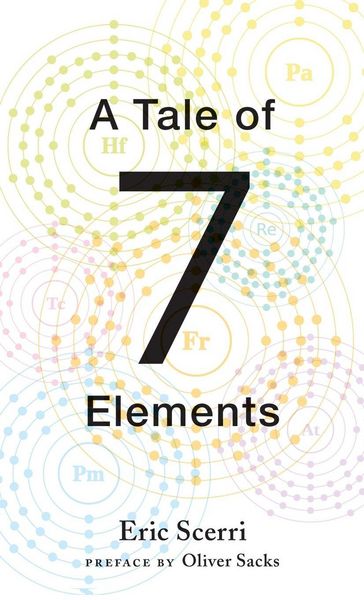
Produktbild: Tale of Seven Elements

Tale of Seven Elements

Aus der Reihe OXFORD UNIV PR

61,99 €

inkl. gesetzl. MwSt., Versandkostenfrei


Beschreibung

In 1913, English physicist Henry Moseley established an elegant method for "counting" the elements based on atomic number, ranging them from hydrogen (#1) to uranium (#92). It soon became clear, however, that seven elements were mysteriously missing from the lineup--seven elements unknown to science....

Beschreibung

In 1913, English physicist Henry Moseley established an elegant method for "counting" the elements based on atomic number, ranging them from hydrogen (#1) to uranium (#92). It soon became clear, however, that seven elements were mysteriously missing from the lineup--seven elements unknown to science. In his well researched and engaging narrative, Eric Scerri presents the intriguing stories of these seven elements--protactinium, hafnium, rhenium, technetium, francium, astatine and promethium. The book follows the historical order of discovery, roughly spanning the two world wars, beginning with the isolation of protactinium in 1917 and ending with that of promethium in 1945. For each element, Scerri traces the research that preceded the discovery, the pivotal experiments, the personalities of the chemists involved, the chemical nature of the new element, and its applications in science and technology. We learn for instance that alloys of hafnium--whose name derives from the Latin name for Copenhagen (hafnia)--have some of the highest boiling points on record and are used for the nozzles in rocket thrusters such as the Apollo Lunar Modules. Scerri also tells the personal tales of researchers overcoming great obstacles. We see how Lise Meitner and Otto Hahn--the pair who later proposed the theory of atomic fission--were struggling to isolate element 91 when World War I intervened, Hahn was drafted into the German army's poison gas unit, and Meitner was forced to press on alone against daunting odds. The book concludes by examining how and where the twenty-five new elements have taken their places in the periodic table in the last half century. A Tale of Seven Elements paints a fascinating picture of chemical research--the wrong turns, missed opportunities, bitterly disputed claims, serendipitous findings, accusations of dishonesty--all leading finally to the thrill of discovery.

Produktdetails

Einband

Gebundene Ausgabe

Erscheinungsdatum

20.06.2013

Abbildungen

30b&w

Verlag Oxford University Press

Produktdetails

Einband

Gebundene Ausgabe

Erscheinungsdatum

20.06.2013

Abbildungen

30b&w

Verlag Oxford University Press
Seitenzahl

306

Maße (L/B/H)

22,2/14,5/2 cm

Gewicht

519 g

Sprache

Englisch

ISBN

978-0-19-539131-2

Herstelleradresse

Libri GmbH
Europaallee 1
36244 Bad Hersfeld
DE

Email: gpsr@libri.de

Noch keine Bewertungen vorhanden

Verfassen Sie die erste Bewertung zu diesem Artikel

Helfen Sie anderen Kundinnen und Kunden durch Ihre Meinung.

Kundinnen und Kunden meinen

Bewertungen (0)

  • Produktbild: Tale of Seven Elements
    • Preface: What constitutes the discovery of an element?
    • Chapter 1.
    • Dalton, to the Discovery of the Periodic System
    • Chapter 2.
    • van den Broek, Moseley and the missing seven elements.
    • Chapter 3.
    • Element 91, protactinium
    • Chapter 4.
    • Element 72, hafnium
    • Chapter 5.
    • Element 75, rhenium
    • Chapter 6.
    • Element 43, technetium
    • Chapter 7.
    • Element 87, francium
    • Element 8.
    • Element 85, astatine
    • Chapter 9.
    • Element 61, promethium