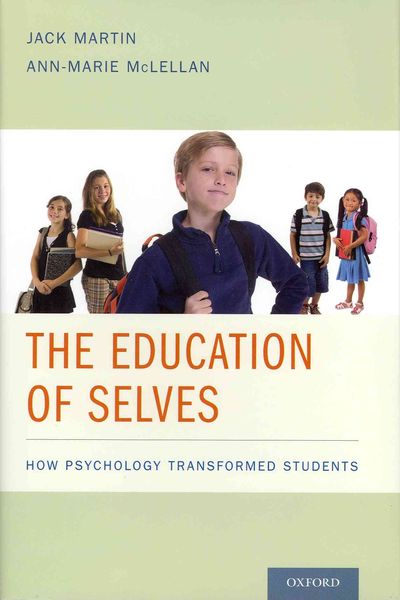
Education of Selves How Psychology Transformed Students
131,99 €
inkl. gesetzl. MwSt.,
Beschreibung
Produktdetails
Einband
Gebundene Ausgabe
Erscheinungsdatum
12.02.2013
Verlag
Oxford AcademicSeitenzahl
244
Maße (L/B/H)
24/16,1/1,8 cm
Gewicht
476 g
Sprache
Englisch
ISBN
978-0-19-991367-1
Most contemporary North Americans, as well as many other Westerners, take for granted their conceptions of themselves as individuals with uniquely valuable and complex inner lives -- lives filled with beliefs, imaginings, understandings, and motives that determine their actions and accomplishments. Yet, such psychological conceptions of selfhood are relatively recent, dating mostly from the late eighteenth century. Perhaps more surprisingly, our understandings of ourselves as creatively self-expressive and strategically self-managing are, for the most part, products of twentieth-century innovations in Enlightenment-based social sciences, especially psychology. Fueled by the enthusiasm for self-expression and self-actualization that emerged in the 1960s, humanistic, cognitive, developmental, and educational psychologists published widely on the overwhelmingly positive consequences of increased self-esteem in children and adolescents. While previous generations had been wary of self-confidence and self-interest, these qualities became widely regarded as desirable traits to be cultivated in both the home and the school.
In The Education of Selves, Jack Martin and Ann-Marie McLellan examine ways in which psychological theories, research, and interventions employed in American and Canadian schools during the last half of the twentieth century changed our understanding of students, conceptualizing ideal students as self-expressive, enterprising, and entitled to forms of education that recognize and cater to such expressivity and enterprise. The authors address each of the major programs of psychological research and intervention in American and Canadian schools from 1950 to 2000: self-esteem, self-concept, self-efficacy, and self-regulation. They give critical consideration to definitions and conceptualizations, research measures and methods, intervention practices, and the social, cultural consequences of these programs of inquiry and practice. The first decade of the twenty-first century has seen a backlash against what some have come to regard as a self-absorbed generation of young people. Such criticism may be interpreted, at least in part, as a reaction to the scientific and professional activities of psychologists, many of whom now appear to share in the general concern about where their activities have left students, schools, and society at large.
Noch keine Bewertungen vorhanden
Verfassen Sie die erste Bewertung zu diesem Artikel
Helfen Sie anderen Kundinnen und Kunden durch Ihre Meinung.
Kurze Frage zu unserer Seite
Vielen Dank für Ihr Feedback
Wir nutzen Ihr Feedback, um unsere Produktseiten zu verbessern. Bitte haben Sie Verständnis, dass wir Ihnen keine Rückmeldung geben können. Falls Sie Kontakt mit uns aufnehmen möchten, können Sie sich aber gerne an unseren Kund*innenservice wenden.
zum Kundenservice