Gutscheinbedingungen

**Gültig nur für Bestellungen an die Wunsch-Poststation bis 10.06.2026 auf Spielzeug, Schreibwaren, Filme, Geschenke & Trends, Musik, tolino eReader & Zubehör, Hörbücher und Hörbuch-Downloads (außer Abo), nicht preisgebundene Bücher und Kalender online auf thalia.at und in der Thalia App. Einzelne Artikel können ausgeschlossen sein. Aufgrund der Buchpreisbindung sind deutschsprachige Bücher und eBooks ausgenommen. Zusätzlich ausgenommen sind preisgebundene Artikel, Abos & Flatrates, eBooks, Games, Geschenkkarten/-boxen, Shelfies, Software, Zeitschriften sowie einzelne Artikel von tonies®. Pro Einkauf einmal einlösbar. Kein Click & Collect möglich. Keine Barauszahlung. Nicht kombinierbar mit anderen Aktionen und Gutscheinen. Gutschein wird auf max. 500€ Bestellwert angerechnet. Nicht gültig für Versandkosten und Services.

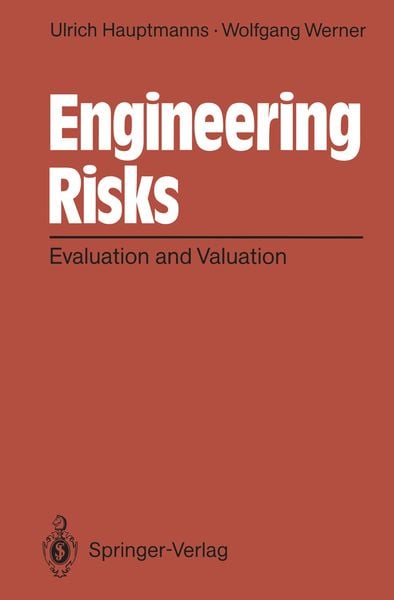
Produktbild: Engineering Risks

Engineering Risks Evaluation and Valuation

51,99 €

inkl. gesetzl. MwSt., Versandkostenfrei


Beschreibung

Produktdetails

Einband

Taschenbuch

Erscheinungsdatum

14.02.2012

Verlag

Springer Berlin

Seitenzahl

246

Maße (L/B/H)

23,5/15,5/1,5 cm

Gewicht

406 g

Auflage

Softcover reprint of the original 1st ed. 1991

Sprache

Englisch

ISBN

978-3-642-95612-6

Beschreibung

Produktdetails

Einband

Taschenbuch

Erscheinungsdatum

14.02.2012

Verlag

Springer Berlin

Seitenzahl

246

Maße (L/B/H)

23,5/15,5/1,5 cm

Gewicht

406 g

Auflage

Softcover reprint of the original 1st ed. 1991

Sprache

Englisch

ISBN

978-3-642-95612-6

Herstelleradresse

Springer-Verlag KG
Sachsenplatz 4-6
1201 Wien
AT

Email: ProductSafety@springernature.com

Kundinnen und Kunden meinen

0 Bewertungen

Informationen zu Bewertungen

Zur Abgabe einer Bewertung ist eine Anmeldung im Konto notwendig. Die Authentizität der Bewertungen wird von uns nicht überprüft. Wir behalten uns vor, Bewertungstexte, die unseren Richtlinien widersprechen, entsprechend zu kürzen oder zu löschen.

Die Bewertungen sind nach Format, Anzahl Sterne und Datum sortiert.

Verfassen Sie die erste Bewertung zu diesem Artikel

Helfen Sie anderen Kund*innen durch Ihre Meinung

Kundinnen und Kunden meinen

0 Bewertungen filtern

  • Produktbild: Engineering Risks
  • 1 Introduction.- 1.1 Definition of Risk.- 1.1.1 The Element of “Damage”.- 1.1.2 The Element of “Uncertainty”.- 1.1.3 Combining Magnitude of Damage and Probability to Risk Numbers.- 1.1.3.1 Individual Risk.- 1.1.3.2 Collective Risks for a Specific Category of Damage.- 1.1.4 Risk Numbers for Rare or Unobserved Events.- 1.1.4.1 Risk Estimates Based on Observations of the Complementary Event.- 1.1.4.2 Risk Estimates Based on Knowledge of Details.- 1.1.4.3 Uncertainties in Risk Assessments Based on Knowledge of Details.- 1.1.4.4 Quantification of Uncertainties in Risk Estimates.- 1.1.5 Formalized Representation of Risk.- 1.1.6 Presentation of Estimated Risk Numbers.- 1.1.7 Problems of Delineation.- 1.2 Potential of Probabilistic Methods for Safety and Risk Valuation.- 1.3 Overview of the Following Chapters.- References.- 2 Methods of Risk Analysis.- 2.1 Plant Systems Analyses.- 2.1.1 Collection of Basic Plant Data.- 2.1.2 Identification of Initiating Events.- 2.1.3 Event Sequence Analysis.- 2.1.4 Reliability Analysis.- 2.1.4.1 Determination of Failure Probabilities and Unavailabilities of Components.- 2.1.4.2 Fault Tree Analysis.- 2.1.4.3 Simulative (Monte Carlo) Methods.- 2.1.4.4 Analytical Methods.- 2.1.4.5 Comparison of the Methods.- 2.1.4.6 Markov Models.- 2.1.4.7 Dependent Failures.- 2.1.4.8 Human Error.- 2.1.5 Determination of Releases of Dangerous Substances or Energy.- 2.2 Determination of Accident Consequences.- 2.2.1 Environmental Transport.- 2.2.2 Calculation of Release Effects.- 2.3 Presentation of Results.- 2.3.1 Generalities.- 2.3.2 Collective Risks.- 2.3.3 Individual Risks.- 2.3.4 Formalized Representation of Risk Assessment.- 2.4 Uncertainty of Results.- References.- 3 Risk Studies for Nuclear Installations.- 3.1 Object and Methods of Risk Analyses for Nuclear Power Plants.- 3.1.1 Plant Systems Analysis.- 3.1.1.1 Initiating Events for Core Degradation or Destruction.- 3.1.1.2 Event Sequence and Reliability Analysis of the Protection and Safety Systems.- 3.1.1.3 Event Sequence Analysis for Core Destruction and Loads on the Reactor Pressure Vessel.- 3.1.1.4 Containment Performance Analysis.- 3.1.2 Accident-Consequence Calculations.- 3.1.2.1 Atmospheric Dispersion and Deposition.- 3.1.2.2 Determination of Radiation Doses.- 3.1.2.3 Determination of Radiation Health Effects.- 3.2 Studies for Light Water Reactors.- 3.2.1 The US Reactor Safety Study.- 3.2.2 Further Studies in the USA.- 3.2.3 NUREG-1150.- 3.2.4 Risk Study for German Nuclear Power Plants.- 3.2.4.1 Phase A.- 3.2.4.2 Phase B.- 3.2.5 Probabilistic Analysis for the Sizewell B Power Station.- 3.2.6 Analyses of Precursors of Severe Core-Damage Accidents.- 3.3 Studies for Fast Breeder and High Temperature Reactors.- 3.3.1 Risk Study for the Sodium-Cooled Fast Breeder Reactor SNR-300 [42].- 3.3.2 Risk Analyses for High Temperature Reactors.- 3.3.2.1 The AIPA Study.- 3.3.2.2 Safety Analysis for the High Temperature Reactor Under German Siting Conditions.- 3.4 Risks of the Nuclear Fuel Cycle.- 3.4.1 Overview of the Fuel Cycle.- 3.4.2 Studies for the Entire Fuel Cycle.- 3.4.3 Studies for Individual Stations of the Nuclear Fuel Cycle.- 3.4.3.1 Facilities for the Fuel Supply.- 3.4.3.2 Plants for the Disposal of Spent Fuel.- 3.4.4 Transportation.- 3.4.5 Decommissioning of Nuclear Installations.- 3.4.6 Summary and Outlook.- 3.5 Conclusions from Risk Studies for Nuclear Reactors.- 3.5.1 Generalities.- 3.5.2 Influence on Research Programmes.- 3.5.3 Influence on Plant Design and Modes of Operation.- References.- 4 Risk Studies for Process Plants.- 4.1 Specific Methods of Analysis.- 4.2 Canvey.- 4.2.1 Originator and Objective.- 4.2.2 Overview of the Industrial Complex and Its Hazard Potentials.- 4.2.3 Investigated Types of Damage.- 4.2.3.1 Explosions.- 4.2.3.2 Release of Toxic Substances.- 4.2.3.3 Fires.- 4.2.4 Damage-Causing Events and Their Quantification.- 4.2.5 Impacts of Accidents.- 4.2.6 Results and Conclusions.- 4.2.7 Canvey — A Second Report.- 4.3 Rijnmond.- 4.3.1 Originator and Objectives.- 4.3.2 Overview of the Industrial Complex and Its Hazard Potentials.- 4.3.3 Types of Damage Investigated.- 4.3.4 Method of Analysis.- 4.3.4.1 Initiating and Undesired Events.- 4.3.4.2 Data for Quantifying Undesired Events.- 4.3.4.3 Fault Tree Analyses.- 4.3.4.4 Determination of Source Terms.- 4.3.4.5 Dispersion Calculations.- 4.3.5 Impacts of Accidents and Counter-measures.- 4.3.5.1 Explosions.- 4.3.5.2 Fires.- 4.3.5.3 Toxic Vapours and Gases.- 4.3.6 Results and Conclusions.- 4.3.7 Uncertainties.- 4.4 Comparative Remarks.- 4.4.1 Canvey-Rijnmon.- 4.4.2 Rijnmond — DRS-A.- 4.4.2.1 Preliminary Remark.- 4.4.2.2 Objective.- 4.4.2.3 Object of the Analyses.- 4.4.2.4 Initiating and Undesired Events.- 4.4.2.5 Data for Quantifying Undesired Events.- 4.4.2.6 Fault Tree Analyses.- 4.4.2.7 Release Processes.- 4.4.2.8 Dispersion Calculations.- 4.4.2.9 Damage Models.- 4.4.2.10 Summary.- References.- 5 Risk Comparisons for Nuclear and Conventional Energy Conversion Systems.- 5.1 Problems, Benefits and Bases of Comparison.- 5.2 Technical Parameters and Data for Environmental Impact of Energy Conversion Systems.- 5.2.1 Preliminary Remarks.- 5.2.2 Coal-fired Power Plants.- 5.2.3 Oil-fired Power Plants.- 5.2.4 Natural Gas-powered Plants.- 5.2.5 Nuclear Power Plants.- 5.2.6 Renewable Energy Sources.- 5.3 Environmental Impact from the Fuel Cycle.- 5.3.1 Preliminary Remarks.- 5.3.2 Coal.- 5.3.3 Natural Oil and Natural Gas.- 5.3.4 Nuclear Energy.- 5.4 Risk Comparisons.- 5.4.1 Preliminary Remark.- 5.4.2 Calculational Procedures.- 5.4.3 Results of the Risk Comparisons.- 5.5 Summary and Recommendations for Further Work.- References.- 6 Appraisal of the Safety of Nuclear Power Plants.- 6.1 Principles of Technical Safety.- 6.2 Outline of Legal Foundations.- 6.3 Procedure of Safety Evaluation.- 6.3.1 Foundations.- 6.3.2 Present Practice.- 6.3.3 Further Development.- 6.4 Probabilistic Characterization of the Present Level of Safety.- 6.4.1 Protection of the Individual.- 6.4.2 Precaution Against Risk.- 6.5 Potential of the Combined Use of Deterministic and Probabilistic Methods.- 6.6 Probabilistic Objectives for Safety.- 6.6.1 Introduction.- 6.6.2 System Reliability and Availability.- 6.6.3 Dangerous Plant Conditions.- 6.6.4 Objectives Concerning Radioactive Releases into the Atmosphere.- 6.6.5 Safety Goals Concerning Radiation Exposure.- 6.6.6 Health Risks of Individuals and Groups of Population.- 6.6.7 Probabilistic Design Objectives on External Events and Fires.- 6.6.8 Probabilistic Safety and Design Objectives in the Federal Republic of Germany.- 6.7 Outlook.- References.- Appendix: Risk Values.