Gutscheinbedingungen

**Gültig bis 06.07.2026 auf fremdsprachige Bücher online auf thalia.at, in der Thalia App ab einem Mindestbestellwert von 30€ und in allen Thalia Buchhandlungen in Österreich. In den Buchhandlungen nur gültig auf lagernde Ware. Einzelne Artikel können ausgeschlossen sein. Ausgenommen sind preisgebundene Artikel & eBooks. Pro Einkauf einmal einlösbar. Nur gültig gegen Vorlage oder im Onlineshop hinterlegter Bonuscard. Infos zur Einlösung in der Buchhandlung sind auf der Bonuscard-Vorteilspreisseite zu finden. Click & Collect nur bei Onlinevorabzahlung möglich. Keine Einlösung bei Scan & Go-Bezahlung. Keine Barauszahlung. Nicht kombinierbar mit anderen Aktionen und Gutscheinen. Gutschein wird auf max. 500€ Bestellwert angerechnet. Nicht gültig für Versandkosten und Services.

  • Produktbild: Aroma Biotechnology
  • Produktbild: Aroma Biotechnology

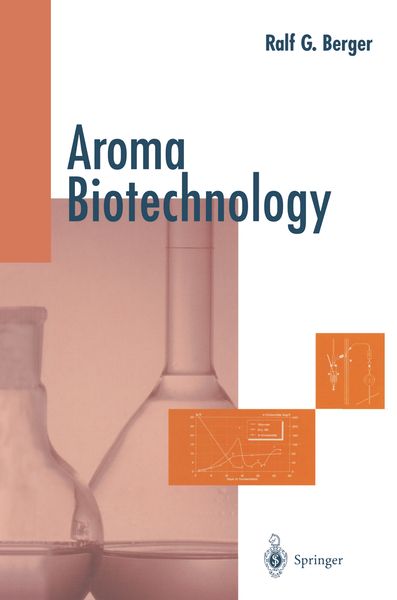
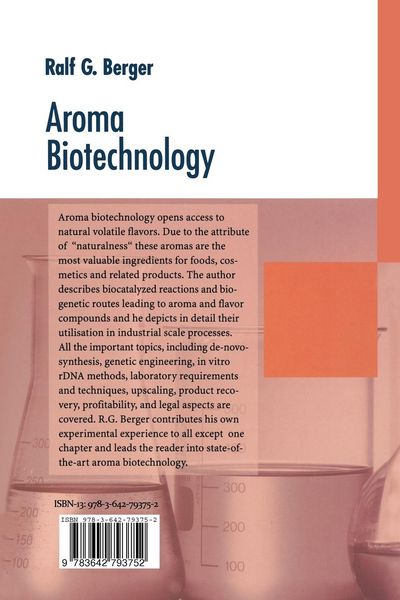
Aroma Biotechnology

51,99 €

inkl. gesetzl. MwSt., Versandkostenfrei


Beschreibung

Produktdetails

Einband

Taschenbuch

Erscheinungsdatum

08.12.2011

Verlag

Springer Berlin

Seitenzahl

240

Maße (L/B/H)

23,5/15,5/1,5 cm

Gewicht

394 g

Auflage

Softcover reprint of the original 1st ed. 1995

Sprache

Englisch

ISBN

978-3-642-79375-2

Beschreibung

Rezension

"...a very welcome publication since, at last, one can find a sound introduction to the entire field of flavour biotechnology in one compact volume." - Int. J. of Cosmetic Science "Though a short book...it is dense with information from the diverse, multidisciplinary literature...an extremely comprehensive, interesting and useful review" - Food Australia

Produktdetails

Einband

Taschenbuch

Erscheinungsdatum

08.12.2011

Verlag

Springer Berlin

Seitenzahl

240

Maße (L/B/H)

23,5/15,5/1,5 cm

Gewicht

394 g

Auflage

Softcover reprint of the original 1st ed. 1995

Sprache

Englisch

ISBN

978-3-642-79375-2

Herstelleradresse

Springer-Verlag KG
Sachsenplatz 4-6
1201 Wien
AT

Email: GPSR Kontakt

Noch keine Bewertungen vorhanden

Verfassen Sie die erste Bewertung zu diesem Artikel

Helfen Sie anderen Kundinnen und Kunden durch Ihre Meinung.

Kundinnen und Kunden meinen

Bewertungen (0)

  • Produktbild: Aroma Biotechnology
  • Produktbild: Aroma Biotechnology
  • 1 Aroma Compounds in Food.- 1.1 Aroma, Flavor, and Fragrance Compounds.- 1.2 Character Impact Components.- 1.3 Categories of Aromas.- 1.4 Functions of Aromas.- 1.5 Bioactivity of Aromas.- 2 The Roots: Empirical Food Biotechnologies and Formation of Aroma Compounds.- 2.1 Characterization of Yeasts.- 2.2 Aroma Development in Beer.- 2.3 Aroma Development in Wine.- 2.3.1 Yeast and Wine Aroma.- 2.3.2 Yeast Enzymes.- 2.3.3 Noble Rot Infected Grape IB.- 2.3.4 Malolactic Fermentation.- 2.3.5 Technological Developments.- 2.4 Yeast Cells As a Source of Aroma.- 2.5 Aromas of Fermented Milk.- 2.6 Bakery Products.- 2.7 Nondairy Acidic Fermentations.- 2.8 Fermented Plant Materials.- 2.9 Ethnic Food.- 2.9.1 Koji and Derivatives.- 2.9.2 Sake.- 2.9.3 Miscellaneous Fermented Food.- 2.10 Aroma Enhancement by Mixed Cultures.- 2.11 Conclusions.- 3 Why Novel Biotechnology of Aromas?.- 3.1 Aromas from Living Cells.- 3.2 The Legal Situation.- 3.3 The Potential of Biocatalysts.- 4 Laboratory Requirements and Techniques.- 4.1 Laboratory Equipment.- 4.2 The Biological Materials.- 4.3 Laboratory-Scale Cultivation.- 4.4 Nutrient Media.- 4.5 Analysis of Nonvolatiles.- 4.6 Analysis of Volatile Bioflavors.- 4.6.1 Chirospecific Gas Chromatography.- 4.6.2 Stable Isotope Analysis: IRMS and SNIF-NMR.- 5 Aroma Compounds from Microbial De Novo Synthesis.- 5.1 A Short History of Bioflavors.- 5.2 Oligo - Isoprenoids.- 5.3 Aliphatics.- 5.3.1 Carboxylic Acids.- 5.3.2 Lipoxygenase and Cyclooxygenase Products.- 5.3.3 Carbonyls.- 5.3.4 Alkanols.- 5.3.5 Esters.- 5.4 Aromatics.- 5.4.1 Vanillin.- 5.4.2 Cinnamates.- 5.4.3 Heterocycles.- 5.5 Degradation of Off-Odor.- 5.6 Are Microbial Volatiles Secondary Metabolites?.- 6 Biotransformation/Bioconversion.- 6.1 Monoterpenes.- 6.2 Sesquiterpenes.- 6.3 Fatty Acid Derivatives.- 6.4 Aromatics and Heterocycles.- 7 Enzyme Technology.- 7.1 Lipases.- 7.1.1 Lipolysis.- 7.1.2 Kinetic Resolution of Racemates.- 7.1.3 Reverse Hydrolysis.- 7.1.4 Nonaqueous Reaction Media.- 7.1.5 Immobilization.- 7.2 Carbohydrases.- 7.2.1 Glycosidic Aroma Precursors.- 7.2.2 Other Glycanases.- 7.3 Proteases.- 7.4 Oxidoreductases.- 7.5 Miscellaneous Enzymes.- 7.6 Cofactor Recycling.- 8 Genetically Altered Catalysts.- 8.1 Mutants and Fusants.- 8.2 In Vitro rDNA Technique.- 8.2.1 Enzymes.- 8.2.2 Lactococci HO.- 8.2.3 Yeasts.- 8.2.4 Higher Fungi.- 8.2.5 Non-Food Species.- 9 Plant Catalysts.- 9.1 Plant Enzymes.- 9.1.1 Lipoxygenase Derived Aromas.- 9.2 Precursor Atmosphere Stored Fruits.- 9.3 In Vitro Plant Cell Culture.- 9.3.1 De Novo Syntheses.- 9.3.2 Differentiated Cells.- 9.3.3 Conversion and Conjugation Of Substrates.- 9.3.4 Key Parameters for the Production Of Aromas.- 9.3.5 Phototrophic in Vitro Cells.- 9.3.6 Plant Genetic Engineering.- 9.3.7 Scaling-Up Experiments.- 10 Bioprocess Technology.- 10.1 Bioreactor Design.- 10.1.1 Mode of Operation.- 10.1.2 Fluidized Bed Reactor.- 10.1.3 Application of Membranes.- 10.1.4 Solid State Reactor.- 10.1.5 Alternative Reactors.- 10.2 Process Monitoring.- 10.3 Downstreaming Volatile Flavors.- 10.3.1 Degradation of Volatiles.- 10.3.2 Inhibition Phenomena.- 10.3.3 Solid/Liquid Separation.- 10.3.4 Electrodialysis.- 10.3.5 Reactive Extraction.- 10.3.6 Two Phase Extraction.- 10.3.7 Solid Phase Extraction.- 10.3.8 Gas Extraction.- 10.3.9 Membranes.- 11 Toward an Industrial Application.- 11.1 Rapid Process Improvement.- 11.1.1 Improved Biotransformation.- 11.1.2 Improved De Novo Synthesis.- 11.2 Scaling-Up.- 11.3 Profitability Aspects.- 11.4 Present Industrial Applications.- 12 Outlook.- References.