Gutscheinbedingungen

**Gültig bis 15.06.2026 auf Spiele & Spielzeug online auf thalia.at, in der Thalia App ab einem Mindestbestellwert von 30€ und in allen Thalia Buchhandlungen in Österreich. In den Buchhandlungen nur gültig auf lagernde Ware. Einzelne Artikel können ausgeschlossen sein. Ausgenommen sind preisgebundene Artikel sowie online auf thalia.at und in der Thalia App einzelne Artikel von tonies®. Pro Einkauf einmal einlösbar. Nur gültig gegen Vorlage oder im Onlineshop hinterlegter Bonuscard. Infos zur Einlösung in der Buchhandlung sind auf der Bonuscard-Vorteilspreisseite zu finden. Click & Collect nur bei Onlinevorabzahlung möglich. Keine Einlösung bei Scan & Go-Bezahlung. Keine Barauszahlung. Nicht kombinierbar mit anderen Aktionen und Gutscheinen. Gutschein wird auf max. 500€ Bestellwert angerechnet. Nicht gültig für Geschenkkarten, Versandkosten und Services.

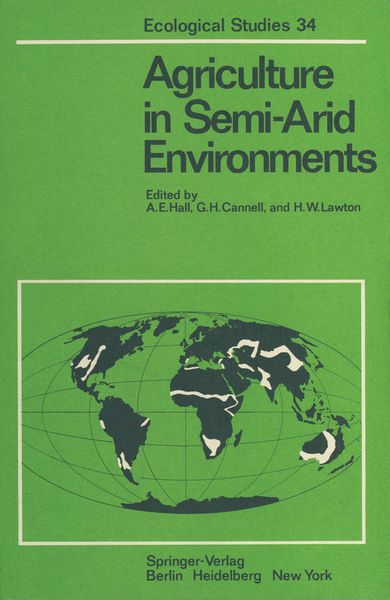
  • Produktbild: Agriculture in Semi-Arid Environments
  • Produktbild: Agriculture in Semi-Arid Environments
Band 34

Agriculture in Semi-Arid Environments

Aus der Reihe Ecological Studies

99,99 €

inkl. gesetzl. MwSt., Versandkostenfrei


Beschreibung

Produktdetails

Einband

Taschenbuch

Erscheinungsdatum

27.12.2011

Herausgeber

A.E. Hall + weitere

Verlag

Springer Berlin

Seitenzahl

342

Maße (L/B/H)

24,4/17/2 cm

Gewicht

627 g

Auflage

Softcover reprint of the original 1st ed. 1979

Sprache

Englisch

ISBN

978-3-642-67330-6

Beschreibung

Produktdetails

Einband

Taschenbuch

Erscheinungsdatum

27.12.2011

Herausgeber

Verlag

Springer Berlin

Seitenzahl

342

Maße (L/B/H)

24,4/17/2 cm

Gewicht

627 g

Auflage

Softcover reprint of the original 1st ed. 1979

Sprache

Englisch

ISBN

978-3-642-67330-6

Herstelleradresse

Springer-Verlag KG
Sachsenplatz 4-6
1201 Wien
AT

Email: ProductSafety@springernature.com

Kundinnen und Kunden meinen

0 Bewertungen

Informationen zu Bewertungen

Zur Abgabe einer Bewertung ist eine Anmeldung im Konto notwendig. Die Authentizität der Bewertungen wird von uns nicht überprüft. Wir behalten uns vor, Bewertungstexte, die unseren Richtlinien widersprechen, entsprechend zu kürzen oder zu löschen.

Die Bewertungen sind nach Format, Anzahl Sterne und Datum sortiert.

Verfassen Sie die erste Bewertung zu diesem Artikel

Helfen Sie anderen Kund*innen durch Ihre Meinung

Kundinnen und Kunden meinen

0 Bewertungen filtern

  • Produktbild: Agriculture in Semi-Arid Environments
  • Produktbild: Agriculture in Semi-Arid Environments
  • 1 Ancient Agricultural Systems in Dry Regions.- 1.1 Introduction.- 1.2 The Beginnings of Agriculture.- 1.3 Ancient Agricultural Systems in Dry Regions of the Old World.- 1.3.1 The Near East.- 1.3.1.1 The Mesopotamian Heartland.- 1.3.1.2 Other Near Eastern Agriculture.- 1.3.2 The African Continent.- 1.3.2.1 Egypt.- 1.3.2.2 Other Dry Regions of Africa.- 1.3.3 The Indian Subcontinent.- 1.3.4 The Soviet Union and China.- 1.3.4.1 The Soviet Union.- 1.3.4.2 China.- 1.4 Ancient Agricultural Systems in Dry Regions of the New World.- 1.4.1 Mesoamerica.- 1.4.1.1 The Valley of Oaxaca.- 1.4.1.2 The Tehuacán Valley.- 1.4.1.3 The Basin of Mexico.- 1.4.2 The North American Southwest.- 1.4.2.1 The Hohokam.- 1.4.2.2 Lower Colorado River Tribes.- 1.4.2.3 Owens Valley Paiute.- 1.4.2.4 Anasazi.- 1.4.2.5 Casas Grandes.- 1.4.3 South America.- 1.5 Conclusions.- References.- 2 Development of Present Dryland Farming Systems.- 2.1 Introduction.- 2.2 Geographic Aspects of the World’s Semi-Arid Tropics.- 2.3 Dryland Farming Systems in the Semi-Arid Tropics.- 2.3.1 Australia.- 2.3.2 India.- 2.3.3 Brazil.- 2.3.4 Southern Africa.- 2.3.5 Sahel Region.- 2.4 Geographic Aspects of the World’s Semi-Arid Mid-Latitude Lands (Steppe).- 2.5 Dryland Farming Systems in the Mid-Latitude Steppes.- 2.5.1 North America.- 2.5.2 Eurasia.- 2.6 Perception of the Semi-Arid Environment.- 2.7 The Future of Dryland Farming Systems.- References.- 3 Semi-Arid Climates: Their Definition and Distribution.- 3.1 Introduction.- 3.2 Meteorological Factors Contributing to Aridity and Humidity.- 3.3 Defining Semi-Arid Regions.- 3.3.1 Moisture Balance Over the Year as a Whole.- 3.3.2 Seasonal Considerations in Moisture Balance.- 3.3.3 Attributes of the Bailey Moisture Index.- 3.3.4 Precipitation Variability in Semi-Arid Regions.- 3.4 Thermal Regions of Semi-Arid Zones.- 3.5 Conclusions.- References.- 4 Agroclimatology Applied to Water Management in the Sudanian and Sahelian Zones of Africa.- 4.1 Introduction.- 4.2 Climatology and the Hydrologic Budget of Cropping Systems.- 4.2.1 Evaporative Demand of the Atmosphere.- 4.2.1.1 Reference Crop Evapotranspiration.- 4.2.1.2 Pan Evaporation.- 4.2.1.3 Piche Evaporimeter.- 4.2.1.4 Calculating Evaporative Demand from Weather Data.- 4.2.1.5 Relations Between Evaporative Demand and Rainfall.- 4.2.2 Actual Crop Water Requirements.- 4.2.2.1 Methods of Measurement.- 4.2.2.2 Crop Water Requirements.- 4.2.3 Rainfall Efficiency.- 4.2.3.1 The First Useful Rainfall.- 4.2.3.2 The End of the Useful Rainy Season.- 4.2.3.3 Determining the Adequacy of Rainfall and Soil Moisture Reserves to Satisfy Crop Water Needs During the Growing Season.- 4.3 Application of Agroclimatology to Agriculture in Senegal.- 4.3.1 Cultural Practices.- 4.3.2 Varietal Development.- 4.3.3 Regional Water Management.- 4.4 Future Strategies.- References.- 5 Microbiological and Biochemical Aspects of Semi-Arid Agricultural Soils.- 5.1 Introduction.- 5.2 Microbial Ecology and Soil Physical Properties.- 5.2.1 Water.- 5.2.2 Aeration.- 5.2.3 Temperature.- 5.2.4 pH.- 5.3 Organic Matter.- 5.3.1 Decomposition.- 5.3.2 Synthesis.- 5.3.3 Aggregation.- 5.4 Mineral Nutrition of Plants.- 5.4.1 Phosphorus.- 5.4.2 Mycorrhizae.- 5.4.3 Chelation of Iron and Other Metals.- 5.4.4 The Nitrogen Triangle.- 5.5 Future Directions for Research.- References.- 6 Crop Adaptation to Semi-Arid Environments.- 6.1 Introduction.- 6.2 Water as a Limiting Factor.- 6.3 Adaptive Attributes for Semi-Arid Environments.- 6.3.1 Phenology and Mechanisms for Escaping Drought.- 6.3.2 Drought Avoidance.- 6.3.3 Tolerance to Drought.- 6.3.4 Heat Resistance.- 6.3.5 Acclimation to Drought and Heat.- 6.3.6 Water-Use Efficiency.- 6.4 Developing Cultivars for Semi-Arid Environments.- 6.4.1 Interactions Between Genotype and Environment.- 6.4.2 Selecting for Yield in Semi-Arid Environments.- 6.4.3 Selecting for Indices of Adaptation.- 6.4.4 Genetic Resources Available.- 6.4.4.1 Barley and Wheat.- 6.4.4.2 Millet and Sorghum.- 6.4.4.3 Maize.- 6.4.4.4 Cowpeas and Beans.- 6.5 Future Strategies for Research.- References.- 7 Water Transport Through Soil, Plant, and Atmosphere.- 7.1 Introduction.- 7.2 Components of the Soil-Plant-Atmosphere Continuum.- 7.2.1 Surface Water Hydrology.- 7.2.2 Soil Water Movement.- 7.2.3 Evapotranspiration.- 7.2.3.1 Potential Evapotranspiration.- 7.2.3.2 Evapotranspiration with Incomplete Crop Cover.- 7.2.3.3 Stress-Limited Evapotranspiration.- 7.2.4 Plant Water Uptake and Plant Response.- 7.2.4.1 Water Movement Through the Plant.- 7.2.4.2 Behavior of Plant Roots.- 7.2.4.3 Plant Response to Water Deficits.- 7.3 Models of the Soil-Plant-Atmosphere Continuum.- 7.3.1 Introduction and Classification.- 7.3.2 Descriptions of Individual Models.- 7.3.3 Application to Dryland Farming Systems.- 7.4 Conclusions.- References.- 8 Crop Management in Semi-Arid Environments.- 8.1 Introduction.- 8.2 Management Systems.- 8.2.1 Subsistence Cropping.- 8.2.2 Commercial Crop Production.- 8.3 Cultural Systems.- 8.3.1 Annual Cropping.- 8.3.2 Alternate Crop-Fallow System.- 8.3.3 Ley Farming.- 8.3.4 Shifting Cultivation.- 8.3.5 Mound Culture.- 8.3.6 Recession Farming.- 8.3.7 Mulch Farming.- 8.4 Cropping Methods.- 8.4.1 Sole Cropping.- 8.4.2 Mixed Cropping.- 8.4.3 Intercropping.- 8.4.4 Relay Cropping.- 8.5 Crop Selection.- 8.5.1 Choice of Species.- 8.5.2 Choice of Cultivar.- 8.5.3 Seed Sources.- 8.6 Planting Techniques.- 8.6.1 Time of Planting.- 8.6.2 Planting Depth.- 8.6.3 Seeding Rates.- 8.7 Crop Fertilization.- 8.8 Crop Rotation.- 8.9 Vertebrate Pest Control.- 8.10 Harvesting.- 8.11 Future Directions of Research.- References.- 9 Soil Management in Semi-Arid Environments.- 9.1 Introduction.- 9.2 Differing Responses of Soils to Tillage.- 9.3 Objectives of Soil Management.- 9.4 Tillage and Soil Water.- 9.5 Soil Fertility.- 9.6 Tillage and the Soil Microenvironment.- 9.7 Erosion Control.- References.- 10 Erosion and Its Control in Semi-Arid Regions.- 10.1 Introduction.- 10.2 Erosion by Water.- 10.2.1 Factors that Influence Erosion by Water.- 10.2.1.1 Rainfall.- 10.2.1.2 Temperature.- 10.2.1.3 Slope.- 10.2.1.4 Soil.- 10.2.1.5 Plant Cover.- 10.2.1.6 Universal Soil-Loss Equation.- 10.2.2 Extent of Erosion by Water for Different Farming Systems.- 10.3 Erosion by Wind.- 10.3.1 Factors that Influence Erosion by Wind.- 10.3.1.1 Wind.- 10.3.1.2 Surface.- 10.3.1.3 Soil.- 10.3.1.4 Wind Erosion Equation.- 10.3.2 Extent of Erosion by Wind.- 10.4 Erosion Control Measures.- References.- 11 Diseases and Nematode Pests in Semi-Arid West Africa.- 11.1 Introduction.- 11.2 Principles of Disease and Nematode Management.- 11.2.1 Exclusion.- 11.2.2 Crop Rotation and Cultural Practices.- 11.2.3 Pesticides.- 11.2.4 Resistant Varieties.- 11.3 Diseases and Nematodes of Specific Food Crops.- 11.3.1 Sorghum.- 11.3.2 Millet.- 11.3.3 Cowpea.- 11.3.4 Peanut.- 11.4 Future Directions for Research in Disease and Nematode Pest Control in Semi-Arid Africa.- 11.4.1 Plant Diseases.- 11.4.2 Nematode Pests.- References.- 12 Weed Control.- 12.1 Losses from Weeds.- 12.1.1 Crop Yield Reduction.- 12.1.2 Competition for Moisture.- 12.1.3 Competition for Nutrients.- 12.1.4 Competition for Light.- 12.1.5 Competition in Mixed Populations.- 12.2 Weed Characteristics.- 12.2.1 Weed Reproduction.- 12.2.2 Weed Life Cycle.- 12.3 Management of Weeds.- 12.3.1 Cultural Control.- 12.3.1.1 Prevention.- 12.3.1.2 Competitive Crops.- 12.3.1.3 Crop Rotation.- 12.3.2 Mechanical Weed Control.- 12.3.2.1 Manual.- 12.3.2.2 Hoeing.- 12.3.2.3 Cutting.- 12.3.2.4 Flooding.- 12.3.2.5 Heat.- 12.3.2.6 Smothering.- 12.3.2.7 Tillage.- 12.3.2.8 Biological Control.- 12.4 Herbicides.- 12.4.1 Classification and Selectivity.- 12.4.1.1 Contact.- 12.4.1.2 Translocated.- 12.4.1.3 Soil-Applied.- 12.4.1.4 Time of Application.- 12.4.1.5 Formulation.- 12.5 Interaction of Weed Control and the Environment.- 12.5.1 Weather.- 12.5.1.1 Temperature.- 12.5.1.2 Wind.- 12.5.1.3 Water.- 12.5.1.4 Environmental Interactions with Herbicides.- 12.5.2 Soil and Herbicides.- 12.5.3 General Considerations.- 12.6 Control of Specific Weeds.- 12.6.1 Broadleaved Weeds.- 12.6.2 Weedy Grasses.- 12.6.3 Nutsedge.- 12.6.4 Striga.- 12.7 General Conclusions.- References.- 13 The Interaction Between Cultivation and Livestock Production in Semi-Arid Africa.- 13.1 Introduction.- 13.1.1 Basic Differences Between the Two Production Systems.- 13.2 Linkages Between Crop and Livestock Production.- 13.2.1 Interactions When Agricultural and Pastoral Production Take Place in Different Management Units.- 13.2.1.1 No Supporting Linkage.- 13.2.1.2 Ecological Linkage.- 13.2.1.3 Exchange Linkage.- 13.2.1.4 Competition Linkage.- 13.2.2 Interactions When Agricultural and Pastoral Production Take Place Within the Same Management Unit.- 13.2.2.1 Investment Linkage.- 13.2.2.2 Food Linkage.- 13.2.2.3 Manure Linkage.- 13.2.2.4 Draft Linkage.- 13.2.2.5 Fodder Linkage.- 13.3 Selected Cases of Cropping-Livestock Systems.- 13.3.1 Western Senegal.- 13.3.2 Bambara Lands.- 13.3.3 The Gouma Region.- 13.3.4 Mossi Lands.- 13.3.5 Hausaland.- 13.3.6 Bokoro Area.- 13.3.7 Western Darfur.- 13.3.8 Harar Province, Ethiopia.- 13.4 Trends in Organization of Linkages.- 13.4.1 The Process of Adaptation.- 13.4.1.1 Economic Viability.- 13.4.1.2 Political Viability.- 13.4.1.3 Ecological Viability.- 13.4.2 Conditions and Adaptations in the Semi-Arid Zone.- 13.4.3 New Trends and Their Implications.- 13.4.3.1 National Pacification.- 13.4.3.2 Urbanization.- 13.4.3.3 External Demand for Crops and Livestock, and External Supply of Consumer Goods.- 13.4.3.4 Population Growth.- 13.4.3.5 Overall Implications.- 13.5 Conclusions.- References.- Taxonomic Index.