Gutscheinbedingungen

**Gültig bis 17.08.2026 auf Schreibwaren & Office-Artikel online auf thalia.at, in der Thalia App und in teilnehmenden Thalia Buchhandlungen in Österreich mit Schulsortiment. In den Buchhandlungen nur gültig auf lagernde Ware. Einzelne Artikel können ausgeschlossen sein. Ausgenommen sind preisgebundene Artikel. Pro Einkauf einmal einlösbar. Nur gültig gegen Vorlage oder im Onlineshop hinterlegter Bonuscard. Infos zur Einlösung in der Buchhandlung sind auf der Bonuscard-Vorteilspreisseite zu finden. Click & Collect nur bei Onlinevorabzahlung möglich. Keine Einlösung bei Scan & Go-Bezahlung. Keine Barauszahlung. Nicht kombinierbar mit anderen Aktionen und Gutscheinen. Gutschein wird auf max. 500€ Bestellwert angerechnet. Nicht gültig für Geschenkkarten, Versandkosten und Services.

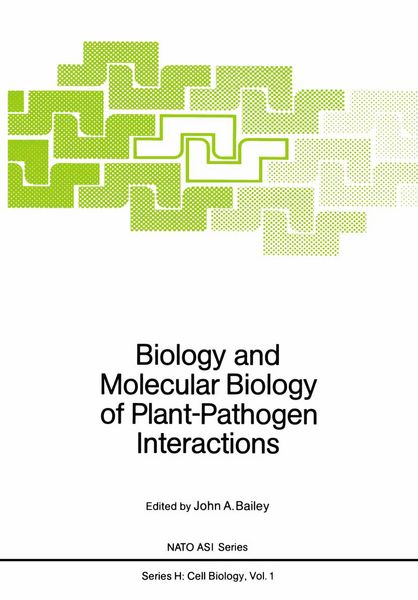
  • Produktbild: Biology and Molecular Biology of Plant-Pathogen Interactions
  • Produktbild: Biology and Molecular Biology of Plant-Pathogen Interactions
Band 1

Biology and Molecular Biology of Plant-Pathogen Interactions

Aus der Reihe Nato ASI Subseries H:

148,99 €

inkl. gesetzl. MwSt., Versandkostenfrei


Beschreibung

Produktdetails

Einband

Taschenbuch

Erscheinungsdatum

09.02.2012

Herausgeber

John A. Bailey

Verlag

Springer Berlin

Seitenzahl

415

Maße (L/B/H)

24,4/17/2,4 cm

Gewicht

740 g

Auflage

Softcover reprint of the original 1st ed. 1986

Sprache

Englisch

ISBN

978-3-642-82851-5

Beschreibung

Produktdetails

Einband

Taschenbuch

Erscheinungsdatum

09.02.2012

Herausgeber

John A. Bailey

Verlag

Springer Berlin

Seitenzahl

415

Maße (L/B/H)

24,4/17/2,4 cm

Gewicht

740 g

Auflage

Softcover reprint of the original 1st ed. 1986

Sprache

Englisch

ISBN

978-3-642-82851-5

Herstelleradresse

Springer-Verlag KG
Sachsenplatz 4-6
1201 Wien
AT

Email: GPSR Kontakt

Noch keine Bewertungen vorhanden

Verfassen Sie die erste Bewertung zu diesem Artikel

Helfen Sie anderen Kundinnen und Kunden durch Ihre Meinung.

Kundinnen und Kunden meinen

Bewertungen (0)

  • Produktbild: Biology and Molecular Biology of Plant-Pathogen Interactions
  • Produktbild: Biology and Molecular Biology of Plant-Pathogen Interactions
  • Introductory Comments On Host-Parasite Interactions.- Biology of Plant-Fungus Interactions.- Fundamental Questions Related to Plant-Fungal Interactions: Can Recombinant DNA Technology Provide the Answers?.- Cellular Modifications during Host-Fungus Interactions in Endomycorrhizae.- Cellular Interactions between Phaseolus vulgaris and the Hemibiotrophic Fungus Colletotrichum lindemuthianum.- Ultrastructural Localization of Carbohydrates. Recent Developments in Cytochemistry and Affinity Methods.- Attachment of a Mycoparasite with Host but not with Nonhost Mortierella Species.- Biology of Plant Bacterial Interactions.- The Biology of Interactions between Plants and Bacteria.- Surface Interactions between Rhizobium and Infected Pea Root Nodule Cells, as Revealed by using Monoclonal Antibodies.- Mechanisms of Resistance.- Biochemical Mechanisms Involved in Resistance of Plants to Fungi.- Cell Wall Modifications Associated with the Resistance of Cereals to Fungal Pathogens.- Mechanism of Resistance of Wheat against Stem Rust in the Sr5/P5 Interaction.- Elicitation of Resistance.- Elicitation of Active Resistance Mechanisms.- Evidence for both Induced Susceptibility and Induced Resistance in the Cladosporium fulvum — Tomato Interaction.- Do Galacturonic Acid Oligosaccharides have a Role in the Resistance Mechanism of Cucumber towards Cladosporium cucumerinum?.- Carbohydrate and Lipid-Containing Elicitors from Phytophthora infestans. Do they have a Common Mechanism of Action?.- Differential Elicitation Activities of Fractions from Phytophthora spp. on Several Host-Plants.- Regulation of Steroid Glycoalkaloid and Sesquiterpenoid Stress Metabolite Accumulation in Potato Tubers by Inhibitors of Steroid Synthesis and Phytohormones in Combination with Arachidonic Acid.- Elicitation and Suppression of Necrosis in Potato Leaves by Culture Filtrate Components of Phytophthora infestans.- Molecular Biology of Plant Responses.- Organization, Structure and Activation of Plant Defence Genes.- Molecular Targets for Elicitor Modulation in Bean (Phaseolus vulgaris) Cells.- Accumulation of Hydroxyproline-Rich Glycoprotein mRNAs in Biologically Stressed Cell Cultures and Hypocotyls.- Biochemical Study of Hydroxyproline-Rich Glycoproteins in Plant-Pathogen Interactions.- Biochemical Responses of Non-Host Plant Cells to Fungi and Fungal Elicitors.- Pea Genes Associated with the Non-Host Resistance to Fusarium solani are also Induced by Chitosan and in Race-Specific by Pseudomonas syringae.- Race Variable Macromolecules Identified in Puccinia graminis f.sp. tritici; Correlations with Avirulence/Virulence to Host Genes for Resistance.- Molecular Biology of Bacterial Pathogenesis.- The Molecular Biology of Pectic Enzyme Production and Bacterial Soft Rot Pathogenesis.- Molecular Genetics of Pathogenicity of Xanthomonas campestris.- Genetic Control of Hypersensitivity and Pathogenicity in Pseudomonas syringae pv. phaseolicola.- Regulation of Bacterial Genes Involved in Bacterium-Plant Interactions by Plant Signal Molecules.- Indoleacetic Acid and Cytokinins in the Olive Knot Disease. An Overview of their Role and their Genetic Determinants.- Molecular Biology of Fungal Pathogenesis.- Gene Expression during Infection Structure Development by Germlings of the Rust Fungi.- Isolation of Stage- And Cell-Specific Genes from Fungi.- An Antibiotic Resistance Marker for Fungal Transformation.- Analysis of Transcription — Control Signals in Aspergillus.- Technology for Molecular Cloning of Fungal Virulence Genes.- Molecular Evolution of Fungal Polygalacturonase.- The D2-Factor in Ophiostoma ulmi: Expression and Latency.- The Effects of Passaging on the Host Specificity of Septoria nodorum: A Cautionary Tale.- Participants.