• Produktbild: Signalling Mechanisms — from Transcription Factors to Oxidative Stress
  • Produktbild: Signalling Mechanisms — from Transcription Factors to Oxidative Stress
Band 92

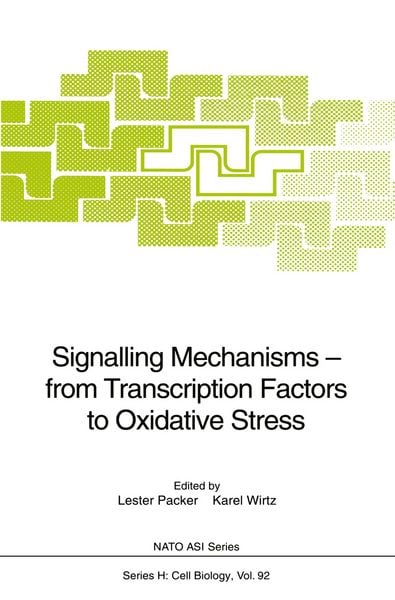
Signalling Mechanisms — from Transcription Factors to Oxidative Stress

Aus der Reihe Nato ASI Subseries H:

99,99 €

inkl. gesetzl. MwSt., Versandkostenfrei


Beschreibung

Produktdetails

Einband

Taschenbuch

Erscheinungsdatum

28.01.2012

Abbildungen

X, 456 p.

Herausgeber

Lester Packer + weitere

Verlag

Springer Berlin

Seitenzahl

456

Maße (L/B/H)

23,5/15,5/2,6 cm

Gewicht

715 g

Auflage

Softcover reprint of the original 1st edition 1995

Sprache

Englisch

ISBN

978-3-642-79677-7

Beschreibung

Produktdetails

Einband

Taschenbuch

Erscheinungsdatum

28.01.2012

Abbildungen

X, 456 p.

Herausgeber

Verlag

Springer Berlin

Seitenzahl

456

Maße (L/B/H)

23,5/15,5/2,6 cm

Gewicht

715 g

Auflage

Softcover reprint of the original 1st edition 1995

Sprache

Englisch

ISBN

978-3-642-79677-7

Herstelleradresse

Springer-Verlag KG
Sachsenplatz 4-6
1201 Wien
AT

Email: ProductSafety@springernature.com

Noch keine Bewertungen vorhanden

Verfassen Sie die erste Bewertung zu diesem Artikel

Helfen Sie anderen Kundinnen und Kunden durch Ihre Meinung.

Kundinnen und Kunden meinen

Bewertungen (0)

  • Produktbild: Signalling Mechanisms — from Transcription Factors to Oxidative Stress
  • Produktbild: Signalling Mechanisms — from Transcription Factors to Oxidative Stress
  • Components of Signal Transduction.- The [Ca2+]i concept: from whole cell to microdomains.- Versatile functions of Ca2+-binding proteins in signal transduction and Ca2+ homeostasis.- Purification of a neurite growth inhibitor (NI-250) from bovine CNS myelin.- Protein kinase C and lipid signalling for cellular regulation.- Phospholipase D regulation in relationship with several protein kinases activation in human neutrophil.- Phosphatide acid phosphohydrolase: its role in cell signalling.- A novel form of type-IVA cAMP phosphodiesterase found in rat brain.- Interaction of the retinal cyclic GMP-phosphodiesterase inhibitor with transducin (Gt) and with other G-proteins (Gi, GO and Gs).- Identification of stable opioid receptor Go-protein complexes using GTP-binding protein selective antisera.- The use of stably transfected cell lines in the analysis of functional interactions between Go?1 & Gi?2 and the ?2C10 adrenoceptor.- Modulation of the AMPA/kainate receptors by protein kinase C.- Interaction of MARCKS, a major protein kinase C substrate, with the membrane.- Phosphorylase kinase: a protein kinase for all seasons.- Antioxidants, Oxidative Stress and Hypoxia.- Signal, messenger and trigger molecules from free radical reactions and their control by antioxidants.- Strategies of antioxidant defense: relations to oxidative stress.- Antioxidants: molecular interactions between vitamins E and C, biothiols and carotenes.- Biokinetics of vitamin E in lipoproteins and cells.- Role of mitochondria in radical generation and toxicity of ?-buty Hydroperoxide towards cultured human endothelial cells.- Hypoxia and endothelial cell adhesiveness.- Hypoxia activates endothelial cells to release inflammatory mediators and growth factors.- Oxidative stress induced by ?-interferon andlipopolysaccharide in rat hepatocyte cultures. Relationship with nitric oxide production.- Effects of nitric oxide on Morris water maze performance in rats: correlation with cGMP levels.- Transcription Factors and Gene Induction.- Signal transduction from the cytoplasm to the cell nucleus by NF-kB/Rel transcription factors.- Functional analysis of the glucocorticoid receptor.- Adipocyte differentiation is dependent on the induction of the acyl-CoA binding protein.- TNF-induced mechanisms for IL6 gene induction.- Regulation of 14 kDa group II PLA2 in rat mesangial cells.- Multifunctional growth factors in morphogenesis and tumor progression.- Gene targeting of the receptor-like protein tyrosine phosphatase LAR by homologous recombination in mouse embryonic stem cells.- Various Functions of Membrane Lipids.- Lipid modifications of eukaryotic proteins: biochemistry and function.- Intracellular synthesis, transport and sorting of glycosphingolipids.- Addendum.- Note to the addendum.- Interleukin 1 ? and tumor necrosis factor-? modulate the nuclear phosphoinositide signaling system.